


Nigel Farage Says BBC Has “Sunk to New Depths” in Blazing New Question Time Row
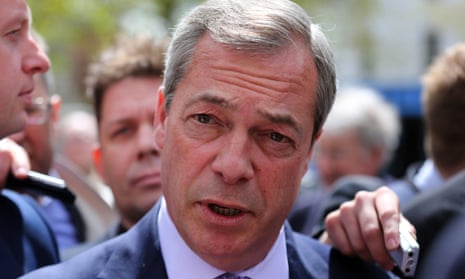
Nigel Farage has launched a furious attack on the BBC after a controversial edition of Question Time focused on immigration triggered a major political row.
The Reform UK leader accused the broadcaster of reaching “new depths” after the programme featured members of the audience who had reportedly arrived in Britain by small boat and subsequently claimed asylum.
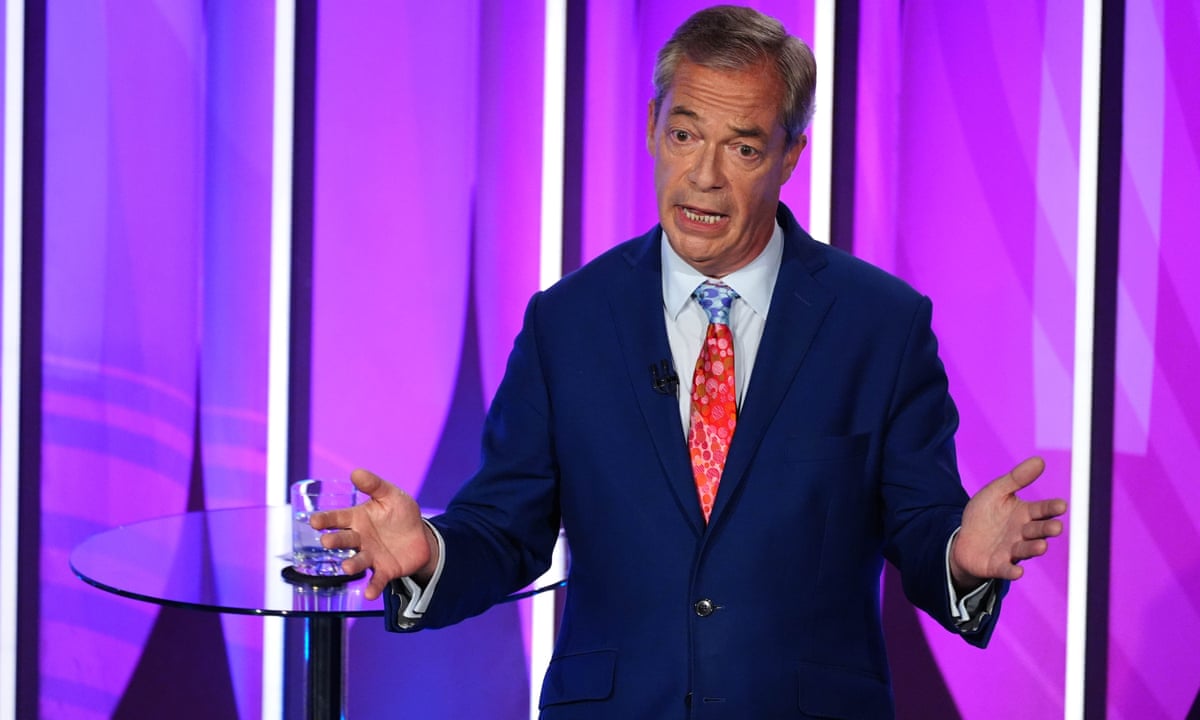
For Farage, the incident was not simply an editorial disagreement. He described the programme as evidence of what he believes is a persistent political bias within the BBC, arguing that the broadcaster had deliberately created a situation designed to put Reform UK’s representative, Zia Yusuf, under pressure.
The controversy has once again placed the BBC, immigration and Reform UK at the centre of Britain’s increasingly polarised political debate.
But beneath the furious exchanges lies a much bigger question:
What should a public broadcaster’s political debate programme look like when the subject under discussion is one of the most controversial issues in modern Britain?
A Controversial Question Time Programme
The dispute followed a special edition of BBC Question Time filmed in Dover and devoted exclusively to migration.
The panel included Labour migration minister Mike Tapp, Conservative MP Kieran Mullan, Liberal Democrat deputy leader Daisy Cooper, Green Party leader Zack Polanski and Reform UK’s head of policy, Zia Yusuf.
The programme was designed to examine one of the most contentious issues facing Britain: the arrival of migrants across the English Channel in small boats.
But the composition of the audience became the central story.
According to reports, several audience members had themselves gone through the asylum system, including people who had arrived in Britain by boat.
That immediately provoked criticism from Reform.
Yusuf said he was bewildered by the decision and questioned why people who had arrived illegally were being given a platform to challenge politicians over Britain’s immigration laws.
Farage went further.
He argued that the BBC had deliberately created what he described as an “absolute set up job”.
Farage’s Attack on the BBC
Farage’s criticism was uncompromising.
He argued that the BBC had “sunk to new depths” by allowing two audience members who, in his description, had arrived in Britain illegally by boat to participate in the programme.
He said they should have been removed from the country rather than given a platform on a flagship political programme.
Farage also described Question Time as a programme that had once played an important role in British political debate but had now become, in his view, “utterly discredited”.
That is a serious accusation.
The BBC is funded primarily through the licence fee and has a public-service obligation to provide impartial news and current affairs programming.
Its political programmes therefore receive considerably more scrutiny than ordinary commercial broadcasts.
When a politician as prominent as Farage accuses the BBC of deliberately manipulating an audience, the broadcaster’s editorial decisions inevitably come under intense examination.
Why the Audience Became So Important
The central dispute is not necessarily whether asylum seekers should be allowed to speak publicly.
They obviously have the same basic right to express their views as other members of society.
The real question is whether their presence was appropriate for this particular programme and whether the BBC presented the audience fairly.
Supporters of the BBC’s decision could argue that a programme about migration should include people directly affected by the asylum system.
Indeed, someone who has experienced the asylum process may have valuable firsthand knowledge.
If the programme is genuinely about understanding migration, excluding migrants from the discussion could itself be criticised as unbalanced.
But Farage’s supporters make a different argument.
They say Question Time is primarily intended to allow politicians to answer questions from British voters.
From that perspective, the presence of people who entered the country illegally creates a legitimate editorial question about representation.
The disagreement therefore goes beyond immigration.
It is about who gets to speak in Britain’s political conversation.
The Role of Zia Yusuf
The controversy became even more significant because Zia Yusuf was representing Reform UK on the panel.
Yusuf has become an important figure within Farage’s political organisation, particularly as Reform attempts to demonstrate that it has a serious policy team rather than relying entirely on its leader.
During the programme, Yusuf was confronted by an audience member who argued that he had come to Britain because he was fleeing war.
The exchange placed Yusuf in a difficult political position.
Reform’s policy is uncompromising: people who are in Britain illegally should be removed.
Yusuf reaffirmed that position during the broadcast, saying that if Farage became Prime Minister, people who were in the country illegally would be deported.
That gave viewers a direct illustration of the disagreement between Reform and those seeking protection in Britain.
For Reform, that is precisely the kind of confrontation it believes voters should be allowed to see.
But for the BBC, the exchange could be interpreted as a legitimate attempt to expose a politician to questions from people directly affected by the policy.
The Legal Language Matters
One important issue in the controversy is the language used to describe people seeking asylum.
Farage and Reform referred to some participants as “illegal migrants”.
The legal situation can be more complicated.
A person who arrives in the UK without prior permission may have entered the country irregularly, but a person who subsequently makes an asylum claim is subject to the UK’s asylum and immigration processes.
Whether someone ultimately has a legal right to remain depends on the outcome of those procedures.
That distinction matters because political language can shape public understanding.
Calling someone an “illegal migrant” communicates a very different message from describing them as an “asylum seeker”.
The BBC therefore has to navigate not only political neutrality but also precise terminology.
At the same time, politicians such as Farage deliberately use stronger language because they want to emphasise their belief that the system has lost control.
Farage’s Larger Criticism
The Question Time controversy fits into a much broader Farage campaign against the BBC.
He has repeatedly accused the broadcaster of being biased against Reform and more sympathetic towards left-of-centre political arguments.
This is not unique to Farage.
The BBC has faced criticism from politicians on both the left and right for decades.
Conservatives have accused it of being too progressive.
Labour politicians have at times accused it of giving excessive attention to Conservative arguments.
Reform’s criticism is therefore part of a much older debate about whether the BBC can genuinely maintain political neutrality.
The difference today is the intensity of the argument.
Social media allows politicians to respond immediately to individual programmes and clips.
A dispute that might once have remained a media-industry story can now become a national political controversy within hours.
Kemi Badenoch Joins the Criticism
Farage was not the only senior politician to criticise the BBC.
Conservative leader Kemi Badenoch also objected to the programme’s format.
She argued that Question Time should allow British citizens to question politicians rather than provide asylum seekers with a platform to demand changes to immigration law.
Her criticism is politically significant because it demonstrates that the concern was not confined to Reform.
At the same time, Badenoch did not necessarily share every aspect of Farage’s interpretation.
That distinction matters.
A politician can criticise an editorial decision without accepting the broader accusation that the BBC is institutionally biased.
The BBC’s Defence
The BBC rejected the suggestion that the audience had been secretly manipulated.
A BBC spokesperson said that all parties represented on the panel had been informed the day before the programme that there would be people in the audience who had been through the asylum system.
That response is important.
If the political parties were informed beforehand, the argument that Reform was deliberately ambushed becomes considerably weaker.
The BBC can argue that transparency existed.
Reform, however, can still question whether the decision was editorially appropriate.
Knowing that asylum seekers will be present does not necessarily resolve the question of whether their selection created a balanced audience.
That is where the controversy remains.
The Bigger Immigration Debate
The programme’s dispute cannot be separated from Britain’s wider migration crisis.
Small-boat crossings have become one of the most politically sensitive subjects in the country.
For Reform, they represent a failure of border control.
Farage has repeatedly promised a much tougher immigration policy and has made control of Britain’s borders central to his political identity.
For Labour, the challenge is to reduce irregular migration while maintaining Britain’s obligations under domestic and international law.
For the Conservatives, immigration remains an area in which they face intense competition from Reform.
For the BBC, covering the issue fairly means allowing competing perspectives to be heard.
That is much easier to say than to achieve.
Why the BBC Is Under Such Pressure
The BBC occupies a unique position in British public life.
It is expected to be impartial.
But impartiality does not mean giving every argument exactly the same amount of time.
A programme can include people with different experiences without endorsing their views.
That is the editorial defence available to the BBC.
If an asylum seeker asks a question on Question Time, the BBC is not necessarily supporting that person’s position.
It may simply be allowing a participant in a major national controversy to describe their experience.
But this is precisely where public perception becomes important.
If a significant proportion of viewers believe that the BBC consistently selects audiences or questions in a particular ideological direction, the broadcaster’s formal commitment to impartiality may not be enough to preserve public trust.
Reform’s Political Opportunity
For Farage, the controversy offers a valuable political opportunity.
He can turn an argument about one television programme into a broader campaign about establishment institutions.
The message is familiar:
Westminster does not understand ordinary voters.
The political establishment does not listen.
The mainstream media protects the existing system.
And, in Farage’s telling, Reform is the movement willing to challenge all three.
This is one reason his attacks on the BBC are politically effective even when the specific editorial controversy remains debatable.
The argument fits perfectly into Reform’s broader anti-establishment narrative.
The Question of Representation
However, there is another question worth considering.
Who should be represented in a debate about migration?
British taxpayers clearly have a legitimate interest.
People living in communities affected by migration have a legitimate interest.
Local authorities have a legitimate interest.
Employers have a legitimate interest.
Asylum seekers and refugees also have a legitimate interest because government policy directly affects their lives.
A genuinely informative programme might therefore include all of these perspectives.
The challenge is achieving balance without allowing any one group to dominate.
That is ultimately an editorial judgement.
And editorial judgements will inevitably be controversial.
Is Criticism of the BBC Legitimate?
Absolutely.
The BBC should be scrutinised.
Its decisions should be questioned.
Its political coverage should be examined for bias.
A public broadcaster should not be immune from criticism simply because it has a public-service mission.
But there is an important difference between saying:
“This editorial decision was wrong.”
and saying:
“The broadcaster deliberately manipulated the programme.”
The first is an ordinary political argument.
The second requires much stronger evidence.
In this case, the BBC’s claim that parties were informed beforehand complicates the allegation of a deliberate ambush.
That does not necessarily prove that the programme was perfectly balanced.
It simply means that the strongest version of Farage’s accusation remains contested.
A New Era of Media Politics
The controversy also demonstrates how dramatically the relationship between politicians and broadcasters has changed.
Politicians are no longer dependent on journalists to interpret their criticism.
They can publish directly to millions of followers.
Farage can attack the BBC immediately.
Reform can circulate clips of the programme.
Supporters can amplify the message.
Opponents can respond.
The traditional media cycle has become much faster.
This creates opportunities for political movements like Reform.
Farage has built much of his career around direct communication with voters.
He does not need the BBC to give him a platform.
If anything, attacking the BBC can sometimes give him a bigger platform than appearing on it.
The Risk for the BBC
For the BBC, however, repeated controversies carry a serious long-term risk.
Trust is difficult to build and easy to lose.
If people across the political spectrum begin to believe that the BBC favours one side, its authority becomes weaker.
That is why the broadcaster must be exceptionally careful with programmes dealing with issues such as immigration.
Audience selection, question selection and framing can all affect perceptions of impartiality.
The BBC does not merely need to be impartial.
It needs to be able to demonstrate impartiality.
That is an increasingly difficult task in a highly polarised political environment.
The Future of Question Time
The programme itself has been one of the most recognisable features of British political broadcasting for decades.
Its format is deliberately confrontational.
Politicians sit before an audience and face unscripted questions.
That is part of its appeal.
But the format also creates enormous editorial challenges.
Who should be invited?
Which questions should be selected?
How should the audience be balanced?
How much time should be given to different subjects?
And how should producers ensure that the programme reflects the country without turning into a shouting match?
These questions become particularly sensitive when the topic is immigration.
Conclusion
Nigel Farage’s accusation that the BBC has “sunk to new depths” represents another chapter in the increasingly bitter conflict between Reform UK and Britain’s public broadcaster.
The immediate dispute arose from a Question Time programme in Dover focused on migration, where members of the audience who had been through the asylum system were given an opportunity to question politicians.
Farage and Zia Yusuf regarded the decision as evidence of BBC bias.
Farage described the programme as an “absolute set up job” and argued that the broadcaster had deliberately attempted to generate sympathy for people who had entered Britain illegally.
The BBC’s defence is that political parties were informed beforehand that people who had been through the asylum system would be in the audience.
That leaves a genuine debate.
Was the programme giving necessary space to people directly affected by Britain’s asylum system?
Or did the BBC create an audience that was insufficiently representative of the wider British public?
Reasonable people can disagree.
What is much harder to dispute is that the controversy demonstrates how deeply divided Britain remains over immigration—and how fiercely Reform UK is challenging the institutions that shape the national conversation.
For Farage, attacking the BBC is about more than one edition of Question Time.
It reinforces his wider argument that Britain’s political and media establishment has become disconnected from ordinary voters.
For the BBC, the incident is a reminder that impartiality must not only be maintained but visibly demonstrated.
And for British politics, the dispute offers another warning.
The argument over immigration is no longer confined to Parliament.
It is being fought in television studios, on social media, at public events and in the everyday conversations of voters.
The BBC may insist that its role is simply to facilitate debate.
Farage believes the broadcaster has become part of the debate itself.
That disagreement is unlikely to disappear.
Indeed, as Reform continues to grow and immigration remains one of the defining issues of British politics, clashes between Farage and the BBC may become even more frequent.
The real test will be whether Britain’s political institutions can maintain a meaningful space for disagreement without allowing every disagreement to become a battle over whether the institution itself can be trusted.