

Nigel Farage Mocks Rachel Reeves With Savage Swipe After Chancellor Heckled
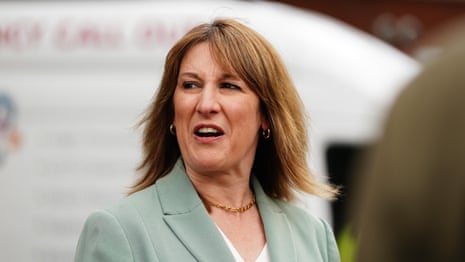
Nigel Farage has seized on an extraordinary confrontation involving Rachel Reeves after the Chancellor was heckled during a public appearance, turning an awkward moment for the Labour government into another opportunity to attack its economic record.
The incident quickly became political theatre.
Reeves was visiting a petrol station in Leeds after announcing that a planned increase in fuel duty would be scrapped. During a media interview, a man in a van, apparently supporting Reform UK, repeatedly shouted criticism at the Chancellor and called for Keir Starmer and Labour to leave office.
Rather than allowing the episode to disappear, Farage embraced it.
He publicly said he would like to buy the heckler a pint and asked whether anyone knew how to find him.
For Farage, the moment offered something politically valuable: a vivid demonstration of the anger that he believes exists among voters who feel ignored by Westminster.
But the incident also revealed something more complicated about modern British politics.
It showed how economic frustration, political distrust and increasingly aggressive political rhetoric can collide in public.
The Heckling Incident
The confrontation happened while Reeves was speaking to journalists at a petrol station in Leeds.
The Chancellor had been discussing the government’s decision to scrap a planned fuel-duty increase, a measure intended to provide some relief to motorists and households facing pressure from living costs.
During the broadcast, a man driving a van interrupted her.
He shouted anti-Labour slogans and repeatedly invoked Farage’s name. As he drove away, he continued criticising the government and questioning whether he might be arrested. He also referred to the St George’s flags displayed on his vehicle.
Reeves responded by defending the importance of good manners.
She said that she loved the country and argued that good manners were part of being British.
Her response was subsequently widely discussed because it represented a sharp contrast with the aggressive tone of the heckler.
The incident might have ended there.
Instead, Farage intervened.
Farage’s Response
Farage’s reaction was deliberately provocative.
Rather than condemning the heckler’s behaviour, he appeared to embrace the anger behind it.
His suggestion that he would buy the man a pint was clearly intended as political theatre.
The message was simple: Farage believes the man’s anger reflects a wider dissatisfaction with Labour.
That is an important part of Reform UK’s political strategy.
The party wants to position itself as the voice of people who believe that established politicians no longer understand ordinary life.
The heckler therefore becomes more than an individual.
For Farage’s supporters, he can be presented as an example of the frustration felt by motorists, workers and taxpayers.
For critics, however, the episode raises questions about whether politicians should encourage confrontational behaviour simply because it benefits them politically.
Why Rachel Reeves Has Become a Target
Reeves occupies an especially vulnerable position.
As Chancellor, she is responsible for decisions that directly affect household finances.
Taxes, fuel duty, government spending and the broader economy are all issues that voters can connect to their daily lives.
That makes her a natural target for Reform.
Farage has repeatedly argued that Labour is making life more expensive for ordinary people.
His economic message focuses heavily on taxation, government spending and the cost of living.
He wants voters to associate Labour with higher costs and Reform with lower taxes and a smaller state.
The petrol-station confrontation therefore fitted perfectly into his wider political narrative.
A motorist angry with the government is precisely the kind of voter Farage wants to reach.
Fuel Duty Is a Powerful Political Issue
Fuel duty has particular political importance because it is immediately visible.
When petrol or diesel becomes more expensive, motorists notice.
The consequences can extend beyond the individual driver.
Businesses that depend on transport face higher costs.
Delivery companies face higher operating expenses.
Tradespeople may have to spend more simply travelling between jobs.
Higher transportation costs can eventually feed into the prices of goods.
That is why fuel taxation has always been politically sensitive.
Reeves’s decision to scrap the planned increase was designed to demonstrate that the government understood the pressure facing households.
But Farage can still argue that Labour should go further.
He can say that taxpayers should not be celebrating the cancellation of a tax rise in the first place.
That is the political advantage of opposition.
Farage’s Broader Economic Argument
The incident fits neatly into Reform UK’s broader economic philosophy.
Farage argues that Britain has a government that takes too much money from citizens while delivering insufficient value in return.
Reform’s programme has increasingly focused on reducing government spending, cutting taxes and reforming welfare.
The party has also sought to portray itself as the political movement of working people who believe the tax system no longer rewards effort adequately.
That message has become increasingly important as Reform attempts to move beyond its original Brexit-focused identity.
The party wants to build a coalition of voters who are unhappy with the political establishment for different reasons.
Some are concerned about immigration.
Others are worried about taxation.
Some are angry about public services.
Others simply believe Labour and the Conservatives have failed.
Farage’s political skill lies in bringing those grievances together.
The Problem With the Heckler’s Approach
However, there is an important distinction between political frustration and political abuse.
Reeves was subjected to personal heckling while attempting to conduct a public interview.
Her response emphasised civility and good manners.
That is significant because British political culture has traditionally placed considerable value on public debate conducted without intimidation.
The incident therefore raises a difficult question.
How far should politicians encourage anger from their supporters?
Farage’s response may have been effective as political communication, but it also risks reinforcing a political environment in which confrontation becomes normal.
If every angry public encounter becomes a political victory for one side, politicians have an incentive to encourage increasingly dramatic confrontations.
That does not necessarily produce better politics.
The Other Side of the Argument
Yet there is another interpretation.
Many voters genuinely are angry.
They may feel that politicians speak in carefully prepared language while ordinary families struggle with high costs.
They may believe that governments repeatedly promise improvement but fail to deliver it.
They may feel that political institutions are distant from everyday life.
The heckler’s behaviour may therefore have been excessive, but the underlying frustration should not automatically be dismissed.
Indeed, even Conservative politicians defended Reeves’s right to be treated respectfully while acknowledging that voters had legitimate reasons to be dissatisfied with the government.
Mel Stride, the Conservative shadow chancellor, supported Reeves’s response on the question of manners while also arguing that people had genuine reasons to be disappointed with Labour’s economic performance.
That distinction is important.
A democracy needs to protect both political debate and political disagreement.
People have every right to be angry with their government.
But politicians also have a responsibility to maintain standards of public discourse.
Farage’s Political Instinct
The reason Farage’s response attracted so much attention is that he instinctively understands the power of political symbolism.
He did not need to produce a long economic speech.
He did not need to release a detailed policy paper.
One short comment about buying the heckler a pint allowed him to associate himself with the anger visible in the footage.
That is classic Farage politics.
His strength has always been his ability to translate complicated political arguments into simple emotional messages.
For supporters, the message is:
“I understand why you are angry.”
For opponents, the message is:
“Farage is encouraging political hostility.”
Either way, Farage wins attention.
Labour’s Difficult Position
For Reeves, the episode creates a difficult communications problem.
If she ignores the heckler, she risks appearing disconnected from the anger surrounding her government.
If she responds aggressively, she risks escalating the confrontation.
If she emphasises politeness, critics can accuse her of lecturing ordinary people.
Yet her response was relatively restrained.
She did not engage in a prolonged argument.
Instead, she returned to the theme of British manners.
That allowed her to present herself as the calmer figure in the encounter.
Whether that works politically is another question.
Modern political communication is often driven by short video clips rather than detailed explanations.
The most memorable moment can easily become more important than the policy being announced.
Reform’s Opportunity
For Reform UK, the incident represents an opportunity to reinforce its political identity.
The party wants to argue that the establishment is increasingly disconnected from ordinary people.
A heckler confronting the Chancellor at a petrol station provides powerful imagery for that argument.
It is far more emotionally immediate than a parliamentary debate.
The setting matters too.
A petrol station is not Westminster.
It is an everyday environment associated with household expenses.
That makes the confrontation particularly useful for Farage’s political narrative.
It allows him to shift the discussion from abstract economic policy to the practical experience of paying for fuel.
The Politics of the Cost of Living
The deeper issue is the cost of living.
Although inflation rates can fall, households do not necessarily feel that their lives have become affordable again.
Prices can stop rising as quickly without returning to previous levels.
That distinction is politically important.
A government can point to improving economic indicators.
A household can still say:
“Everything is more expensive than it used to be.”
Farage has repeatedly attempted to exploit this gap between official economic statistics and people’s personal experiences.
Reeves faces the opposite challenge.
She must persuade voters that government policy can improve their living standards over time.
That is much harder than announcing a single tax change.
The Battle Over Economic Credibility
The wider political fight is therefore increasingly about credibility.
Labour wants to portray itself as the party capable of managing the economy responsibly.
Reform wants to portray itself as the party capable of breaking with an economic model that it considers fundamentally broken.
Farage argues that government has become too large.
Labour argues that government investment is necessary.
Reform advocates lower taxes.
Labour argues that public services need adequate funding.
Reform emphasises personal responsibility and welfare reform.
Labour emphasises social protection.
These are fundamentally different visions.
The heckling incident simply provided a dramatic backdrop for that much larger argument.
Why Farage’s Reaction Matters
It would be easy to dismiss Farage’s comment about buying the heckler a pint as a joke.
But politically, it is more significant than that.
Farage is signalling solidarity with a particular type of voter: someone who is openly hostile to Labour, distrustful of Westminster and prepared to express that anger publicly.
That voter is central to Reform’s electoral strategy.
The party does not necessarily need every voter to agree with every policy.
It needs to persuade enough people that Reform represents the clearest vehicle for rejecting the political establishment.
Farage’s response reinforces exactly that message.
The Risk of Polarisation
There is nevertheless a danger for everyone involved.
British politics is already highly polarised.
Social media rewards outrage.
Short videos of confrontations travel much faster than detailed policy explanations.
Politicians therefore have incentives to turn every disagreement into a dramatic political spectacle.
The danger is that political debate becomes less about solving problems and more about identifying enemies.
The Reeves incident illustrates that risk.
A disagreement about fuel duty became a confrontation about Labour, Farage, patriotism, manners and national identity.
That may generate clicks and political attention.
It does not necessarily improve public understanding of economic policy.
What Reform Must Prove
For all the effectiveness of Farage’s rhetoric, Reform eventually faces a more difficult test.
It must show what it would actually do in government.
Mocking Reeves is easy.
Explaining how to manage Britain’s £2 trillion-plus public finances is much harder.
Promising tax cuts is easy.
Identifying the spending reductions needed to fund them is harder.
Criticising Labour’s economic record is easy.
Producing better economic outcomes is the real test.
This is why the role of Robert Jenrick, Reform’s would-be chancellor, is so important.
Farage can provide the political message.
Jenrick must provide the numbers.
The Conservative Question
The Conservatives are caught between Labour and Reform.
They can defend Reeves against excessive political abuse while still criticising her economic policies.
That is precisely what Mel Stride did.
But every time Conservatives acknowledge the legitimacy of concerns raised by Reform supporters, they risk reinforcing Reform’s argument that the traditional parties have failed to address those concerns.
The Conservatives therefore need to distinguish themselves from both Labour and Reform.
That is an increasingly difficult task.
A New Political Style
The incident also demonstrates how British political campaigning is changing.
Traditional politics relied heavily on speeches, parliamentary debates and newspaper interviews.
Modern politics is increasingly visual.
A few seconds of footage can define an entire political story.
The angry motorist.
The Chancellor’s response.
Farage’s joke.
Each moment can be separated from the wider context and circulated independently.
This gives politicians like Farage an advantage because he is exceptionally comfortable operating in that environment.
He understands how to turn an incident into a political message.
Conclusion
Nigel Farage’s response to the heckling of Rachel Reeves was more than a provocative joke.
It was a carefully instinctive piece of political communication.
By saying he would like to buy the heckler a pint, Farage associated himself with the anger directed at the Chancellor and reinforced Reform UK’s central message: that large numbers of voters feel frustrated, overtaxed and ignored by the political establishment.
Reeves, meanwhile, attempted to take the opposite approach.
Her appeal to good manners presented her as the defender of civility and public standards, while Conservative figures also acknowledged that political disagreement should not become personal abuse.
But beneath the argument over manners lies a much bigger political conflict.
Britain is debating the size of government, the level of taxation, the cost of living and the future direction of the economy.
Reform believes the answer is a smaller state, lower taxes and much tougher reforms.
Labour believes government must retain the capacity to invest in public services and protect households while maintaining fiscal discipline.
The confrontation at the petrol station simply gave those competing visions a dramatic human face.
For Farage, it was an opportunity to say that the anger directed at Reeves represents something larger.
For Labour, it was a reminder of the intensity of public frustration.
And for voters, it offered a glimpse of the increasingly combative political environment that is likely to define Britain’s next electoral battle.
The real question is not whether Farage can mock Rachel Reeves.
He clearly can.
The real question is whether he can convert that anger into lasting political support—and, ultimately, whether Reform can turn its powerful opposition rhetoric into an economic programme capable of delivering results once it is no longer standing outside government.
That is the challenge Farage now faces.
Winning the argument against Rachel Reeves is one thing. Convincing Britain that Reform can do better is another.
Leave a Reply
You must be logged in to post a comment.