


Nigel Farage and the Political Pressure He Puts on the Left
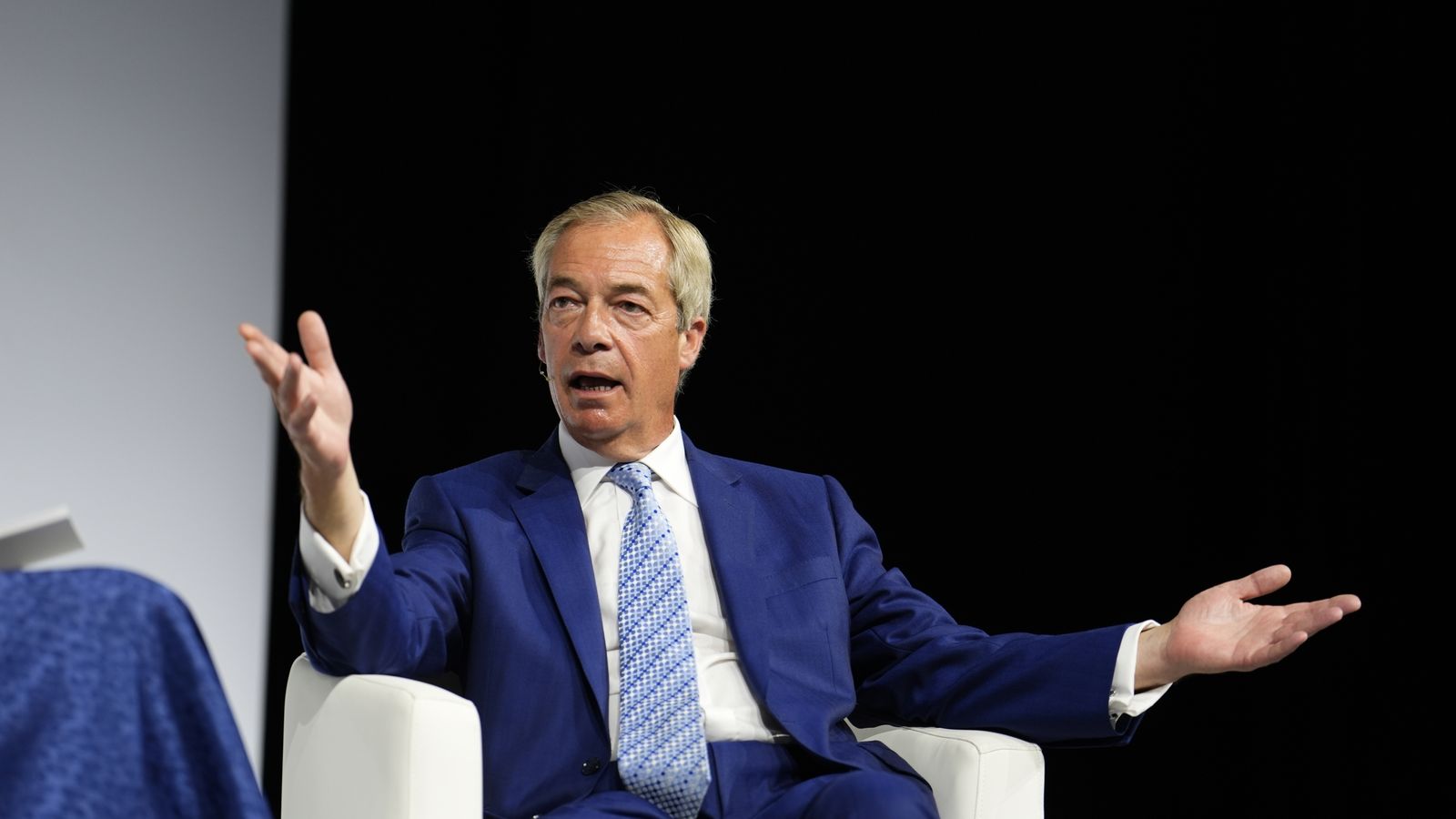
Nigel Farage has spent much of his political career being underestimated. For years, he was treated by many opponents as a colourful outsider, a provocateur whose influence would eventually fade. Yet that prediction has repeatedly proved wrong. From his role in the campaign for Brexit to the rise of Reform UK, Farage has demonstrated an unusual ability to shape Britain’s political conversation, often forcing established parties to respond to issues they would rather avoid.
This helps explain why his political presence can provoke such strong reactions among his opponents. The language surrounding him is frequently emotional: critics accuse him of dividing the country, exploiting public anxieties and pushing British politics towards the right. Supporters, by contrast, see him as a politician willing to say what others are afraid to say. Whatever one’s personal view of Farage, it is difficult to deny that he has become one of the most consequential figures in modern British politics.
There are two major reasons why Farage appears to remain particularly capable of getting under the skin of his political opponents.
First, Farage Has Changed the Political Agenda
The first reason is simple: Farage has repeatedly succeeded in moving political debate onto territory where the established parties are uncomfortable.
Immigration is perhaps the clearest example. For many years, immigration was discussed by Britain’s major political parties in relatively cautious terms. Farage and the parties he led or influenced placed the issue much closer to the centre of political debate. His arguments about border control, national sovereignty and the consequences of large-scale immigration attracted substantial support, but they also generated fierce opposition.
This tension became especially visible during the Brexit campaign. Farage was one of the most recognisable figures associated with the Leave movement, and immigration became one of the central subjects of the referendum debate. His political strategy was controversial, but it was undeniably effective in attracting attention to questions about Britain’s relationship with the European Union and its ability to control immigration.
Farage’s influence has continued beyond Brexit. Reform UK has sought to appeal to voters who believe that the traditional Conservative and Labour parties have failed to address concerns about immigration, public services, taxation, political accountability and the cost of living. The party’s rise has therefore created a difficult problem for the established parties: ignoring Reform risks allowing it to grow, while attacking it can give Farage even more publicity.
This is an important part of his political effectiveness. Farage does not necessarily need his opponents to agree with him. In many cases, he benefits simply from forcing them to talk about the subjects he has chosen.
The reaction to him can consequently become part of the political story itself. Every denunciation, every heated television debate and every attempt to portray him as irrelevant can provide additional exposure. His opponents may believe that they are damaging his reputation, while his supporters may interpret the same criticism as evidence that he is challenging an established political consensus.
This is a familiar pattern in populist politics. A politician presents himself as an outsider fighting an entrenched establishment. The stronger the establishment’s resistance appears, the easier it becomes for the outsider to claim that he is genuinely threatening the existing order.
Second, Farage Has Demonstrated Electoral Resilience
The second reason is Farage’s remarkable political resilience.
Few British politicians have experienced as many apparent setbacks while continuing to return to the centre of national politics. Farage has been associated with several political organisations and has experienced electoral defeats, leadership changes and periods when commentators predicted that his influence had reached its peak.
Yet he has repeatedly reinvented himself.
His political career illustrates the difference between winning individual elections and changing the political environment. Even when Farage himself was not winning parliamentary seats, the political movements surrounding him could influence the policies and strategies of much larger parties.
The Brexit referendum was the most dramatic example. Farage did not personally become prime minister, but the campaign he had supported helped transform British politics. The referendum result forced successive governments to devote years to negotiating Britain’s departure from the European Union.
His later involvement with Reform UK demonstrated that his political appeal had not simply disappeared after Brexit. Instead, he found a new political vehicle through which to campaign on many of the same themes: immigration, national sovereignty, dissatisfaction with Westminster and frustration with the political establishment.
This persistence is one reason his opponents cannot easily dismiss him.
A politician who disappears after one unsuccessful campaign can be ignored. A politician who repeatedly returns, attracts media attention and influences the behaviour of larger parties is much harder to contain.
That is particularly uncomfortable for Labour and the Conservatives because Reform’s success can threaten both parties in different ways. Labour can lose voters in communities where concerns about immigration, national identity and economic insecurity are strong. The Conservatives can lose voters who previously regarded them as the natural home of the political right but now see Reform as more willing to challenge the establishment.
In this sense, Farage does not need to replace every traditional party in order to have an impact. He only needs to make their electoral calculations more difficult.
Why the “Meltdown” Narrative Is Powerful
The expression “meltdown on the Left” is itself part of the political contest. Supporters of Farage frequently portray strong criticism of him as proof that the political establishment is frightened by his success. His opponents, meanwhile, may argue that describing criticism as a “meltdown” is simply a rhetorical technique designed to make legitimate disagreement look hysterical.
There is truth in both observations.
Political language is rarely neutral. When Farage’s supporters say that opponents are “melting down”, they are not merely describing an emotional reaction. They are constructing a story in which Farage represents the challenger and his critics represent an establishment desperate to defend its position.
That story can be politically effective because it reinforces Farage’s outsider identity.
At the same time, it is important not to assume that every criticism of Farage is motivated by fear. Many people oppose his policies because they genuinely disagree with his approach to immigration, Brexit, international relations or the role of government. Strong disagreement is not automatically evidence that someone has been politically defeated.
A serious assessment of Farage therefore requires separating political theatre from political substance.
His supporters are right to point out that he has had an extraordinary influence on British politics. His critics are equally entitled to challenge the consequences of the policies he promotes.
Farage’s Larger Challenge to British Politics
The deeper significance of Farage may ultimately be less about Nigel Farage himself and more about what his rise says about Britain.
His success reflects a broader dissatisfaction with traditional political institutions. Many voters feel that mainstream parties have become too similar, too cautious or too disconnected from everyday concerns. Others are frustrated by the pace of political change and believe that questions of borders, national identity and democratic accountability have not been adequately addressed.
Farage has been particularly successful at giving these frustrations a political vocabulary.
That does not mean every voter who supports Reform agrees with everything Farage says. Nor does it mean that every criticism of mainstream politics is justified. Politics is more complicated than the slogans used during election campaigns.
But the continuing appeal of Farage demonstrates that dismissing dissatisfied voters is unlikely to make their concerns disappear.
Indeed, one of the most important lessons of recent British politics is that voters who feel ignored can eventually find alternative political representatives. Established parties may dislike the messenger, but they cannot permanently ignore the message.
Conclusion
Nigel Farage remains a deeply divisive figure, but his political importance cannot reasonably be dismissed. His ability to influence the national agenda and repeatedly return from apparent political setbacks explains why he continues to command attention.
The two reasons he appears to get under the skin of his opponents are therefore closely connected. First, he has repeatedly forced mainstream politicians to confront subjects—particularly immigration, sovereignty and distrust of Westminster—that they might prefer to discuss on their own terms. Second, his remarkable resilience means that attempts to dismiss him have repeatedly failed to make him disappear.
Whether one considers Farage a necessary challenger to Britain’s political establishment or a dangerous force within it, his impact is undeniable. His career demonstrates that political influence is not measured only by the number of parliamentary seats a politician personally wins. Sometimes influence is measured by how dramatically other politicians are forced to change their behaviour in response.
That may be the most significant reason Farage continues to provoke such intense reactions. He has made himself difficult to ignore.
And in politics, being impossible to ignore can be a form of power in itself.