

Andy Burnham Handed Blueprint to Reverse Brexit with UK Joining ‘European Confederation’
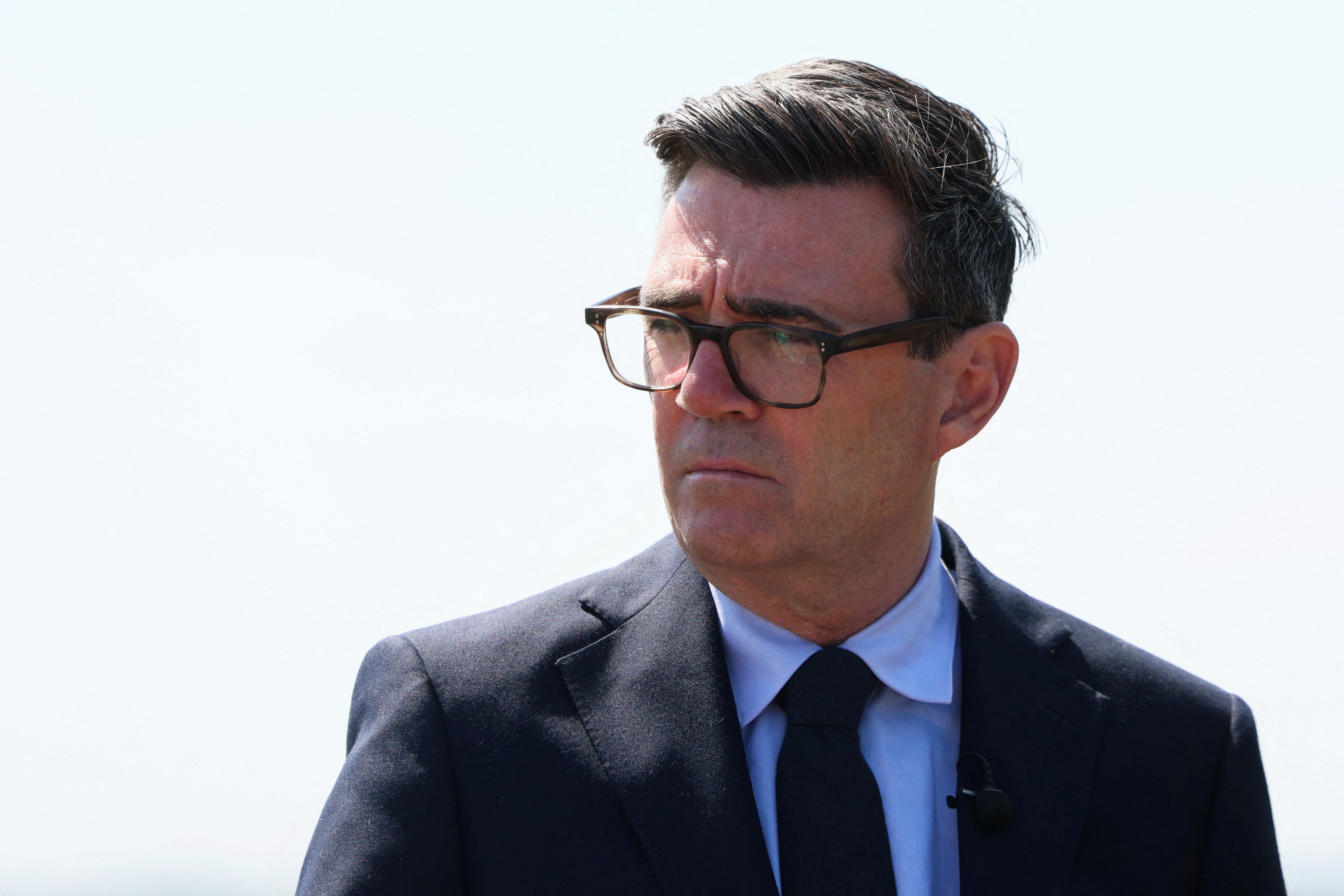
Andy Burnham has been handed a potentially explosive blueprint for reshaping Britain’s relationship with Europe, with a former Conservative politician proposing the creation of a new “European Confederation” that could bring the United Kingdom substantially closer to the European Union without formally restoring full EU membership.

The proposal has immediately reignited one of Britain’s most divisive political arguments: whether Brexit should remain the permanent settlement of the UK’s relationship with Europe, or whether Britain should gradually rebuild the economic and political links that were severed after the 2016 referendum.
For Burnham, the proposal presents an intriguing political opportunity — but also an enormous political risk.
The idea comes from former Conservative MP Nick Boles, who has argued for transforming the existing European Political Community into a treaty-based European Confederation. The proposed organisation would include EU and non-EU countries, creating what has been described as an “outer ring” around the European Union.
Under the concept, Britain would not simply rejoin the European Union.
Instead, it would become part of a new European structure that could provide substantial economic and security cooperation while allowing countries outside the EU to retain greater political independence.
That distinction is crucial.
For Brexit supporters, the proposal could look like a sophisticated attempt to reverse Brexit without actually using the politically toxic phrase “rejoining the EU”.
For supporters of closer European cooperation, however, it could offer something much more practical: a way for Britain to rebuild relationships with its nearest neighbours without immediately reopening the entire Brexit settlement.
And that is why Burnham has been presented with such a potentially significant political blueprint.
A new European “outer ring”
The proposal is based on an idea that Europe needs a new institutional structure capable of bringing together countries that are unwilling or unable to become full EU members.
The existing European Political Community already brings together the EU’s 27 member states and numerous non-EU countries. But it currently operates primarily as a forum for political discussions rather than as a powerful new European institution.
Boles’s proposal would go much further.
A European Confederation could provide a formal framework for cooperation between EU and non-EU countries on trade, security, defence and other strategic issues.
Britain could therefore occupy a position somewhere between its current status as a completely separate EU neighbour and its former position as a member state.
That could be politically attractive to a government seeking to reduce the practical costs of Brexit without openly declaring that Brexit was a mistake.
Under the proposal, Britain could regain access to the European single market for goods in return for making a much stronger contribution to European defence. The plan envisages Britain committing around 3.5 per cent of GDP to defence while using its military capabilities to contribute to the security of the wider continent.
That is an extraordinary proposition.
Britain would effectively be offering one of its greatest strategic assets — its military capability — in exchange for substantially deeper economic integration with Europe.
The political argument would be straightforward.
Britain has one of Europe’s largest economies and most capable armed forces. The EU has enormous economic weight but has historically depended heavily on individual member states and NATO for defence. A new confederation could therefore combine Britain’s military strength with Europe’s economic power.
Supporters would describe that as a mutually beneficial partnership.
Critics would ask why Britain should make such commitments after deliberately voting to leave the EU.
Burnham’s European dilemma
The proposal arrives at an interesting moment for Burnham.
His Government is already signalling a desire for a significantly deeper relationship with Brussels.
New EU minister Hamish Falconer has said Labour wants to accelerate and deepen Britain’s post-Brexit relationship with the EU, particularly in areas such as services, professional qualifications and worker mobility. However, the Government continues to insist that it will not rejoin the single market or customs union and will not restore free movement.
That means Burnham is already attempting to move Britain closer to Europe while maintaining clear political boundaries around Brexit.
The European Confederation proposal could potentially offer another route.
Rather than asking Britain to rejoin the EU, it would create an alternative structure in which Britain could participate more deeply while remaining outside the Union.
But that is exactly why Brexit supporters are likely to be suspicious.
If Britain regained substantial access to the single market, accepted common rules in important sectors and participated in a European political structure, critics could argue that the practical consequences of Brexit were being dismantled piece by piece.
The Government could respond that Britain would remain outside the EU’s institutions and would retain national sovereignty.
The political argument would then become much more complicated.
What exactly does Brexit mean if Britain remains outside the EU but gradually reconstructs many of the economic and strategic relationships it previously had with the bloc?
That question could dominate British politics again.
The economic case for closer Europe
There is a powerful economic argument behind the proposal.
Britain remains geographically and economically intertwined with Europe. The EU is Britain’s largest nearby trading bloc, and Brexit introduced new administrative barriers for companies trading across the Channel.
Businesses have repeatedly complained about customs procedures, paperwork and additional costs.
A closer relationship could therefore potentially make British exports easier and reduce some of the friction created by Brexit.
The argument is particularly strong for manufacturing, food, agriculture and other industries that depend on cross-border trade.
Even within Parliament, supporters of closer cooperation have argued that Brexit has increased costs for British businesses and made European trade more complicated. Parliamentary debates in 2026 have included calls for a much more ambitious UK-EU relationship, including closer regulatory alignment, a customs union and greater access to the single market.
But the Government has so far resisted going that far.
That restraint reflects political reality.
The referendum produced a clear decision to leave the European Union. Millions of voters who supported Brexit did so because they wanted Britain to control its own laws, borders and trade policy.
Any government attempting to reverse that settlement would therefore face enormous opposition.
Burnham knows this.
His political challenge is to determine how much closer Britain can move towards Europe without alienating voters who regard Brexit as an essential expression of national sovereignty.
Defence could be the key
One of the most interesting aspects of the European Confederation proposal is that it does not focus exclusively on economics.
It is also a response to the changing security environment in Europe.
Russia’s war against Ukraine has transformed the strategic debate across the continent. European countries are increasingly concerned about their ability to defend themselves and about the future of American involvement in European security.
Britain remains one of Europe’s most powerful military nations.
That gives London considerable leverage in any new European security arrangement.
Under the proposed confederation, Britain could contribute significantly to European defence while receiving greater economic integration in return.
Ukraine would also have a role in the proposed structure, potentially contributing its substantial military experience while continuing on a path towards eventual EU membership. Norway, Switzerland, Albania and Serbia have also been mentioned as possible participants alongside the UK and EU countries.
The result would be a much broader European organisation than the EU itself.
It would include countries with different political systems, different economic relationships with Brussels and different ambitions for eventual EU membership.
That could make it both more flexible and more difficult to manage.
Is this really Brexit reversal?
This is where the political battle will become most intense.
Brexit supporters are likely to argue that the proposed confederation is simply Brexit in reverse.
They could point to access to the single market, closer political cooperation and stronger institutional ties as evidence that Britain would be moving back towards the European system it deliberately left.
The counterargument is that Britain could enjoy closer cooperation without surrendering sovereignty.
The UK would not necessarily become an EU member. It could remain outside the European Commission, European Parliament and other EU institutions.
That distinction matters.
Britain’s relationship with Europe does not have to be binary.
It is possible to be outside the EU while maintaining very close economic and security relationships with it. Countries such as Norway and Switzerland already demonstrate that different forms of European integration are possible.
The question is whether British voters would accept such an arrangement.
Reform UK will seize on the proposal
For Nigel Farage and Reform UK, the European Confederation idea would provide an obvious political target.
Farage has spent decades arguing that Britain should be independent from Brussels. His political identity remains closely associated with Brexit.
A proposal that could restore single-market access and create a new European political structure would therefore give Reform an opportunity to accuse Labour of attempting to undo Brexit by stealth.
The Conservatives would face a similar dilemma.
They could oppose the proposal and position themselves as defenders of Brexit.
But if they oppose every form of closer cooperation with Europe, they could alienate businesses and voters who want practical improvements to Britain’s trading relationship with the continent.
The political centre of gravity may therefore be shifting.
The old argument was “Leave versus Remain”.
The new argument could be:
How close to Europe should Britain become after Brexit?
That is a much more complicated question.
Burnham has a difficult choice
For Burnham, the European Confederation proposal could become an attractive long-term idea.
He could argue that Britain does not need to choose between complete separation from Europe and full EU membership.
Instead, Britain could become part of a new European partnership based on trade, defence and shared interests.
That would fit neatly with Burnham’s broader political emphasis on economic renewal and regional development.
British businesses could potentially benefit from easier European trade.
British universities could potentially benefit from deeper cooperation.
British defence capabilities could play a larger role in shaping European security.
And Britain could potentially regain influence over European affairs without formally returning to the EU.
But there would be costs.
Greater access to European markets inevitably comes with negotiations over rules and standards. Greater defence commitments require enormous spending. And any arrangement involving greater economic integration could reignite arguments over immigration and free movement.
The Government would therefore need to negotiate extremely carefully.
A political gamble of enormous proportions
The most important point is that the European Confederation does not currently represent a settled government policy.
It is a proposal for a new European structure, not an announcement that Britain is about to rejoin the EU.
That distinction should not be lost amid the political excitement.
Nevertheless, the fact that such an idea is now being seriously discussed demonstrates how dramatically Britain’s European debate has changed.
Only a few years ago, the central political question was how Britain would complete its departure from the EU.
Now politicians and commentators are discussing entirely new structures for bringing Britain closer to Europe.
Burnham’s Government has already indicated that it wants a deeper relationship with Brussels, while maintaining its formal red lines around EU membership.
The European Confederation idea could push that debate considerably further.
It offers a vision of Europe in which Britain does not return to the EU but nevertheless becomes deeply integrated into the continent’s economic and security architecture.
For some voters, that could represent pragmatic common sense.
For others, it could be seen as an unacceptable betrayal of Brexit.
Either way, the proposal has the potential to reopen one of Britain’s most consequential political arguments.
The Brexit referendum may have answered the question of whether Britain should remain in the European Union.
It did not answer the much larger question of what Britain’s relationship with Europe should look like after leaving.
Andy Burnham now has a blueprint for answering it.
A European Confederation could offer Britain a new place in Europe — closer than it is today, but outside the EU itself.
Whether that represents a sensible new settlement or a backdoor route towards reversing Brexit will depend entirely on who is looking at it.
For Burnham, however, one thing is certain: the European question is returning to the centre of British politics.