
Farage Rages as Police Decision on Zack Polanski Sparks “Communist Russia” Warning

Nigel Farage has launched a furious attack on the police after officers decided to take no further action against Green Party leader Zack Polanski over a controversial social-media post featuring an image of a guillotine and a reference to the Reform UK leader.
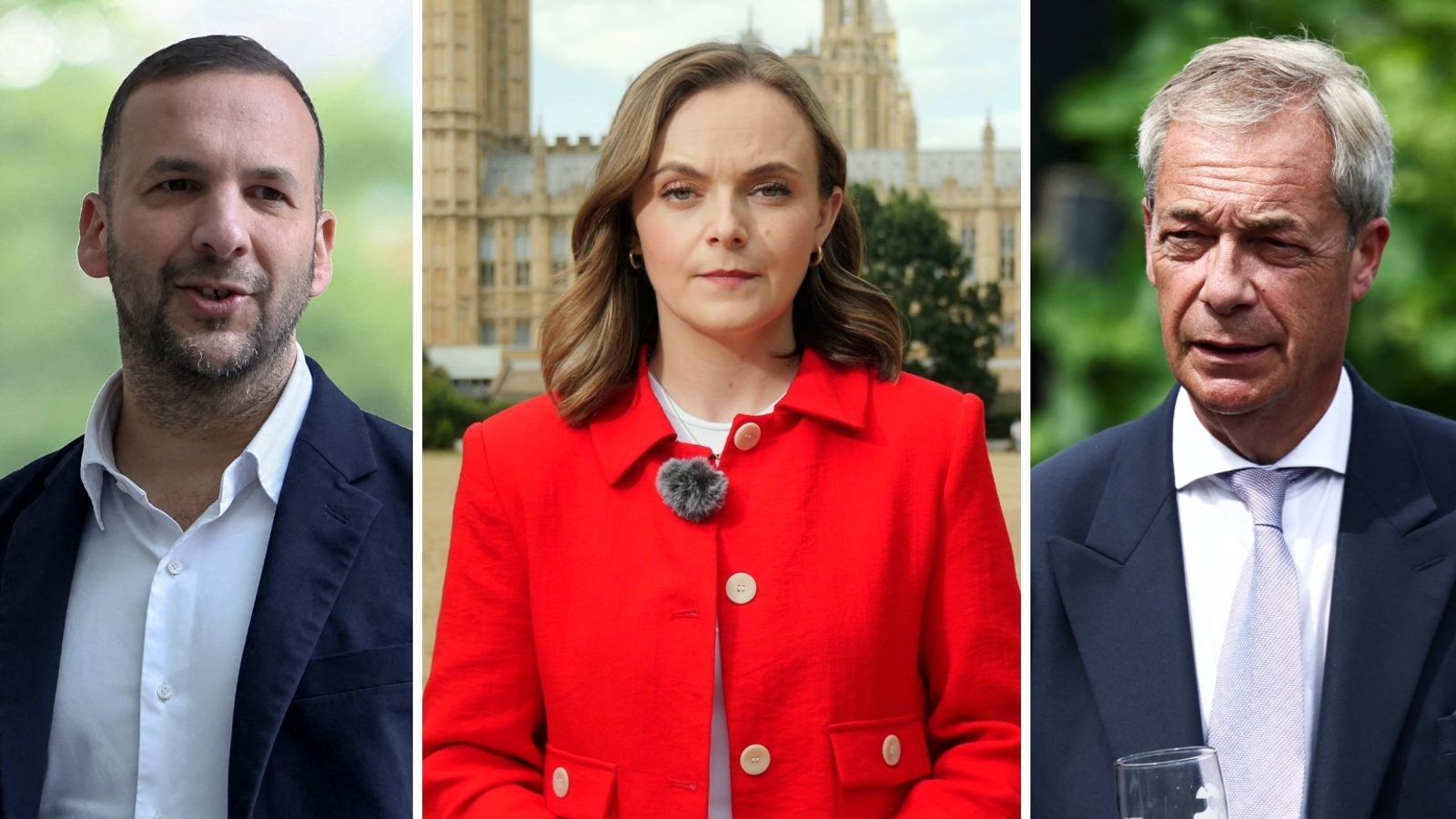
The decision has reignited a bitter political argument about free speech, political intimidation and the role of the police in dealing with provocative material shared online. Farage and Reform UK have argued that the decision demonstrates a dangerous double standard, while Polanski has maintained that the image was shared accidentally and that he did not intend to encourage violence.
The controversy began after Polanski shared an Instagram post containing a photograph of a man wearing a T-shirt depicting a guillotine alongside the words “we’re only making plans for Nigel”. The reference was widely understood to relate to Farage. Reform UK subsequently reported the matter to police, alleging that the material could amount to incitement to violence. The Metropolitan Police initially made enquiries before deciding that Polanski himself would face no further action.
The decision has been particularly controversial because the political climate in Britain has become increasingly tense. Farage has argued that politicians face genuine threats and that language or imagery suggesting violence should be treated extremely seriously.
For the Reform leader, the issue is therefore not simply an offensive T-shirt or an ill-judged social-media post. He believes it raises a wider question about whether the police apply the same standards to politicians from different parts of the political spectrum.
That is where Farage’s rhetoric has become particularly explosive.
He has compared aspects of the British situation to authoritarian political systems, arguing that the police risk becoming political rather than impartial. His supporters have seized on the decision as evidence of what they describe as “two-tier policing”, a phrase that has become increasingly prominent in Reform’s political vocabulary.
Yet the police decision itself was more nuanced than the most inflammatory political reaction suggests.
The Metropolitan Police concluded that Polanski’s sharing of the image did not meet the threshold for criminal prosecution. However, police did record a crime relating to the appearance of the T-shirt itself at an event in Bristol and referred that aspect of the matter to Avon and Somerset Police. That force subsequently decided that no further action should be taken after considering the available evidence.
This distinction is important.
It means that police did not simply ignore the controversy. They considered the material, assessed whether criminal offences had been committed and concluded that the evidence did not justify prosecution.
That is very different from declaring that the image was acceptable or that political threats should not be investigated.
The controversy nevertheless highlights the difficult boundary between offensive political expression and criminal conduct.
Britain protects freedom of expression, including political speech that many people may find offensive or provocative. Politicians are regularly subjected to harsh criticism, satire and deliberately provocative imagery. The existence of offensive political expression does not automatically mean that a criminal offence has occurred.
At the same time, freedom of expression does not provide unlimited protection for genuine threats or encouragement of violence.
The challenge for police is determining where that boundary lies.
In this case, Polanski said that the image had been shared inadvertently as part of a wider gallery. He removed it after becoming aware of the controversial picture and said that he opposed political violence. The police ultimately concluded that the legal threshold for further action had not been reached.
That explanation has done little to satisfy Farage.
The Reform leader has argued that the symbolism cannot simply be dismissed as a joke, particularly given the increasingly hostile political environment. His concerns are understandable in the broader context of threats directed at politicians in recent years.
Political violence is not an abstract concern.
The murder of Reform MP Ann Widdecombe has intensified anxiety within Farage’s party and across Westminster. Politicians from several parties have increasingly warned that inflammatory rhetoric can create an atmosphere in which threats become normalised.
That makes the guillotine image particularly sensitive.
Even if there was no criminal intent, critics can reasonably argue that politicians should exercise exceptional care when sharing material that depicts violence against another political leader. Social media can transform an apparently trivial mistake into a national controversy within hours.
Polanski has defended his explanation that the image was an inadvertent inclusion. But Farage’s argument is that political leaders have a responsibility for what appears on their accounts, regardless of whether they personally selected every individual photograph.
This raises a broader question about political accountability in the digital age.
Should a politician be held responsible for every image included in a social-media gallery? How much responsibility should political leaders have for content prepared by staff, photographers or collaborators? And when does an apology become necessary even if no criminal offence has been committed?
There are no easy answers.
The police, meanwhile, must operate according to evidence and the law rather than political pressure.
That principle is essential.
If politicians could determine whether opponents were investigated simply by making public accusations, policing could quickly become politicised. A Reform leader should not be able to order the arrest of a Green leader, just as a Green leader should not be able to demand police action against a Reform politician merely because he dislikes something they have said.
The same rules must apply to everyone.
This is precisely why the police decision may ultimately be more defensible than Farage’s rhetoric suggests.
The Met was asked to investigate. It did so. Officers concluded that the threshold for criminal action had not been met. Avon and Somerset Police subsequently considered the separate issue relating to the photograph and reached the same broad conclusion.
That does not prevent Farage from criticising the decision.
Politicians are entitled to argue that existing laws are inadequate or that police forces are interpreting them incorrectly. But there is an important difference between criticising a police decision and claiming that the entire police service has become equivalent to an authoritarian regime.
The latter risks undermining public confidence in policing without necessarily providing evidence that officers acted unlawfully or politically.
Farage’s supporters will argue that his anger reflects a genuine concern about fairness.
They point to the contrast between the speed with which police investigated the controversy and the apparent reluctance to pursue certain other politically sensitive cases. Such comparisons can fuel perceptions that policing is inconsistent.
But perceptions are not the same as evidence.
If Reform believes that policing is genuinely discriminatory, the appropriate response is to provide evidence, identify specific cases and propose reforms. Broad claims that Britain is becoming “Communist Russia” may generate headlines, but they do not necessarily establish that police officers have acted improperly.
This is particularly important because public trust in the police is already under pressure.
Police forces need to be seen as independent from political parties. They need to investigate credible allegations regardless of whether the suspect is a Reform politician, Green politician, Labour politician or ordinary member of the public.
Equally, politicians should be able to criticise police decisions without being treated as enemies of the state.
That balance is at the heart of a healthy democracy.
The Polanski controversy also illustrates the growing influence of social media on British politics. Political parties increasingly communicate directly with voters through Instagram, X and other platforms, bypassing traditional media organisations.
This has advantages.
Politicians can communicate instantly with supporters and respond to events without waiting for television interviews or newspaper coverage. But it also creates enormous risks. A photograph shared without sufficient scrutiny can become a political crisis within minutes.
Polanski’s experience is a powerful example.
Whether his explanation is accepted or not, the episode demonstrates that political leaders must understand the consequences of their digital activity. A post that appears humorous to one group can appear threatening to another, particularly when it involves a political opponent and imagery associated with execution.
The incident also demonstrates how quickly political disputes can become personal.
Farage and Polanski represent very different visions of British politics. Farage’s Reform movement is built around immigration control, national sovereignty and opposition to the political establishment. Polanski’s Greens emphasise environmental policy, wealth redistribution and a more left-wing political programme.
Their rivalry is therefore likely to continue.
The danger is that political competition becomes increasingly dominated by accusations, outrage and personal attacks rather than policy arguments.
Britain’s voters deserve better.
There is nothing wrong with fierce disagreement. In fact, democratic politics depends upon it. But disagreement must remain within boundaries that reject intimidation and violence.
The police also have a difficult responsibility.
They must protect politicians from genuine threats while resisting pressure to criminalise offensive but lawful political speech. If every provocative image or statement automatically triggered prosecution, legitimate political debate could be chilled.
Conversely, if genuine threats are dismissed as jokes, the consequences could be far more serious.
The Polanski case therefore sits directly on this difficult line.
The police have determined that criminal action is not justified. Farage believes that conclusion is wrong and has used it to raise much broader concerns about policing and political culture.
The public can reasonably debate both positions.
But the most important principle should remain clear: political opponents should not be threatened with violence, and police decisions should be based on evidence and law rather than party allegiance.
The controversy may now fade from the headlines, but the underlying argument is unlikely to disappear.
As political tensions rise, politicians will increasingly face questions about the material they share, the language they use and the consequences of their rhetoric. Farage’s anger demonstrates just how sensitive that environment has become.
For Polanski, the episode is a warning that even an accidental social-media mistake can have enormous political consequences.
For Farage, it is another opportunity to argue that the British establishment operates according to different rules for different people.
And for the police, it is a reminder that they must remain visibly independent while dealing with an increasingly polarised political environment.
The most important lesson is perhaps the simplest: political violence must never become normal, but neither should political disagreement automatically become a matter for criminal law.
Britain’s democratic system depends upon maintaining that distinction.
The police have made their decision. Farage is furious. Polanski remains under intense political scrutiny.
The debate over where free speech ends and intimidation begins, however, is far from over.