


Brexit Fury as Labour Signals a Deeper Relationship with the EU Under Andy Burnham
Britain’s Brexit debate has been reignited after a newly appointed Labour minister signalled that the Government intends to pursue a significantly closer relationship with the European Union under Prime Minister Andy Burnham. The announcement has immediately raised concerns among Brexit supporters, who fear that Labour’s approach could gradually reverse some of the political and economic separation created by Britain’s departure from the EU.
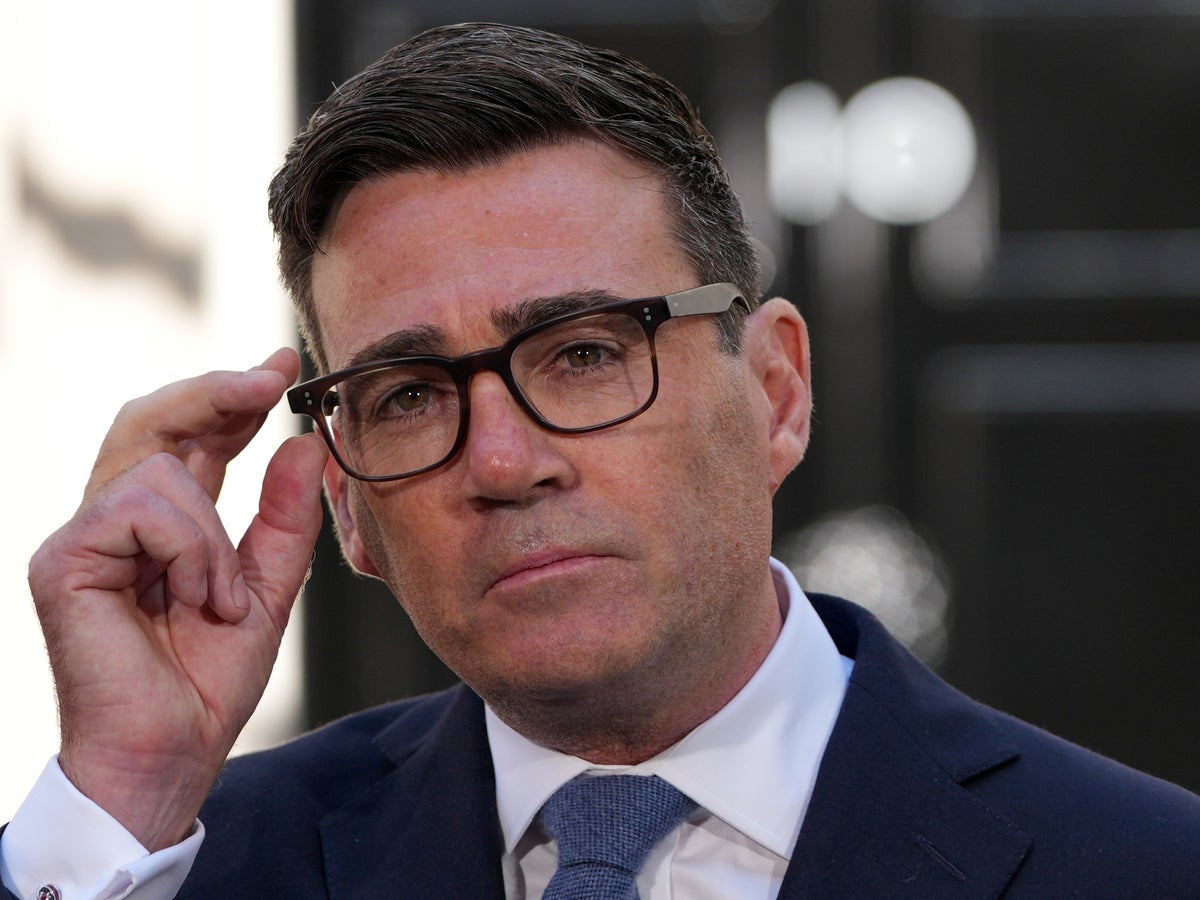
Hamish Falconer, the minister responsible for the Government’s EU reset talks, has said Labour wants to accelerate and deepen Britain’s relationship with Brussels. Although he stressed that the Government’s existing red lines remain in place, including no return to the single market or customs union, his comments point towards a more ambitious approach than the previous government adopted.
For Brexit supporters, that distinction may offer little reassurance.
The political argument is no longer simply about whether Britain will formally rejoin the European Union. The more immediate question is whether the country could gradually move towards closer regulatory, economic and institutional alignment without actually becoming an EU member again.
That prospect is likely to generate fierce debate.
Brexit was one of the most consequential political decisions in modern British history. The 2016 referendum divided the country and reshaped British politics for years afterwards. Supporters argued that leaving the EU would restore national sovereignty, allow Britain to control its borders and give Westminster greater freedom to set its own laws. Opponents warned that leaving the bloc would create trade barriers, reduce economic opportunities and weaken Britain’s influence in Europe.
Nearly a decade later, the argument has not disappeared.
Instead, it has changed form.
The question facing Burnham’s Government is whether Britain can reduce the economic friction created by Brexit while maintaining the political independence that Brexit supporters consider essential.
Falconer’s appointment is significant because he appears determined to make the EU relationship more ambitious. According to his recent comments, Labour wants to explore cooperation particularly in services, including issues such as the mutual recognition of professional qualifications and easier mobility for workers. He has also indicated that the Government wants to make progress on areas ranging from defence and security to climate policy and technology.
For businesses, this could potentially be welcome news.
One of the major difficulties created by Brexit has been the additional administrative and regulatory burden involved in trading with the EU. Britain remains outside the single market and customs union, meaning companies must operate under arrangements that are more complicated than those that existed before Brexit.
Reducing some of those barriers could help British exporters and service providers.
But the political consequences could be much more complicated.
Brexit supporters are likely to argue that every additional area of alignment risks undermining the principle of leaving the EU. If Britain begins accepting European standards, recognising EU qualifications and negotiating greater labour mobility, critics could ask what meaningful difference remains between Brexit and a much closer association with the bloc.
This is where the Government’s red lines become important.
Falconer has insisted that Labour is not seeking to rejoin the single market or customs union and does not intend to restore free movement.
Those commitments are designed to reassure voters who supported Brexit that the Government is not secretly preparing to reverse the referendum.
Yet the Government’s critics will probably argue that Brexit can be weakened gradually without being formally cancelled.
That argument is already visible in the broader debate about Britain’s relationship with Europe. Parliament’s own analysis of the UK-EU reset has noted that closer economic cooperation could reduce trade barriers while the Government continues to reject membership of the single market and customs union. The parliamentary report also highlighted the continuing political importance of the Government’s red lines.
In other words, Britain can move closer to Europe without formally returning to the EU.
That is precisely what makes the issue politically explosive.
For Burnham, the economic argument may be particularly attractive. His political strategy places strong emphasis on industrial policy, regional development and improving living standards outside London. A closer trading relationship with Britain’s largest neighbouring economic bloc could potentially support that agenda.
The Guardian has previously argued that Burnham’s emphasis on industrialisation and economic sovereignty could paradoxically lead Britain towards a closer relationship with Europe, even while maintaining the formal Brexit red lines.
This presents an interesting political paradox.
Brexit was partly justified as a way of giving Britain greater control over its economic future. Burnham could argue that genuine economic sovereignty means choosing whatever international relationships deliver the greatest benefit for British workers and businesses.
His opponents could respond that sovereignty means accepting the consequences of being outside the EU rather than gradually aligning with European institutions whenever economic difficulties arise.
Both arguments have political resonance.
The economic question is therefore likely to dominate the debate.
If closer cooperation with the EU produces stronger exports, greater investment and improved opportunities for British companies, Labour will have a powerful argument. Ministers will be able to say that they are not reversing Brexit but making it work more effectively.
However, if voters perceive closer alignment as a loss of independence without obvious economic benefits, the Government could face a serious backlash.
The issue of immigration makes this even more sensitive.
One of the central arguments for Brexit was the restoration of British control over immigration. Any new arrangement involving easier movement for workers would therefore attract intense scrutiny. Falconer’s comments about exploring greater mobility do not amount to a return to the pre-Brexit free movement system, but the distinction may not satisfy all Brexit supporters.
For Reform UK and other Eurosceptic politicians, this is an obvious opportunity.
Nigel Farage has built much of his political career around opposition to closer European integration. If Labour appears to be moving Britain towards Brussels, Reform can portray itself as the party prepared to defend the original Brexit settlement.
That could become especially important if the Conservatives attempt to occupy the same political territory.
Kemi Badenoch’s Conservatives face their own dilemma. They must defend the principle of Brexit without necessarily opposing every form of cooperation with European countries. Businesses and voters may support practical agreements that make trade easier, even if they remain firmly opposed to EU membership.
A simplistic “Brussels versus Britain” argument may therefore be less effective than it was during the referendum campaign.
The political landscape has changed.
Many voters who supported Brexit are not necessarily opposed to every form of cooperation with Europe. Some may accept closer economic links if Britain retains control over its laws and borders. Likewise, some Remain voters may not actually want Britain to rejoin the EU if doing so would require accepting free movement or other obligations.
The space between “full Brexit” and “EU membership” is therefore becoming increasingly important.
This is where Burnham’s Government appears to be positioning itself.
The strategy is essentially to seek practical cooperation wherever it can produce measurable benefits while preserving the formal independence of the United Kingdom.
Falconer has described this as a more ambitious approach to the relationship, with particular attention to the services sector. He has also indicated that the Government wants to address unresolved problems such as university tuition arrangements for EU students and expand cooperation in areas including defence and security.
The challenge will be ensuring that every agreement is judged against Britain’s national interest.
That phrase will be repeated frequently during the negotiations.
What does the UK actually gain? What does it give up? Does an agreement increase British prosperity? Does it create new obligations? Does it strengthen national security? Does it make it easier for British companies to operate internationally?
These are the questions that should determine policy.
The danger is that the debate becomes trapped between two competing emotional narratives.
Brexit supporters may interpret every new agreement with Brussels as evidence that Labour is attempting to undo Brexit by stealth. Meanwhile, pro-European campaigners may see every concession to British sovereignty as unnecessary and argue that the Government should go much further.
Burnham will attempt to occupy the middle ground.
That may be politically sensible, but it will not necessarily satisfy either side.
His Government could face pressure from Labour supporters who want a much closer relationship with Europe, while simultaneously facing attacks from Reform and Conservative politicians who believe Brexit is being gradually diluted.
The Prime Minister will therefore need to communicate his strategy carefully.
He must explain that closer cooperation does not necessarily mean political subordination. At the same time, he must acknowledge that closer alignment inevitably involves compromises.
That is particularly important because Britain cannot expect the EU to offer all the benefits of membership without requiring any corresponding commitments.
European governments will naturally seek arrangements that protect their own interests.
Negotiations are therefore likely to involve difficult trade-offs.
This is not necessarily a bad thing. International agreements always involve compromise. The real question is whether the final balance is advantageous to Britain.
For Burnham, the political test will be whether he can convince voters that his approach is fundamentally different from simply reversing Brexit.
His supporters will argue that Britain has already left the EU and that the next step should be pragmatic cooperation rather than endless arguments about the referendum. His opponents will argue that the referendum produced a clear instruction to create distance from European institutions and that closer alignment risks undermining that decision.
Both sides will have powerful arguments.
Ultimately, the debate will be settled less by rhetoric than by results.
If British businesses find it easier to export, if universities gain new opportunities, if defence cooperation improves and if economic growth benefits communities across the country, Burnham will have evidence that his approach is working.
If, however, closer cooperation produces new bureaucracy, increased migration pressures or additional obligations without clear economic benefits, the Government could face a political backlash.
The appointment of Hamish Falconer therefore represents more than a change of minister. It signals a potentially important change in tone.
The Labour Government appears determined to move beyond the cautious EU reset associated with its predecessor and pursue a deeper relationship with Brussels while maintaining its formal Brexit red lines.
For Brexit supporters, that will inevitably raise alarm.
For businesses and pro-European voters, it may represent a long-awaited opportunity to reduce the practical difficulties created by Britain’s departure.
For Andy Burnham, it is a political gamble.
He must prove that Britain can become closer to Europe without surrendering the independence that Brexit supporters fought to achieve.
That balancing act may define his Government’s European policy for years to come.
The Brexit debate is therefore far from finished. Britain may no longer be deciding whether to leave the European Union, but it is now deciding what kind of relationship it wants to have with Europe after leaving.
And under Burnham, that relationship appears to be moving closer.
The question that will dominate Westminster is whether that represents a sensible economic reset — or the beginning of a much broader retreat from Brexit.