

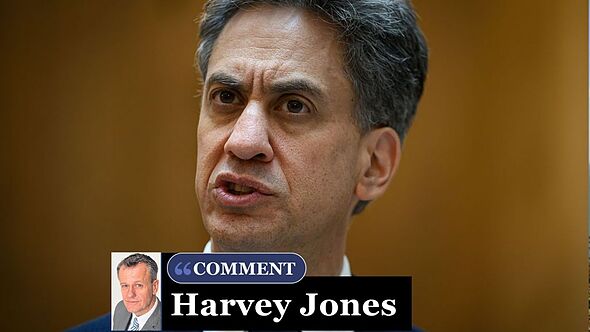
Ed Miliband Is “a Disaster for Britain” – And Andy Burnham Just Let It Happen
Ed Miliband has spent years building a reputation as one of Britain’s most determined advocates of the green transition.
Now, under Andy Burnham, he has been handed one of the most powerful jobs in government.
And that should worry anyone who believes Britain needs cheaper energy, stronger economic growth and a realistic strategy for dealing with the country’s industrial challenges.
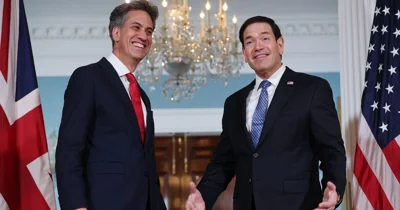
Miliband is no longer Energy Secretary.
Burnham has moved him to the Foreign Office, appointing him Foreign Secretary, while John Healey has taken the role of Chancellor.
At first glance, that may look like Burnham has solved the problem.
But it is not quite that simple.
Miliband’s influence over British policy has not disappeared simply because his department has changed. His political ideas remain deeply connected to Burnham’s wider vision for Britain, particularly on climate change, industrial policy and the transition away from fossil fuels.
That is why critics who describe Miliband as “a disaster for Britain” are not merely attacking one politician.
They are attacking an entire political philosophy.
The central question is whether Britain can afford to pursue ambitious climate policies while millions of households are still worried about energy costs, businesses are struggling with high operating expenses and the economy desperately needs investment.
Miliband’s answer has consistently been that Britain can do both.
He argues that the clean-energy transition is not simply an environmental project.
It is an economic opportunity.
His supporters point to enormous planned investment in offshore wind, solar power and electricity networks. Government figures have indicated that more than £100 billion of private-sector investment had been pledged into the green economy during the previous Parliament, with projects spread across Britain.
That is a powerful argument.
But it does not answer the question that matters most to ordinary households:
What happens to my energy bill?
That is where Miliband’s political problem begins.
Britain’s energy debate has become increasingly polarised.
One side argues that the country must accelerate away from oil and gas.
The other argues that Britain is moving too quickly and risking higher prices, reduced energy security and damage to domestic industry.
Both sides contain elements of truth.
Britain cannot ignore climate change.
But neither can it ignore the economic consequences of energy policy.
Factories need affordable electricity.
Steel producers need competitive energy costs.
Chemical companies need reliable supplies.
Small businesses need predictable bills.
Families need to heat their homes.
If energy becomes too expensive, the consequences spread throughout the economy.
Products become more expensive.
Businesses reduce investment.
Jobs become less secure.
And households have less money to spend elsewhere.
That is why Miliband’s critics have been so persistent.
They do not necessarily oppose renewable energy.
Their objection is to what they see as an unrealistic timetable and an ideological unwillingness to compromise.
Miliband has faced particular criticism over North Sea oil and gas.
The future of fields such as Rosebank and Jackdaw has become one of the biggest tests of Burnham’s climate policy. The government is now under pressure to decide whether new fossil-fuel projects should proceed, with environmental groups arguing that approving them would undermine Britain’s climate commitments.
This is an extraordinarily difficult political choice.
Approving new North Sea production could reassure parts of the energy industry and potentially strengthen domestic supply.
Rejecting new projects would please environmental campaigners and demonstrate that Burnham’s government remains committed to a rapid transition.
But neither decision is cost-free.
That is precisely why the claim that Miliband is simply “bad for Britain” needs to be examined carefully.
There is a legitimate criticism to make.
Miliband’s critics can argue that climate policy has sometimes been presented as though the economic transition will be painless.
It will not be.
Britain will have to invest vast sums in electricity generation, grid infrastructure, storage and alternative energy sources.
It will have to upgrade buildings.
It will have to change transport.
It will have to persuade businesses to invest.
And it will have to maintain energy supplies during the transition.
Those costs are real.
But the opposite argument is also important.
Doing nothing has costs too.
Britain remains exposed to international energy markets.
Global conflicts can send oil and gas prices soaring.
Extreme weather can disrupt economies.
And delaying investment in new energy infrastructure can leave the country more vulnerable in the future.
Miliband therefore has a serious economic argument behind his position.
The question is whether he has always communicated it effectively.
This is where Andy Burnham enters the story.
Burnham has built his political identity around breaking with what he describes as decades of neoliberal economic thinking.
He wants a larger role for the state.
He wants more public investment.
He wants regional development.
He wants Britain to rebuild industrial capacity.
That makes Miliband an interesting ally.
A clean-energy programme can potentially become an industrial strategy.
Wind turbines need factories.
Electricity networks need engineers.
New infrastructure needs construction workers.
Green technologies require supply chains.
If Britain captures enough of that investment, the transition could create jobs rather than simply destroy them.
That is exactly the argument made by Miliband’s supporters.
Former Treasury adviser Nicholas Stern even urged Burnham to appoint Miliband as Chancellor, arguing that he had the vision and experience necessary to increase investment and rebuild confidence in the state’s ability to deliver.
That is not the description of a politician who is universally regarded as an economic disaster.
There are serious economists who believe Miliband’s approach could help Britain.
More than 40 progressive economists also publicly rejected claims that Miliband would destroy jobs if he became Chancellor.
So the debate is not really about whether Miliband is competent.
It is about which economic risks Britain should take.
Should Britain risk moving too slowly on climate change?
Or should it risk moving too quickly and damaging competitiveness?
Should the government prioritise immediate energy affordability?
Or should it accept substantial investment costs today to create a cleaner and potentially more secure energy system tomorrow?
Those are genuine policy choices.
Unfortunately, British politics often turns them into personality contests.
Miliband becomes the villain.
Burnham becomes the radical.
Businesses become the opposition.
Environmentalists become the government.
The reality is much more complicated.
There is, however, one criticism Burnham cannot easily avoid.
He knew that appointing Miliband to a major economic role would be politically controversial.
Before Burnham entered Downing Street, there was intense speculation that Miliband might become Chancellor. Labour figures were divided, with some believing his economic and climate agenda could provide the radical direction Burnham wanted, while others feared it would alarm businesses and the fossil-fuel industry.
In the end, Burnham chose another path.
John Healey became Chancellor.
Miliband became Foreign Secretary.
That may have been a calculated compromise.
Burnham keeps Miliband inside the government and gives him a major international role, but prevents him from directly controlling the Treasury.
Politically, that makes sense.
Economically, however, Miliband’s influence is unlikely to disappear.
Foreign policy and energy policy are increasingly connected.
Britain’s relationships with the United States, Europe and energy-producing countries are all affected by the country’s transition strategy.
Energy security is national security.
Climate diplomacy is foreign policy.
Trade policy is connected to industrial policy.
Miliband therefore remains an important figure.
And that creates a major test for Burnham.
The Prime Minister cannot blame Miliband if energy prices remain high.
He cannot blame his Foreign Secretary if industrial companies complain about costs.
If Burnham agrees with Miliband’s philosophy, he owns it.
If he disagrees with it, he must be willing to overrule him.
Leadership means making that choice.
The same applies to the North Sea.
Burnham cannot hide behind consultations forever.
Rosebank and Jackdaw will force his government to reveal how it balances climate ambitions against energy security and economic growth.
Whatever decision he makes, somebody will be angry.
The environmental movement will demand faster action.
The oil and gas industry will demand continued investment.
Unions will demand jobs.
Consumers will demand lower bills.
Businesses will demand competitive energy.
The Prime Minister cannot satisfy all of them.
That is why the phrase “Miliband is a disaster for Britain” is ultimately too simple.
If Britain ends up with expensive energy, weak industrial competitiveness and declining investment because the transition was badly managed, critics will have a strong case.
But if Britain builds a huge clean-energy industry, creates new jobs, reduces exposure to volatile fossil-fuel markets and develops a more secure domestic electricity system, Miliband’s critics will look very different.
The outcome matters more than the rhetoric.
And that is the challenge Burnham now faces.
He has inherited a country that needs economic growth and energy security while simultaneously facing enormous pressure to decarbonise.
There is no painless solution.
There is no magic technology that can instantly deliver cheap, reliable and completely clean energy.
There is no policy that guarantees every worker in an existing industry will keep their job.
And there is no political strategy that can avoid difficult choices forever.
Burnham must therefore make one thing clear.
Is the green transition primarily an environmental obligation?
Or is it Britain’s next great industrial opportunity?
If it is only the first, critics may be right to fear that Britain will sacrifice economic competitiveness for emissions reductions while other countries continue to expand.
But if Burnham can make it the second, Miliband’s policies could become part of a much more ambitious economic transformation.
That would require enormous discipline.
Britain would need to build infrastructure faster.
It would need to attract private investment.
It would need to control costs.
It would need to protect consumers.
And it would need to avoid shutting down reliable energy sources before alternatives are genuinely ready.
That is the balance Burnham must find.
Miliband can help him.
Or he can become a political liability.
The choice ultimately belongs to Burnham.
So perhaps the real headline is not that Ed Miliband is “a disaster for Britain”.
The real question is whether Andy Burnham has given Miliband too much influence over a policy area where Britain can afford very few mistakes.
Burnham has already made his decision on one crucial point: Miliband remains inside the heart of government.
He has not been discarded.
He has not been marginalised.
He has simply been moved.
Now the Prime Minister must prove that he can use Miliband’s ambition without allowing ideology to replace economic reality.
Britain needs cleaner energy.
It also needs cheaper energy.
It needs investment.
It needs jobs.
It needs industrial renewal.
It needs energy security.
And it needs growth.
A successful government has to deliver all of those objectives together.
That is the standard by which Burnham and Miliband should ultimately be judged.
Not by how angry their critics become.
Not by how loudly their supporters cheer.
But by whether British families and British businesses are better off when the transformation is complete.
The green transition could become one of Britain’s greatest economic opportunities.
It could also become one of its most expensive mistakes.
Andy Burnham has chosen to keep Ed Miliband at the centre of his government.
Now he must make sure that choice works for Britain.