

Andy Burnham Declares War on ‘Fake’ Sales That Rip Off Shoppers
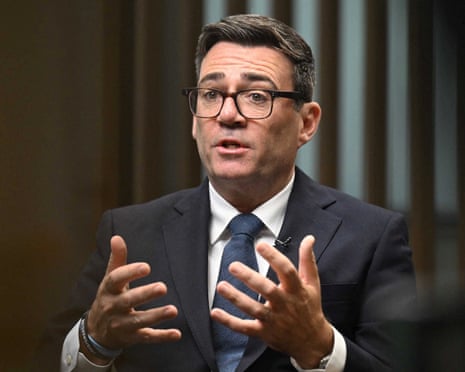
Andy Burnham has chosen an unlikely enemy for one of his first major battles as Britain’s new Prime Minister: the fake bargain.
Not illegal imports. Not organised crime. Not a geopolitical crisis.
Fake discounts.
But perhaps that is precisely why the announcement matters.
For millions of British shoppers, the experience is familiar. A product appears to be reduced from £100 to £60. A huge red label promises “40 per cent off”. A countdown clock suggests that the opportunity will disappear within hours. Yet the supposed original price may have been artificially inflated, or the product may rarely have been sold at that higher figure in the first place.
The customer thinks they have found a bargain.
The retailer gets the sale.
And the consumer may never know whether the bargain was real.
Burnham now wants to change that.
The Prime Minister has announced a crackdown on misleading discount claims, including the use of inflated “was” prices and deceptive reference prices. The government estimates that ending these practices could save British shoppers around £400 million a year.
On paper, this is difficult to oppose.
Consumers deserve to know what they are actually paying for. If a retailer claims that a product has fallen from £200 to £100, the £200 figure should represent a genuine previous price rather than a number invented to make the £100 price look attractive.
That principle is not particularly radical.
What is more interesting is what Burnham’s campaign tells us about the kind of Prime Minister he intends to be.
His government has repeatedly emphasised what might be called the politics of everyday life. Instead of promising only enormous constitutional reforms or distant economic ambitions, Burnham wants to identify the small frustrations that people encounter every week and make them easier to deal with.
That approach has obvious political appeal.
People may not understand every detail of fiscal policy.
They certainly do not spend their mornings reading government consultations.
But they understand being charged for a subscription they forgot to cancel.
They understand seeing something advertised as “half price” and wondering whether it ever really cost twice as much.
They understand paying fees they did not expect.
And they understand the feeling of discovering that a supposedly special offer was not particularly special at all.
This is why Burnham’s attack on fake sales could be more politically significant than it initially appears.
It is an attempt to demonstrate that government can make a tangible difference to ordinary household finances.
The government says consumers currently spend around £1.6 billion a year on unwanted subscriptions. New rules planned for January 2027 will require clearer information, more frequent reminders and easier cancellation, alongside a 14-day cooling-off period.
That is a substantial intervention.
But there is a danger.
A government can easily become obsessed with solving small problems because small problems are easier to solve than big ones.
It is much easier to announce a crackdown on misleading price labels than to solve Britain’s housing shortage.
It is easier to simplify subscription cancellation than to increase productivity.
It is easier to condemn fake bargains than to make wages rise faster than living costs.
Burnham therefore needs to demonstrate that his “everyday fixes” are not a substitute for serious economic policy.
They should be the beginning of his programme, not the entire programme.
The cost-of-living crisis is not caused primarily by misleading sales.
Families are struggling because housing costs are high, energy bills remain burdensome, food prices have risen and many households have experienced years of weak improvements in living standards.
Stopping retailers from advertising fake discounts will help.
But it will not transform household finances on its own.
That does not make the policy pointless.
Quite the opposite.
Good government is partly about recognising that economic pressure is experienced through hundreds of small transactions.
A household does not experience inflation as an abstract percentage.
It experiences it when the weekly food shop costs more.
When the electricity bill arrives.
When the mortgage or rent increases.
When a child’s shoes need replacing.
When an online service automatically renews at a higher price.
When a supposedly discounted product turns out not to be much of a bargain.
These individual moments accumulate.
Burnham appears to understand that.
His wider consumer agenda includes action against subscription traps and other business practices that make it unnecessarily difficult for customers to escape unwanted payments. He has argued that cancelling a subscription should be as easy as joining one.
That sounds like common sense.
Yet common sense is often precisely what regulation fails to deliver.
Businesses naturally want customers to spend money. There is nothing inherently wrong with that. Retailers exist to make profits, and competitive markets depend on businesses persuading people to buy their products.
The problem begins when persuasion becomes deception.
There is an important distinction between a clever marketing campaign and a misleading one.
A genuine sale is perfectly legitimate.
A business that buys a product for £50, normally sells it for £100 and temporarily reduces it to £70 is offering a genuine discount.
But if the £100 price exists mainly as a reference point designed to make £70 look cheap, the consumer is being manipulated.
That undermines trust.
And trust matters to markets.
Retailers themselves should recognise this. If consumers begin to believe that every sale is fake, genuine discounts lose their credibility as well.
The result is a marketplace where nobody knows what anything is really worth.
That is bad for consumers and ultimately bad for honest businesses.
Yet Burnham’s plans have already attracted criticism from sections of the business community. Some industry representatives argue that companies need sufficient time to understand and implement the new requirements, while others fear that rushed regulation could create unnecessary costs and confusion.
That criticism should not simply be dismissed.
Consumer protection and business regulation must strike a balance.
Britain needs thriving retailers.
The high street is already under enormous pressure from online competition, high operating costs and changing consumer behaviour. If every new regulation creates significant compliance costs without producing meaningful benefits, smaller businesses could suffer disproportionately.
A large multinational retailer may have teams of lawyers and compliance specialists.
A small independent shop may have one owner doing almost everything.
Burnham’s government must therefore ensure that the rules are clear enough for small businesses to follow without hiring expensive consultants.
The objective should be honest pricing, not mountains of paperwork.
There is another challenge: enforcement.
A ban is meaningless if businesses know that breaking it carries little risk.
If Burnham genuinely wants to eliminate misleading discounts, regulators need the resources and authority to investigate complaints and punish persistent offenders.
Consumers should not have to become amateur detectives.
They should not need to take screenshots of prices every day to prove that a retailer’s “was” price was misleading.
The law should create incentives for businesses to get pricing right in the first place.
This is where Burnham has an opportunity to make his policy genuinely important.
Instead of simply announcing another set of rules, his government could create a stronger culture of consumer accountability.
Retailers that consistently provide transparent pricing should have nothing to fear.
Businesses that deliberately manipulate customers should face meaningful consequences.
And consumers should be given clear information rather than buried in complicated terms and conditions.
The political implications are significant too.
Burnham entered Downing Street promising a different kind of Labour government.
His political identity has been built around regional government, public services and his ability to communicate directly with ordinary voters.
The crackdown on fake discounts fits perfectly into that image.
It allows him to say that government is not merely concerned with Westminster arguments.
It is concerned with what happens when someone opens an online shopping app at the end of a difficult month and tries to save a few pounds.
That is politically clever.
But it is also a test.
Burnham has to prove that these policies are more than headlines.
If the government claims that consumers will save £400 million, voters will eventually want to know whether they actually did.
If subscription reforms are supposed to save households money, people should be able to see the difference.
If fake discounts are banned, retailers should genuinely stop using them.
Results will matter more than speeches.
That is ultimately the challenge facing Burnham.
His government has promised to make everyday life easier.
Fine.
Now it has to deliver.
Britain does not need another political slogan about fairness.
It needs rules that work.
It needs regulators who enforce them.
It needs businesses that compete honestly.
And it needs consumers who can trust the prices they see.
There is nothing wrong with a sale.
There is nothing wrong with a retailer making a profit.
There is nothing wrong with clever marketing.
But there is something fundamentally wrong with telling someone they are saving £50 when they never really were.
That is not a bargain.
It is manipulation dressed up as good news.
Burnham is right to challenge it.
The danger is that the Prime Minister could become so focused on small “rip-offs” that he loses sight of the much larger financial pressures facing British families.
Stopping fake discounts will not solve the cost-of-living crisis.
It will, however, remove one small layer of dishonesty from everyday economic life.
And perhaps that is the real significance of Burnham’s announcement.
A government does not always have to change the world in one dramatic move.
Sometimes it can start by making sure that when a British shopper sees the words “50 per cent off”, they can actually believe them.
For a country tired of being told that everyday frustrations are simply “part of life”, that would be a modest — but meaningful — change.