

Andy Burnham Just Went Too Far – Britain Already Has One Monaco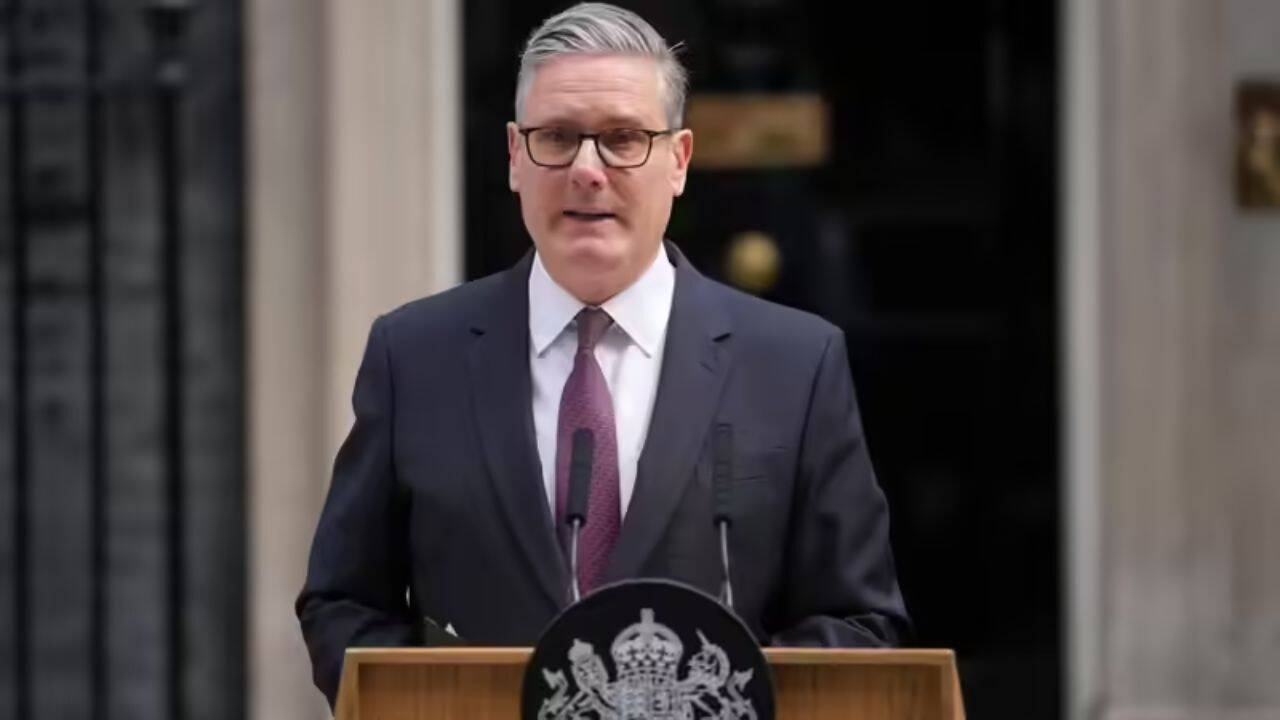
There is something deeply uncomfortable about the way modern politics increasingly turns politicians into personalities, symbols and almost mythical figures. Britain has always had a complicated relationship with political celebrity, but Andy Burnham appears to be taking that relationship to a new level. His rise from long-serving Labour politician and Mayor of Greater Manchester to Prime Minister has been remarkably rapid, and his popularity has been built not simply on policies but on a carefully cultivated image of authenticity, accessibility and regional pride.
That image has undoubtedly helped Burnham. Yet there comes a point when political charisma stops being an asset and begins to resemble something else: personal rule.
Britain already has one monarch. It does not need another one in Downing Street.
Burnham’s supporters would understandably reject such a comparison. He is an elected politician, not a hereditary sovereign. He has no crown, no palace and no constitutional claim to rule by birth. His authority ultimately comes from democratic institutions. But politics is not only about formal constitutional powers. It is also about political culture, symbolism and the way leaders present themselves to the public. And Burnham’s increasingly theatrical style of leadership risks creating the impression that the country is being invited to follow a personality rather than scrutinise a government.
This concern has become particularly relevant following his plans for a nationwide “listening tour”. The idea, presented as an attempt to reconnect politics with ordinary people, sounds attractive on the surface. A prime minister travelling around Britain, meeting communities and listening to their concerns could be an admirable exercise in democratic engagement. At a time when many citizens feel ignored by Westminster, there is certainly value in politicians leaving government buildings and talking to people directly.
But there is a fine line between listening to the public and staging a political pilgrimage.
The symbolism matters. A national tour led by a charismatic leader can easily become less about collecting information and more about constructing an image. Instead of government coming to citizens as an institution accountable to them, citizens can begin to appear as an audience gathered around the leader. That is precisely the danger when politics becomes too personal.
Recent commentary has already drawn attention to the almost medieval imagery surrounding Burnham’s travelling political style, comparing the idea of a leader touring the country with the old tradition of monarchs travelling through their territories. The comparison is deliberately provocative, but it exposes an important question: should a prime minister be trying to look like a national saviour, or should he be concentrating on the difficult, unglamorous work of governing?
Britain does not have a shortage of politicians who know how to make speeches. It has a shortage of politicians who can turn promises into measurable results.
Burnham arrived at Downing Street promising a new era of stability, hope and national renewal. In his first speech as prime minister, he spoke about putting the care of people at the heart of government, building council homes, helping young people into work and ending rough sleeping. These are serious ambitions, and many of them deserve support. He also emphasised the need to make politics work better and to restore a sense of national purpose.
But rhetoric is the easy part.
The real test of Burnham’s premiership will not be whether people cheer when his bus arrives in their town. It will be whether families can afford their energy bills, whether young people can find secure employment, whether public services improve, whether housing becomes more affordable and whether the government can maintain fiscal credibility while delivering its promises.
This distinction is particularly important because Burnham’s political career has always depended heavily on his ability to connect emotionally with the public. During his nine years as Mayor of Greater Manchester, he developed a distinctive political identity centred on Manchester, regional pride and his ability to present himself as an alternative to Westminster politics. When he returned to Parliament and subsequently became prime minister, that identity travelled with him.
There is nothing wrong with regional pride. In fact, Burnham’s experience in Greater Manchester has given him a perspective that many Westminster politicians lack. His enthusiasm for devolution and greater regional control could potentially reshape Britain’s relationship between central and local government. His proposals have been described as an ambitious move towards a form of “devo max”, giving regional leaders more authority over public services, investment, energy, health and welfare.
That could be one of the most significant contributions of his government.
But devolution should mean empowering communities, not replacing one distant political establishment with a collection of powerful local personalities. If Burnham truly believes in giving people more control, he should be prepared to build institutions that remain strong even when he is no longer the person leading them.
That is where the “one monarch” argument becomes more than a joke.
The constitutional monarchy exists precisely because Britain separates symbolic national identity from day-to-day political government. King Charles is the head of state, while the prime minister leads His Majesty’s Government and is responsible for its policies and decisions. The arrangement may seem old-fashioned to some, but its underlying principle is important: no elected politician should become the embodiment of the nation itself.
A prime minister represents the government. He does not own the country.
Burnham should therefore resist the temptation to become too closely associated with the idea that Britain needs him personally to recover. The country does not need a political monarch, even a democratically elected one. It needs functioning institutions, competent ministers, accountable civil servants, independent scrutiny and a Parliament capable of challenging the government.
This is not an argument against charisma. Political leaders need communication skills. They need to inspire people, especially when a country is facing difficult circumstances. A completely technocratic politician who cannot connect with ordinary citizens will struggle to govern effectively.
The problem begins when the image becomes more important than the institution.
Burnham’s greatest political strength could therefore become his greatest weakness. His ability to make people feel that he understands them is valuable. But if that emotional connection becomes a substitute for detailed policy, scrutiny and accountability, it will eventually disappoint the very people who put their trust in him.
Britain has seen this pattern before. Political leaders are elevated, celebrated and presented as figures capable of transforming the national mood. Then reality arrives. Budgets have to balance. Infrastructure projects encounter delays. Public services require difficult choices. International crises cannot be solved with speeches. Housing targets meet planning objections. Promises collide with limited resources.
No prime minister can escape those realities.
Burnham certainly has the opportunity to prove his critics wrong. His background outside Westminster’s traditional political culture could help him understand why so many citizens have lost faith in established politics. His commitment to regional empowerment could produce a healthier balance between London and the rest of Britain. His emphasis on social responsibility and public services could provide a meaningful alternative to years of political pessimism.
But he should remember that Britain does not need a new national father figure, a political king or a travelling saviour.
It needs a government.
The distinction may sound semantic, but it is fundamental. A government can be questioned. A government can be defeated. A government can be replaced. A personality cult is much harder to challenge because criticism of the leader becomes confused with criticism of the nation or its hopes.
Burnham should therefore be careful about the mythology surrounding him. He is not Manchester’s eternal mayor. He is not Britain’s answer to every political problem. He is not the embodiment of a national revival.
He is the Prime Minister.
That is already one of the most powerful political offices in the country.
Britain already has one monarch, and it should have only one political system. The country does not need another crown, even a metaphorical one. What it needs from Andy Burnham is something much less glamorous and much more difficult: competent government, honest accountability and results that can be measured long after the cameras have gone.
If Burnham can deliver those things, he will not need to behave like a king.
History will judge him as a successful prime minister instead.