

The Real Reason Brits Are Ready to Vote for Farage – And It Has Nothing to Do With Brexit
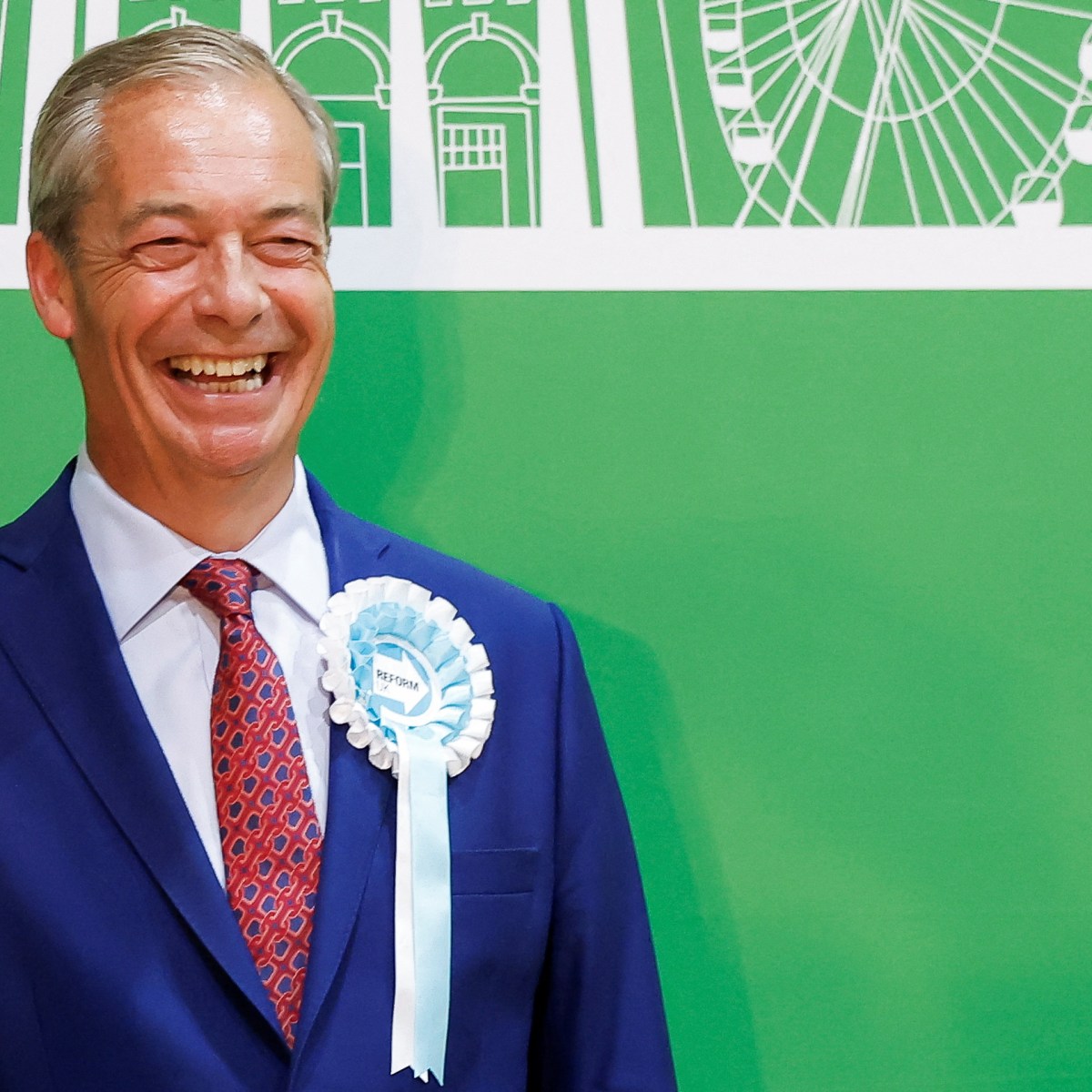
For years, Nigel Farage was almost impossible to separate from one word:
Brexit.
He became one of the most recognisable faces of Britain’s campaign to leave the European Union.
For many voters, Farage was Brexit.
For many opponents, he became a symbol of everything they disliked about the Brexit movement.
But something remarkable has happened since the referendum.
Farage’s political appeal has survived.
More importantly, it has evolved.
Reform UK is no longer simply asking voters to revisit Britain’s relationship with Brussels.
The European Union is no longer the central issue around which Farage’s political future revolves.
Instead, his message has moved towards something much broader.
It is about frustration.
It is about trust.
It is about immigration.
It is about living standards.
It is about national identity.
And above all, it is about the belief among some voters that the political establishment has stopped listening.
That may be the real secret behind Farage’s continuing appeal.
Brexit is no longer enough
The Brexit referendum took place years ago.
Britain has left the European Union.
The argument over membership has therefore changed fundamentally.
Farage cannot build an entire political movement around a question that has already been decided.
He knows that.
Reform knows that.
And its political message has consequently evolved.
The party is attempting to persuade voters that Brexit was only one symptom of a much bigger problem.
The problem, according to Farage and his supporters, is that Britain’s political system has become disconnected from ordinary people.
That argument can appeal to voters who do not particularly care about Brexit anymore.
The politics of frustration
The modern Reform voter is not necessarily someone who spends every morning thinking about the European Union.
They may be thinking about the price of their mortgage.
Their rent.
Their energy bills.
Their wages.
The state of the NHS.
The availability of housing.
The number of people entering the country.
The condition of their local high street.
The crime rate in their neighbourhood.
Or simply whether politicians are telling them the truth.
These concerns have little to do directly with Brexit.
Yet they can produce the same political emotion:
“Something has gone wrong, and nobody is listening.”
That is the emotional space Farage has learned to occupy.
Trust may be the real issue
Perhaps the most important political currency in Britain today is trust.
Voters can disagree about policies.
They can disagree about taxes.
They can disagree about immigration.
They can disagree about public spending.
But once people stop believing politicians, almost every government promise becomes less effective.
This is where Farage has an advantage.
He has spent decades presenting himself as someone outside the traditional political establishment.
Whether voters agree with him or not, many see him as more willing to say what he actually thinks.
That perception is politically valuable.
The appeal of authenticity
Farage’s political style is not polished in the traditional Westminster sense.
He can be provocative.
He can be confrontational.
He sometimes uses language that his opponents consider inflammatory.
But his supporters often interpret exactly those characteristics as evidence of authenticity.
They do not necessarily want another politician who sounds carefully rehearsed.
They want someone who appears willing to say what others are afraid to say.
That is an important distinction.
Politics is increasingly emotional.
Authenticity can therefore become more important than ideological consistency.
Immigration has replaced Brexit
If one issue has emerged as the new centre of Farage’s political message, it is immigration.
Reform has made the subject one of the defining elements of its identity.
Farage argues that successive governments have promised voters tighter control while failing to deliver.
His supporters believe the issue affects housing, public services, wages, infrastructure and national identity.
Critics argue that Reform exaggerates the problem and uses immigration to create division.
But politically, one thing is undeniable:
It is an issue that generates strong emotions.
And strong emotions can drive elections.
The housing connection
Housing is another reason the immigration argument can resonate beyond Brexit.
Britain has struggled for years with housing shortages and affordability problems.
A young person trying to rent a home may not care about the constitutional arguments surrounding Brexit.
They care about whether they can afford somewhere to live.
A family trying to buy a house may not be interested in Westminster’s political battles.
They care about deposits, mortgage rates and supply.
Farage’s political argument connects these practical frustrations to a wider complaint about government policy.
Whether every part of that argument stands up to scrutiny is another question.
But politically, the connection is powerful.
The NHS and public services
The same is true of public services.
Many voters believe that the state is demanding more money while delivering less.
Waiting lists.
Local services.
Schools.
Police.
Transport.
Social care.
These issues create daily frustrations.
Reform can then present itself as the party willing to challenge government bureaucracy and waste.
Its message is simple:
Government is too expensive, too complicated and too disconnected from ordinary life.
That message can appeal to voters who have never considered themselves supporters of a populist party.
The working-class shift
Perhaps the most important change is happening among working-class voters.
For decades, Labour enjoyed a deep relationship with many working-class communities.
That relationship has weakened.
Some voters feel Labour has become too distant from their concerns.
Others believe the party has become more interested in cultural and metropolitan politics than in wages, jobs, crime and national identity.
Farage is attempting to exploit that gap.
He wants to convince former Labour voters that Reform can become their new political home.
The Conservative collapse created an opening
The decline of Conservative support has also helped Farage.
Many traditional Conservative voters became frustrated with the party after years of broken promises.
Immigration was one of the biggest sources of anger.
Taxation was another.
Government spending was another.
Farage could therefore present Reform as the logical destination for people who believed the Conservatives had failed.
But he did not want to stop there.
He wanted to attract Labour voters too.
That is what makes the current political realignment so significant.
Farage does not need everyone
One misconception about populist politics is that a politician needs universal popularity.
Farage does not.
He needs a sufficiently large coalition of dissatisfied voters.
He needs people who are angry enough to vote.
He needs supporters who are willing to ignore traditional party loyalties.
And he needs to persuade them that Reform can actually win.
That last point is crucial.
A protest vote is one thing.
A government vote is another.
The psychology of momentum
Political momentum can change voter behaviour.
People are more likely to vote for a party if they believe it has a realistic chance of winning.
They are more likely to volunteer.
They are more likely to donate.
They are more likely to persuade friends and relatives.
They are more likely to tell pollsters they support the party.
Farage understands this.
That is why Reform’s electoral performances matter beyond the number of seats won.
Every breakthrough creates the impression that another breakthrough is possible.
The outsider who wants to govern
There is another major transformation taking place.
Farage is no longer presenting himself simply as an outsider.
He increasingly wants Reform to look like a government-in-waiting.
That requires a different kind of politics.
It requires policy teams.
Experienced politicians.
Candidates.
Local organisation.
Economic credibility.
And answers to difficult questions.
The more successful Reform becomes, the less Farage can rely purely on protest politics.
The biggest weakness
This may ultimately become Reform’s greatest challenge.
It is much easier to criticise government than to replace it.
Opposition parties can promise lower taxes.
They can promise tighter immigration.
They can promise less bureaucracy.
They can promise better public services.
But once in government, every promise has a cost.
Every policy has unintended consequences.
Every department has competing priorities.
Every minister faces resistance.
That is where Reform’s political credibility will truly be tested.
Farage’s balancing act
Farage therefore has to maintain two identities at once.
He must remain the outsider who challenges Westminster.
But he must also appear capable of running Westminster.
He must remain angry enough to energise his supporters.
But responsible enough to reassure undecided voters.
He must attract experienced politicians without becoming indistinguishable from the establishment.
And he must promise radical change without frightening voters who want stability.
That is an extremely difficult balancing act.
Why Brexit still matters indirectly
Although Farage’s current appeal is not necessarily about Brexit, Brexit still matters indirectly.
It established his credibility as a politician capable of leading a major national campaign.
It demonstrated that a political movement outside the traditional parties could fundamentally change Britain’s political direction.
It also created a generation of voters who became more willing to question political assumptions.
Farage’s current campaign builds on that history.
But the message is no longer:
“Leave the EU.”
It is:
“Change the political system.”
The anti-establishment vote
This is perhaps the central point.
Many Reform supporters may not be deeply ideological.
They may not identify as traditional conservatives.
They may not identify as right-wing.
They may simply be dissatisfied.
That makes Reform different from a conventional political party.
It is attempting to become a home for political frustration.
Anyone who feels ignored can potentially be part of that coalition.
Why Starmer should be concerned
For Keir Starmer, this creates a serious challenge.
He cannot defeat Reform simply by reminding voters about Brexit.
That argument is becoming less relevant.
He cannot assume Reform voters are former Conservatives.
Some are.
But others may have previously voted Labour.
He cannot rely entirely on attacks against Farage’s personality.
That may energise Reform supporters.
Instead, Labour has to answer the underlying frustrations.
Why are people struggling to afford housing?
Why do voters distrust politicians?
Why do public services feel under pressure?
Why are immigration figures such a politically explosive issue?
Why do so many voters feel that government does not work for them?
Those are much harder questions.
The danger of dismissing voters
There is another mistake established parties can make.
They can dismiss Reform voters as extremists.
That may feel politically satisfying.
But it can be electorally disastrous.
Most voters do not see themselves as extremists.
They see themselves as ordinary people with ordinary concerns.
They may be angry.
They may be frustrated.
They may be sceptical.
But they still expect politicians to take them seriously.
If Labour or the Conservatives simply insult them, Reform can step into the gap.
The politics of respect
Respect may therefore be more important than any individual policy.
Voters want to believe that politicians understand their lives.
They want their concerns acknowledged.
They want politicians to admit when something has gone wrong.
They want practical solutions.
Farage’s greatest strength may not be any particular policy.
It may be his ability to make dissatisfied voters feel that somebody is listening.
The new political dividing line
Britain’s political divisions are changing.
The old division was largely Labour versus Conservative.
Then came Leave versus Remain.
Now another division is emerging:
The establishment versus the outsider.
That does not fit neatly into left and right.
A voter can support public spending and still vote Reform.
A voter can favour the NHS and still want lower immigration.
A former Labour voter can become a Farage supporter without suddenly becoming a traditional Conservative.
That is why the new political landscape is so difficult to predict.
What could stop Farage?
Farage’s rise is not inevitable.
Reform could struggle to maintain momentum.
Internal disagreements could emerge.
Its policies could face serious scrutiny.
The Conservatives could recover.
Labour could improve the economy and public services.
Voters could become concerned about Reform’s governing competence.
Any of these factors could weaken the party.
But none of them changes the central reality.
Farage has identified a political mood that existed before Reform.
The real reason
The real reason some Brits are increasingly willing to vote for Farage may therefore have very little to do with Brexit.
It is about something more basic.
They want to feel heard.
They want to believe that politicians mean what they say.
They want government to work.
They want immigration to be controlled.
They want affordable housing.
They want functioning public services.
They want political leaders who understand the pressures of everyday life.
And some of them have concluded that the traditional parties are no longer offering convincing answers.
Farage has built his political career around telling those voters that he understands their frustration.
The ultimate test
The question now is whether he can turn that frustration into lasting political support.
Winning angry voters is relatively easy.
Governing them is much harder.
Reform can campaign against the system.
But eventually, it may have to become the system.
That is the moment when Farage’s political project will face its greatest test.
Conclusion
Nigel Farage’s political survival after Brexit is not an accident.
He has adapted.
The referendum gave him a platform.
But it did not create all the frustrations that fuel his current support.
Those frustrations existed before Brexit and have continued afterwards.
They concern immigration.
Living standards.
Housing.
Public services.
Trust.
Identity.
And the growing belief that traditional political parties no longer understand the voters they once represented.
That is why the Farage phenomenon cannot simply be dismissed as unfinished Brexit politics.
The argument has moved on.
Britain has moved on.
And Farage has moved with it.
His biggest political opportunity is no longer persuading Britain to leave Europe.
It is persuading Britain that the old political order itself needs to be replaced.
Whether voters ultimately agree is another question.
But if the growing appetite for Reform is driven by a desire for change rather than nostalgia for Brexit, Keir Starmer and the Conservatives face a much bigger problem than they may realise.
Because you can settle Brexit.
You cannot settle dissatisfaction with politics simply by winning an argument about Europe.
And that may be the real reason Nigel Farage remains such a powerful force in British politics.