

Robert Jenrick Joins Reform MP in Calling for a Burka Ban — and Britain Faces a New Battle Over Integration
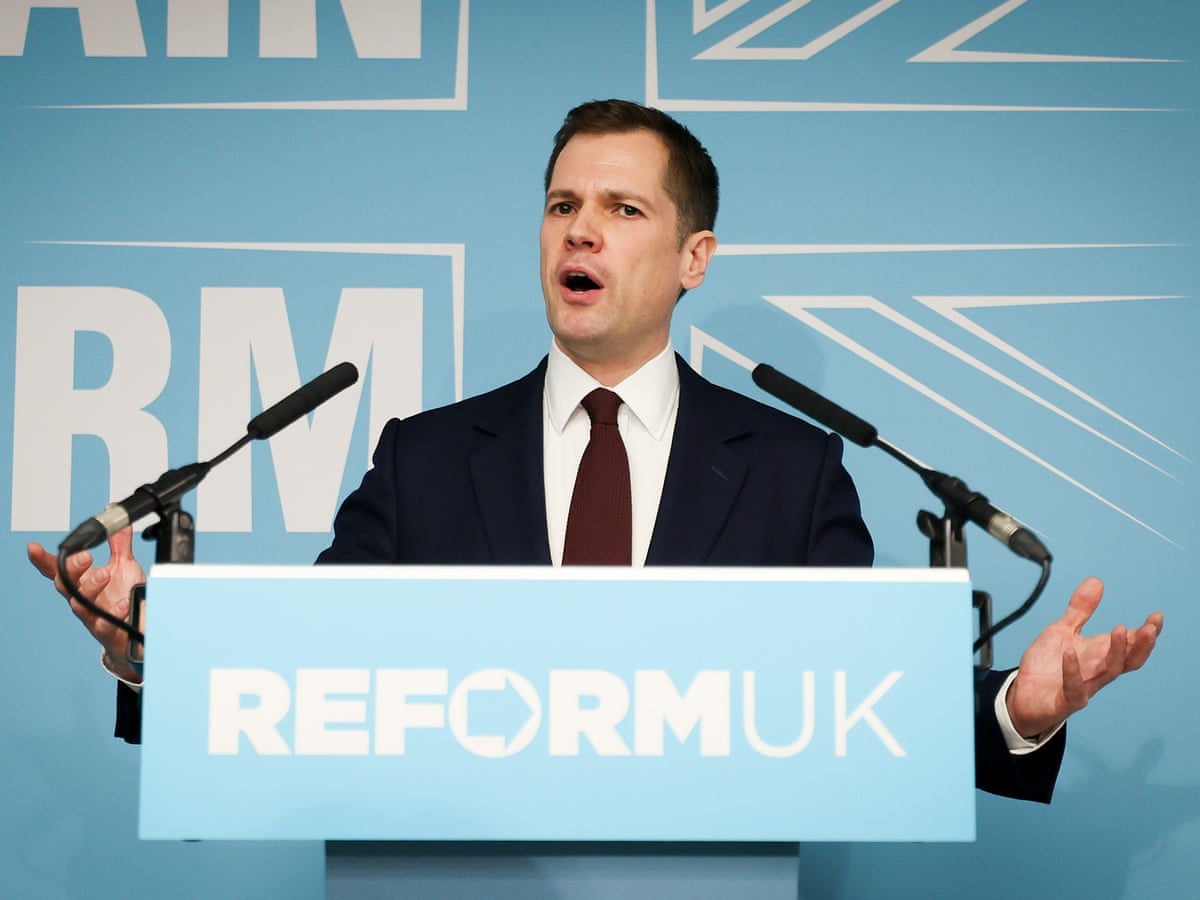
Robert Jenrick has reignited one of Britain’s most sensitive political debates by backing calls for a ban on the burka, putting himself alongside Reform politicians demanding tougher rules on face coverings.
The intervention is far bigger than a debate about one item of clothing.
It touches on questions of security, integration, religious freedom, individual liberty and what Britain expects from people who choose to make their lives in the country.
For supporters of a ban, the argument is straightforward.
They believe people living in Britain should be identifiable in public spaces, particularly in circumstances where security is important.
Critics, however, argue that banning religious clothing would interfere with individual freedom and unfairly target Muslim women.
That clash has made the burka one of the most politically explosive symbols in Britain’s culture debate.
And with Jenrick now part of Reform UK, the issue has acquired an even more significant political dimension.
A debate that refuses to disappear
The argument over the burka is not new.
Britain has repeatedly seen politicians debate whether full-face coverings should be restricted in certain circumstances.
In October 2025, Jenrick said he would “probably ban” the burka, arguing that Britain needed to think seriously about integration and social cohesion. At the time, senior Conservative figures stressed that a burka ban was not official Conservative Party policy.
The issue later returned to the centre of Reform’s political debate.
Reform MP Sarah Pochin had already called for a national ban, arguing that face coverings raised public-safety concerns.
That intervention caused an extraordinary internal dispute inside Reform.
Zia Yusuf, then chairman of the party, initially criticised the proposal and described it as a mistake.
The controversy demonstrated just how sensitive the subject remains.
But the debate did not disappear.
Instead, it became part of a much broader discussion about national identity and integration.
Why Reform sees an opportunity
For Reform UK, the issue fits naturally into its wider political message.
Nigel Farage’s party wants to present itself as the political force prepared to discuss subjects that other parties allegedly avoid.
Immigration.
Borders.
Integration.
Crime.
National identity.
Religious extremism.
These subjects are closely connected in Reform’s political narrative.
A burka ban therefore becomes more than a question about clothing.
It becomes a symbol of whether Britain is prepared to establish clear expectations about integration.
That is precisely why the issue attracts such strong reactions.
The argument for a ban
Supporters of a ban usually make several arguments.
The first concerns identification.
If a person’s entire face is concealed, CCTV cameras and members of the public cannot easily identify them.
In places such as airports, banks, courts and government buildings, identification can be particularly important.
The second argument concerns communication.
Facial expressions and eye contact are fundamental parts of ordinary social interaction.
Supporters of restrictions argue that societies work better when people are encouraged to participate in common public norms.
The third argument concerns integration.
Some politicians believe Britain should be clearer about what integration means.
They argue that multiculturalism cannot simply mean allowing completely separate social practices to develop without any shared expectations.
From this perspective, a ban would be presented not as an attack on Islam but as a statement about common civic standards.
The argument against a ban
Opponents see the issue very differently.
They argue that Britain has historically protected freedom of religion and personal expression.
If a Muslim woman chooses to wear a burka voluntarily, they ask why the state should have the power to prohibit her choice.
They also question whether a nationwide ban would actually improve security.
There is a major distinction between restricting face coverings in specific high-security environments and prohibiting them across public spaces.
A bank may reasonably require a customer to reveal their face for identification.
An airport may have similar requirements.
But critics argue that those practical rules do not automatically justify a general prohibition.
That distinction is at the heart of the controversy.
The European example
Britain is not the only European country to have debated the issue.
Several European states have introduced restrictions or bans on full-face coverings in public places.
France and Belgium are among the best-known examples.
Other countries have also adopted restrictions under different legal frameworks.
Supporters of a British ban therefore argue that the proposal would not make Britain an international outlier.
But Britain has its own constitutional and cultural traditions.
The fact that another country has introduced a ban does not automatically mean the same policy would produce the same result in Britain.
Jenrick’s political transformation
Jenrick’s position is particularly interesting because of his political journey.
He was once a senior Conservative politician.
He challenged the leadership.
He became one of the prominent voices on the Conservative right.
Then, in January 2026, he left the Conservatives and joined Reform UK after Kemi Badenoch removed him from her shadow cabinet and suspended his party membership.
His move was enormously significant.
It demonstrated that Reform was no longer simply attracting traditional Conservative voters.
It was attracting established Conservative politicians.
Jenrick’s arrival therefore gave Reform additional political credibility among voters who wanted a tougher alternative but were uncertain about the party’s ability to operate as a serious governing organisation.
His position on the burka now reinforces that broader identity.
Reform’s internal argument
Yet the history of the issue within Reform reveals something important.
The party itself has not always been united.
When Sarah Pochin raised the question of a burka ban in 2025, Zia Yusuf initially opposed the move and called it a poor political decision.
Several Reform figures, however, supported Pochin.
The controversy became serious enough that Yusuf temporarily resigned as party chairman before returning to the organisation.
Later, he said his intervention had been an error and indicated that he would probably support banning the burka and other face coverings in public spaces.
That evolution shows how rapidly Reform’s position has developed.
What began as an internal disagreement increasingly became part of the party’s wider debate about security and integration.
Farage’s political calculation
Nigel Farage understands the electoral power of cultural issues.
Immigration helped define his political career.
Brexit made him one of Britain’s most recognisable political figures.
Now Reform wants to transform that reputation into a governing movement.
A burka ban fits into a wider message:
Britain should have clearer boundaries.
Britain should enforce its laws.
Britain should expect newcomers to integrate.
And Britain should not be afraid to defend its cultural norms.
Whether voters agree with that philosophy is another question.
But politically, the message is unmistakable.
The danger of culture-war politics
There is also a danger.
If politicians present every question about integration as a battle between “British values” and religious identity, the debate can become increasingly polarised.
A Muslim woman wearing a burka is not necessarily rejecting Britain.
Likewise, someone who supports restrictions is not necessarily hostile to Muslims.
The reality is much more complicated.
There are Muslims who support restrictions on full-face coverings.
There are non-Muslims who oppose them.
There are people who support religious freedom but also believe identification requirements should be enforced in certain settings.
A serious national debate therefore requires more nuance than political slogans usually allow.
Security versus liberty
The central question is ultimately one familiar to democratic societies.
How much liberty should individuals have when that liberty conflicts with security or public-order concerns?
Governments already restrict behaviour in many circumstances.
People cannot simply refuse airport security.
Banks can require identification.
Courts have rules concerning appropriate clothing and identification.
Public institutions can impose reasonable security requirements.
The disagreement begins when those limited restrictions become a general prohibition.
Where should the line be drawn?
That is the question Parliament would have to confront if a national ban were seriously proposed.
Labour’s dilemma
Keir Starmer’s Labour Government would face a difficult political choice.
Supporting a ban could alienate civil-liberties campaigners and parts of the Muslim electorate.
Opposing it gives Reform an opportunity to accuse Labour of being unwilling to defend integration or security.
The government could attempt a middle position.
It could support restrictions in specific high-security environments while rejecting a nationwide ban.
That would be legally and politically easier to defend.
But Reform would almost certainly argue that such an approach is too weak.
The Conservative dilemma
The Conservatives have their own problem.
Jenrick’s position demonstrates the pressure Reform is putting on the party’s right wing.
If Conservatives support every Reform proposal, they risk becoming a weaker version of Reform.
If they oppose them, Reform can accuse them of lacking courage.
Kemi Badenoch has already attempted to draw a distinction between the Conservatives and Reform.
But the ideological competition on the right is becoming increasingly intense.
The burka debate is just one example.
A question of integration
Behind all the arguments about clothing lies a much bigger question.
What does successful integration actually mean?
Does it simply mean obeying British law and paying taxes?
Does it require speaking English?
Does it require participating in British civic life?
Does it require accepting particular cultural norms?
Or should people be allowed to maintain very different cultural and religious practices as long as they obey the law?
Britain has never completely settled this question.
That is why debates about clothing, religious schools, immigration and national identity keep returning.
The generational dimension
There is also a generational element.
Younger Britons tend to be more comfortable with visible cultural diversity than previous generations.
At the same time, many younger people also worry about social fragmentation.
They may support religious freedom while wanting stronger shared civic identity.
Older voters may approach the issue differently, particularly those who remember a more culturally homogeneous Britain.
Politicians are therefore navigating competing ideas about what modern Britain should look like.
What would a ban actually achieve?
This is perhaps the most important practical question.
If Britain banned the burka, how much would security improve?
How many crimes would be prevented?
Would women who currently wear the burka simply stop wearing it?
Would some withdraw from public life?
Would the policy encourage integration?
Or would it deepen alienation?
These questions require evidence rather than political instinct.
A policy can sound decisive while producing limited practical benefits.
Equally, a policy can be controversial while producing benefits that supporters believe are worth the political cost.
The Reform vision
Reform’s broader vision is based on the belief that Britain has become too hesitant to enforce its own cultural and political boundaries.
The party wants to reverse that.
Its supporters see this as confidence.
Critics see it as confrontation.
The disagreement is fundamental.
And the burka has become one of the clearest symbols of that divide.
Jenrick’s message to former Conservatives
For Jenrick, supporting a burka ban also sends a message to voters who once supported the Conservatives.
He is effectively saying that Reform is willing to address issues that the Conservatives either avoided or failed to resolve.
That strengthens his role inside his new party.
He can argue that he did not leave the Conservatives simply to change political labels.
He left because he believed the old party was incapable of delivering the political change he wanted.
His move to Reform has therefore transformed him from a Conservative leadership contender into one of Farage’s most important political allies.
A bigger battle over Britain’s identity
The burka controversy should therefore not be dismissed as a minor culture-war argument.
It is part of a much larger political struggle.
What kind of country does Britain want to be?
How much cultural diversity can a society accommodate while maintaining a shared identity?
How far should the state go to enforce integration?
And when does protecting national cohesion become an unacceptable restriction on individual freedom?
There are no easy answers.
The political consequences
Whatever happens next, Reform has already gained something from the debate.
It has forced the other parties to discuss an issue they might prefer to avoid.
It has placed integration and face coverings back into the political conversation.
And it has given politicians such as Jenrick an opportunity to demonstrate how far they are prepared to go.
For Labour, the challenge is to avoid appearing weak without abandoning its commitment to civil liberties.
For the Conservatives, the challenge is to compete with Reform without simply becoming Reform.
For Reform, the challenge is to prove that its policies are more than provocative headlines.
The real test
If Parliament eventually debates a burka ban seriously, the strongest arguments should not be based simply on emotion.
Supporters should explain precisely what problem the law is intended to solve.
They should identify where existing laws are inadequate.
They should explain how enforcement would work.
Opponents should also answer difficult questions about identification, security and integration rather than dismissing every concern as prejudice.
That is how a mature democracy should approach the issue.
The battle ahead
Robert Jenrick’s support for a burka ban is therefore significant not because it settles the question.
It does not.
It shows how Britain’s political centre of gravity is shifting.
Issues once considered too sensitive for mainstream politicians are increasingly being discussed openly.
Reform is pushing the boundaries.
Conservative politicians are responding.
Labour is being forced to choose its position.
And voters are watching.
The burka itself may be worn by a relatively small number of women.
But politically, it has become a much larger symbol.
It represents the tension between individual freedom and collective identity.
Between multiculturalism and integration.
Between security and liberty.
Between an open society and a society determined to establish clearer boundaries.
That is why the debate is unlikely to disappear.
Jenrick has joined Reform.
Reform wants to reshape British politics.
And the party is increasingly willing to take positions that force the other parties to respond.
Whether Britain eventually chooses a ban is uncertain.
But one thing is already clear.
The argument over the burka is no longer simply about what people wear.
It is about what Britain believes it means to belong.
And that is a debate that could shape the country’s politics for years to come.