


Reform Hails Huge By-Election Victory in the Backyard of Plaid Cymru Header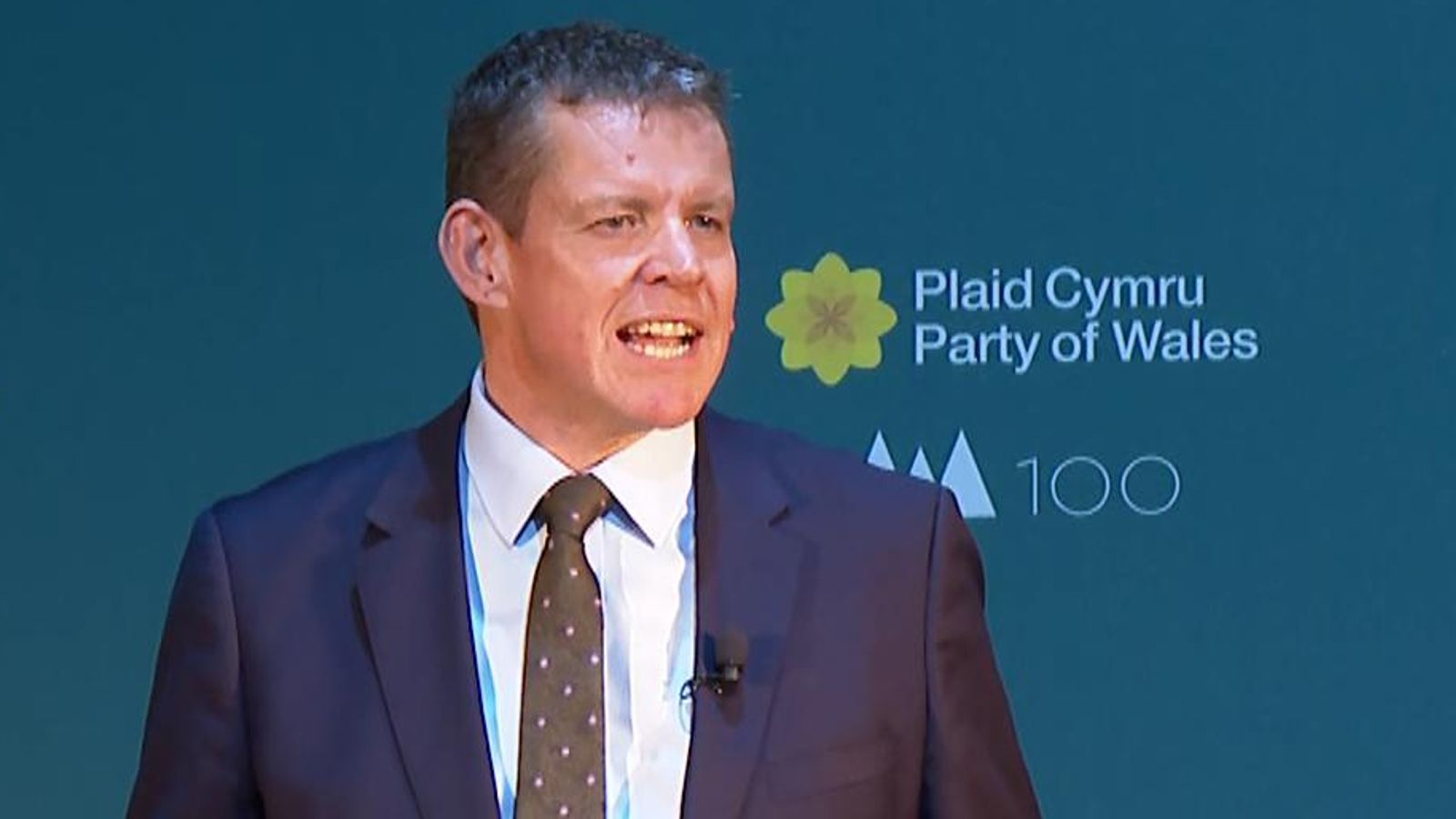
Nigel Farage’s Reform UK has celebrated another striking by-election victory, this time in an area regarded as a political stronghold for Plaid Cymru.
The result has sent a powerful message through Welsh politics.
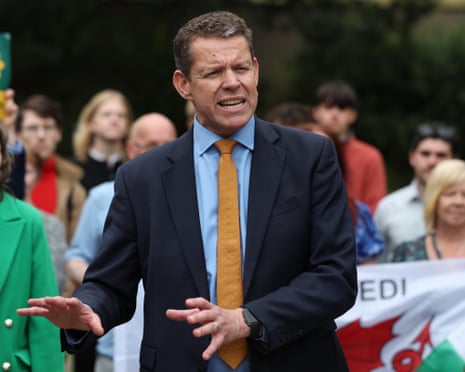
For decades, Wales has had its own political traditions, with Plaid Cymru maintaining a particularly strong presence in parts of the country.
Labour has also enjoyed deep-rooted support across Wales for generations.
But Reform is increasingly challenging those assumptions.
The latest victory gives Farage another opportunity to argue that the political map of Britain is being redrawn.
And this time, the message is particularly uncomfortable for Plaid Cymru.
If Reform can make electoral progress in territory associated with one of Wales’s most distinctive political movements, then no traditional party can assume that its voters are permanently loyal.
A result that carries symbolic weight
By-election results matter for more than the number of votes involved.
They can reveal where political loyalties are changing.
A victory in an area associated with a rival party can be especially powerful because of the symbolism.
For Reform, winning in the political backyard of Plaid Cymru’s leadership provides exactly that symbolism.
Farage can present the result as evidence that his movement is no longer confined to England or former Conservative territory.
It is increasingly willing to compete in Wales.
And it is prepared to challenge parties that have dominated Welsh politics for decades.
Wales is changing
Welsh politics has historically been different from politics in much of England.
National identity plays a particularly important role.
Plaid Cymru has built its political identity around Welsh nationalism, devolution and the interests of Wales.
Labour has traditionally benefited from strong support among working-class communities, particularly in the former industrial areas.
But these traditional political identities are under pressure.
Economic change has transformed communities.
The decline of heavy industry has weakened some of the old Labour structures.
Younger voters have different priorities.
And political dissatisfaction is increasingly cutting across traditional party boundaries.
That creates opportunities for a party like Reform.
Farage’s message reaches Wales
Reform’s message is not primarily based on Welsh nationalism.
Instead, Farage focuses on issues that he believes unite voters across Britain.
Immigration.
Taxation.
Public services.
Crime.
Housing.
Political accountability.
National sovereignty.
The strategy is straightforward.
Rather than asking Welsh voters to abandon their national identity, Reform asks them to prioritise other issues.
That can be politically effective.
A voter can be proud to be Welsh and still be angry about taxes.
They can support devolution and still want tighter immigration controls.
They can have voted Plaid Cymru for years and still be frustrated with the political establishment.
Political identities are rarely as simple as party strategists imagine.
A fictional conversation on the doorstep
Imagine a fictional conversation between a Reform campaigner and a lifelong Plaid Cymru voter.
The campaigner asks:
“Have you always voted Plaid?”
“Yes.”
“Will you this time?”
The voter hesitates.
“I’m not sure.”
“Why?”
“Because the issues I care about have changed.”
The exchange is fictional, but it illustrates the challenge facing traditional parties.
Voters are becoming less predictable.
They may continue to identify with one party culturally while voting for another.
That makes elections increasingly competitive.
The Plaid Cymru challenge
For Plaid Cymru, the result will be particularly uncomfortable.
The party’s strength depends partly on its ability to present itself as the authentic political voice of Wales.
A Reform victory in an area associated with Plaid’s leadership challenges that narrative.
Plaid can argue that one by-election does not represent the whole country.
That is true.
But the political symbolism remains.
If voters are willing to support Reform in traditionally nationalist territory, Plaid cannot simply assume that its identity-based appeal will be enough.
It must compete on everyday issues as well.
The Labour problem
Labour faces a similar challenge.
For generations, Labour was deeply embedded in Welsh politics.
In many communities, voting Labour was part of the local culture.
But those traditions have weakened.
Economic transformation has changed the electorate.
Brexit also demonstrated that Welsh voters could defy expectations.
And Reform is attempting to turn dissatisfaction into political support.
If the party succeeds in attracting former Labour voters, it could fundamentally alter Wales’s electoral landscape.
Why Reform celebrates so loudly
Reform understands the value of symbolism.
Winning a seat in a familiar political stronghold allows the party to make a much bigger claim than simply announcing a numerical victory.
It can say:
“We can win here.”
That matters.
Political parties need to convince voters that they are capable of winning before voters are willing to take a chance on them.
The psychological barrier is enormous.
A voter may agree with Reform but think:
“They can’t win, so my vote will be wasted.”
Every by-election victory weakens that argument.
The Farage effect
The result also strengthens Farage personally.
He remains the central figure in Reform’s national campaign.
His ability to attract media attention gives the party visibility that smaller political movements rarely achieve.
When Reform wins somewhere unexpected, Farage can turn the result into a national story.
That is strategically valuable.
It allows a local victory to become part of a much larger narrative about national political change.
But one by-election does not transform Wales
There is an important note of caution.
Wales is not suddenly becoming a Reform stronghold because of one result.
Plaid Cymru remains an important political force.
Labour remains deeply established.
The Conservatives have their own support.
The Liberal Democrats can also compete in particular areas.
Welsh politics is complicated.
Local factors can heavily influence by-elections.
Turnout can be lower than at a general election.
Candidates matter.
National political trends can also be magnified.
Therefore, Reform must demonstrate that this victory is repeatable.
The bigger question: can Reform build in Wales?
That is the real test.
Winning one constituency is one thing.
Building a permanent political organisation is another.
Reform needs candidates.
It needs local activists.
It needs councillors.
It needs constituency organisations.
And it needs a message that can appeal to voters who care deeply about Welsh politics.
That may prove more difficult than winning a headline-making by-election.
The party cannot simply rely on Farage’s national popularity.
It must develop local political credibility.
Welsh identity and Reform
One of the most interesting questions is whether Reform can successfully operate within Wales’s distinct political culture.
Farage’s political message has historically focused on Britain and the United Kingdom.
Plaid Cymru focuses heavily on Welsh identity and national self-government.
These are very different political visions.
But voters do not always choose parties based on constitutional questions.
A voter can care deeply about Welsh culture while also caring about household finances.
If Reform can convince voters that those economic and social issues are more important at election time, it can win support without necessarily replacing Welsh identity.
The wider British realignment
The Welsh result fits into a much broader trend.
Traditional party loyalties are weakening across Britain.
Former Conservative voters are moving towards Reform.
Some former Labour voters are moving towards Reform.
Smaller parties are becoming more competitive.
And voters increasingly choose parties based on individual issues rather than family tradition.
That is the environment in which Reform is growing.
The party’s challenge is to turn that fluidity into a stable coalition.
A warning for every traditional party
The result should worry not only Plaid Cymru.
It should worry Labour.
It should worry the Conservatives.
And, to a lesser extent, every party that has relied on inherited loyalties.
The lesson is simple:
No constituency belongs permanently to any political party.
A party can dominate for decades and still lose.
A political identity can appear permanent until voters suddenly decide it is not.
That is what makes by-elections so valuable as political signals.
Farage’s next challenge
For Farage, celebration will eventually have to give way to strategy.
He must decide how seriously to invest in Wales.
Does Reform want a handful of breakthrough victories?
Or does it want to become a major political force across the entire country?
If the second option is the goal, Reform will need a much deeper Welsh organisation.
It will need to recruit local figures.
It will need policies tailored to Welsh concerns.
And it will need to demonstrate that it understands Wales rather than simply importing a national message.
Could the political map change?
The answer is increasingly difficult to predict.
Wales has traditionally been one of Labour’s strongest territories.
Plaid Cymru has maintained a distinctive nationalist base.
But Reform’s progress introduces another variable.
If Reform can continue winning in areas where established parties once felt secure, Wales could become much more competitive.
The next general election could therefore produce surprises.
Seats that once seemed safe may become battlegrounds.
Voters who once followed tradition may become undecided.
And parties may be forced to campaign in places they previously took for granted.
The message from the result
For Reform, the latest by-election victory is therefore more than a local success.
It is a statement.
A statement that the party can compete outside its traditional territory.
A statement that Welsh voters are not immune to the political realignment taking place across Britain.
And a statement that even parties with deep local roots cannot assume their voters will remain loyal forever.
For Plaid Cymru, the challenge is to demonstrate that Welsh nationalism remains a powerful political force.
For Labour, the challenge is to maintain its connection with working-class Wales.
For the Conservatives, the challenge is to prevent further losses to Reform.
And for Nigel Farage, the challenge is to prove that the victory is the beginning of a trend rather than a one-off event.
That will require organisation, candidates and policies.
But the political symbolism is already there.
Reform has won in territory where many once assumed it would struggle.
And that is precisely why Farage is celebrating.
Because in modern British politics, the most valuable victory is sometimes not the biggest one.
It is the one that makes everyone else realise that the old assumptions may no longer apply.