

‘Morally Repugnant!’ Reform’s Zia Yusuf Attacks Labour Over Tax Burden as Britain Faces Growing Anger Over Overseas Spending
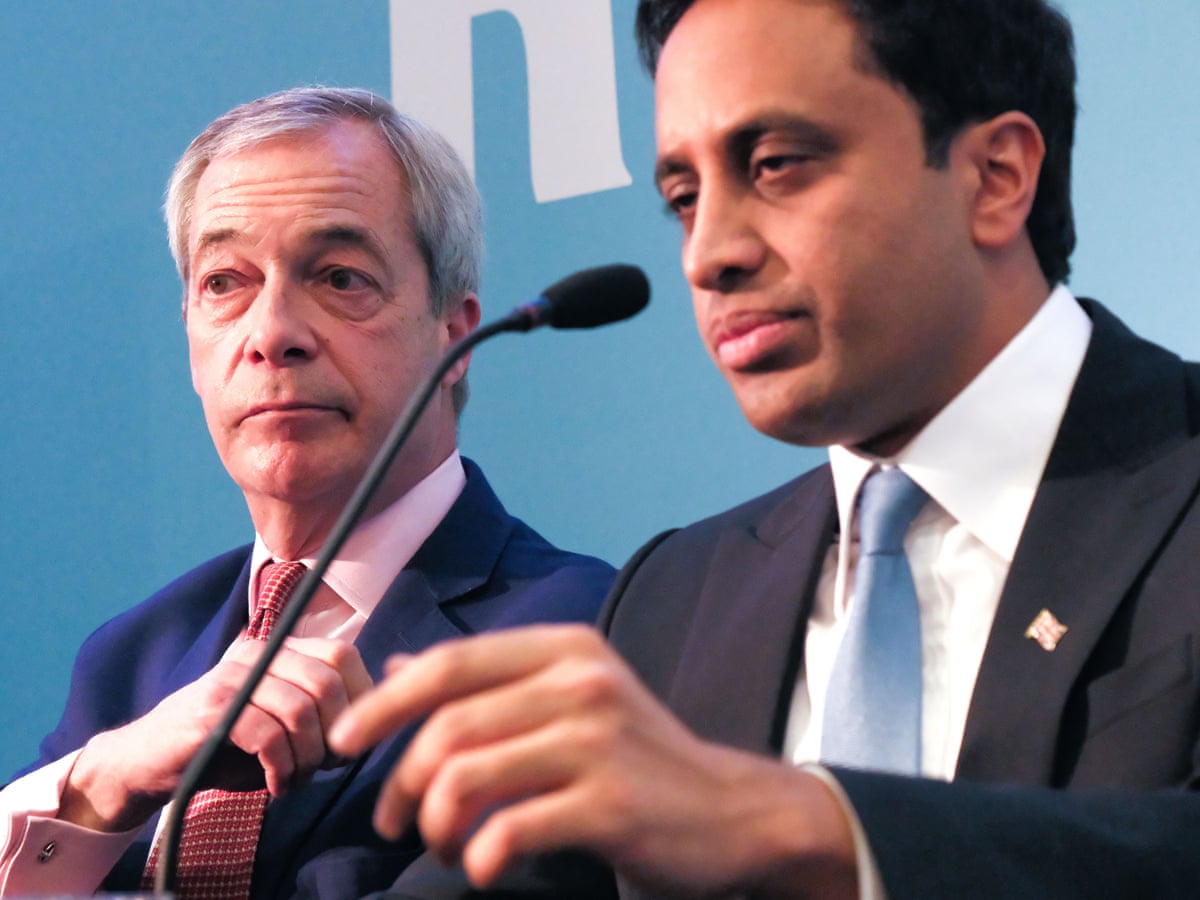
Britain’s political argument over taxes has entered increasingly bitter territory.
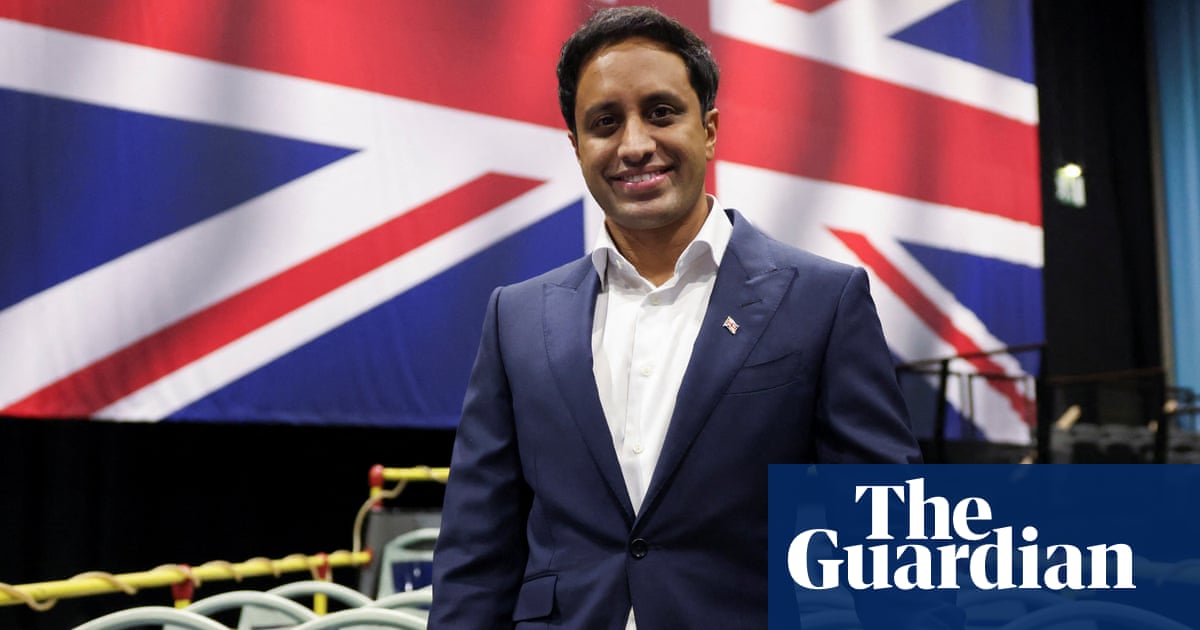
Reform UK chairman Zia Yusuf has launched a fierce attack on Labour, describing what he sees as the government’s approach to taxation and overseas spending as “morally repugnant”.
The language is deliberately strong.
But behind the political confrontation lies a much bigger question:
How should a government balance the financial pressures facing British households with its international responsibilities?
For Reform, the answer is straightforward.
The British taxpayer should come first.
The party argues that ordinary people are already facing an enormous tax burden and that the government should be far more cautious about committing public money overseas while domestic services remain under pressure.
Labour, however, rejects the idea that international spending and domestic investment are necessarily competing priorities in the simplistic way Reform suggests.
The result is another major political dividing line between the two parties.
And as household finances remain under pressure, the argument is likely to become increasingly important.
Yusuf turns up the heat
Zia Yusuf has become one of Reform’s most prominent political voices.
His style is different from Nigel Farage’s.
Where Farage often relies on political theatre and personal confrontation, Yusuf frequently presents himself as a businessman and policy-minded critic of government.
That gives his attacks a particular political purpose.
He wants Reform to sound not simply angry, but financially serious.
When Yusuf describes a government policy as “morally repugnant”, he is not merely criticising a single spending decision.
He is trying to establish a broader principle:
British taxpayers should not be expected to pay ever higher taxes while government continues spending money on priorities that many voters believe should come second.
That argument has obvious political appeal.
The tax burden question
Britain’s tax burden has become one of the defining issues of modern politics.
Households are facing higher costs for housing, food, energy and other essentials.
At the same time, governments are under pressure to maintain the NHS, social care, schools, policing, defence and infrastructure.
All of these areas require money.
That creates an uncomfortable reality.
There is no government that can simultaneously reduce taxes dramatically, increase spending on every public service and eliminate government debt.
Something has to give.
Reform’s argument is that the government should begin by reducing waste and reconsidering spending commitments that are less important to British citizens.
Labour’s argument is that responsible government sometimes requires difficult spending decisions and that Britain cannot simply retreat from international responsibilities.
The disagreement is therefore about priorities as much as money.
“Why are British taxpayers paying?”
That is the question Reform wants voters to ask.
Imagine a fictional taxpayer sitting at a kitchen table after opening a tax statement.
“My bills keep going up,” he says.
“The government says there isn’t enough money for everything.
“So why does it have money for projects overseas?”
The conversation is fictional, but the political emotion behind it is genuine.
People do not necessarily oppose foreign aid or international cooperation.
But when domestic services appear under strain, voters often ask whether government spending reflects their priorities.
That is precisely the political space Reform is trying to occupy.
Labour’s defence
Labour would argue that the debate cannot be reduced to “money spent abroad versus money spent at home”.
International spending can serve Britain’s interests.
Aid can support countries facing humanitarian crises.
Development programmes can improve stability.
International partnerships can strengthen diplomatic relationships.
Defence cooperation can protect Britain’s strategic interests.
And in some cases, overseas spending can reduce pressures that eventually affect Britain itself, including migration, conflict and global instability.
From that perspective, the issue is not whether Britain should spend anything overseas.
The issue is whether the money is being spent effectively.
That is a much more complicated question.
Reform’s opportunity
For Reform, complexity can actually be politically useful.
The party’s message is easy to understand.
Britain has taxpayers.
Those taxpayers expect government to provide services.
If services are struggling, government should examine every pound it spends.
That does not necessarily mean abolishing foreign aid or international commitments.
It means asking whether every programme delivers sufficient value.
Reform can therefore position itself as the party willing to ask questions that other politicians are supposedly afraid to ask.
That is a powerful political identity.
But the numbers matter
This is where Reform faces an important challenge.
Political rhetoric can make spending overseas sound enormous.
But the actual figures matter.
A government budget contains thousands of different spending commitments.
Even substantial reductions in one area may not automatically translate into large tax cuts for individual households.
If Reform wants to persuade voters that overseas spending is the reason taxes are high, it needs to demonstrate the arithmetic.
How much would be saved?
Which programmes would be cancelled?
How much would each taxpayer receive?
Would the money instead go to the NHS?
Would it fund tax reductions?
Would it reduce government borrowing?
Or would it simply be absorbed into another department?
Those are the questions that transform political rhetoric into economic policy.
A wider battle over government priorities
The argument also reflects a deeper ideological difference.
Reform’s political philosophy is increasingly centred around the idea of a smaller and more focused state.
The party wants government to concentrate on core functions.
Law and order.
Defence.
Borders.
Infrastructure.
Essential public services.
And lower taxation.
Labour, by contrast, argues for a more active state capable of investing in public services and pursuing broader social and economic objectives.
Neither side has a monopoly on concern for taxpayers.
They simply disagree about what government should do with the money it collects.
The emotional power of the phrase “morally repugnant”
Yusuf’s choice of language is significant.
Calling something “expensive” is an economic criticism.
Calling it “inefficient” is an administrative criticism.
Calling it “morally repugnant” turns it into a question of right and wrong.
That is much more powerful.
It tells supporters that the issue is not merely about accounting.
It is about fairness.
The argument becomes:
Why should ordinary families sacrifice more while government spends money elsewhere?
That framing is particularly effective during periods of economic anxiety.
When people feel financially secure, arguments over government spending can seem technical.
When people feel squeezed, they become personal.
The danger for Labour
Labour therefore faces a difficult political challenge.
If ministers respond aggressively, they risk giving Reform more publicity.
If they ignore the criticism, they risk allowing Reform to define the issue.
The government needs to explain why its spending decisions are necessary.
It also needs to demonstrate value for money.
And perhaps most importantly, it needs to convince taxpayers that sacrifices are being shared fairly.
That final point could become decisive.
Voters are often willing to accept taxes when they believe government is competent.
They become much more hostile when they believe money is being wasted.
The Reform problem
Reform also needs to be careful.
It is easy to criticise government spending.
It is harder to govern.
If Reform eventually enters government, it will inherit many of the same international obligations that Labour faces.
It will need to maintain diplomatic relationships.
It will need to respond to humanitarian emergencies.
It will need to consider national security.
It will need to work with allies.
And it will need to make difficult decisions about aid and international commitments.
At that point, the party will have to decide whether its current rhetoric is flexible enough for the responsibilities of government.
A fictional Westminster exchange
Imagine a fictional exchange between a Labour minister and a Reform politician.
The minister says:
“Britain cannot simply turn its back on the world.”
The Reform politician replies:
“And Britain cannot turn its back on British taxpayers.”
The minister responds:
“Those are not mutually exclusive.”
The Reform politician says:
“Then prove it.”
That fictional exchange captures the central political argument.
Both sides can claim to be defending Britain’s interests.
The disagreement is over what those interests require.
Taxpayers want results
Ultimately, voters are less interested in ideological arguments than politicians sometimes assume.
They want functioning hospitals.
They want reliable public transport.
They want safe streets.
They want affordable housing.
They want efficient government.
And they want to know that their taxes are being spent responsibly.
If Labour can demonstrate that international spending produces measurable benefits while domestic services improve, its position becomes stronger.
If Reform can demonstrate that government is wasting billions that could be better used at home, its argument becomes stronger.
Evidence will matter.
Farage’s wider strategy
For Nigel Farage, the controversy fits perfectly into Reform’s broader political strategy.
He wants the next election to be fought around a simple question:
Who is on the side of ordinary taxpayers?
Reform wants voters to see Labour as a high-tax, high-spending party that asks too much from working people.
Labour wants voters to see Reform as a party offering simplistic solutions to complicated problems.
That battle will intensify.
And figures such as Zia Yusuf will play an important role in it.
Yusuf can attack Labour from an economic perspective while Farage dominates the broader political conversation.
Together, they can present Reform as both an outsider movement and a potential governing alternative.
The bigger question
The argument over overseas spending is ultimately about what Britain believes government is for.
Should government concentrate almost entirely on domestic priorities?
Or should Britain continue to spend money abroad because international stability, humanitarian assistance and strategic partnerships ultimately serve British interests?
There is no easy answer.
But the political demand for accountability is legitimate.
Every government should be prepared to explain how taxpayers’ money is being spent.
Every major programme should face scrutiny.
And every political party should be willing to explain not only what it wants to spend, but what it would stop spending.
That is where Reform’s criticism becomes most powerful.
But it is also where Reform will eventually be tested.
The promise and the reality
Zia Yusuf’s “morally repugnant” attack is designed to provoke.
It is designed to make taxpayers angry.
It is designed to force Labour onto the defensive.
And politically, it may succeed.
But outrage alone cannot balance Britain’s books.
If Reform wants to convince voters that it can govern, it will eventually need to provide the detailed calculations behind its promises.
Which taxes would fall?
Which programmes would disappear?
How much money would actually be saved?
What would happen to Britain’s international commitments?
And what would taxpayers receive in return?
Those questions cannot be answered with slogans.
They require numbers.
Britain is heading towards a bigger argument
The political fight over taxation is unlikely to disappear.
If anything, it is becoming more intense.
Labour believes that government needs sufficient revenue to maintain public services and meet its responsibilities.
Reform believes taxpayers are already being asked to contribute too much and that government should radically rethink its priorities.
Both parties will claim to be defending ordinary Britons.
But only one of them can ultimately persuade voters that its approach offers the better future.
For now, Zia Yusuf has chosen confrontation.
His message is deliberately uncompromising:
British taxpayers should not be expected to accept higher burdens while government refuses to examine every spending commitment.
Whether voters agree will depend on what they see happening around them.
If hospitals improve, services become more efficient and the economy strengthens, Labour can argue that its spending decisions are justified.
If taxes remain high while public services continue to struggle, Reform will have a powerful weapon.
And that is why this argument matters.
It is not really about one overseas programme.
It is about trust.
Trust that government is spending wisely.
Trust that taxpayers are being treated fairly.
And ultimately, trust in who should control Britain’s finances.
For Nigel Farage and Zia Yusuf, that is the political battle they want.
And for Labour, it may be one of the most difficult battles of all.