

Nigel Farage Erupts at Keir Starmer as Reform Faces ‘Racist’ Plan Accusation
Nigel Farage has launched an angry political counterattack against Keir Starmer after Reform UK came under fire over allegations that one of its policies could be interpreted as discriminatory.
The confrontation has opened another bitter chapter in the increasingly hostile relationship between Labour and Reform, with both sides attempting to portray themselves as the defenders of ordinary British voters.
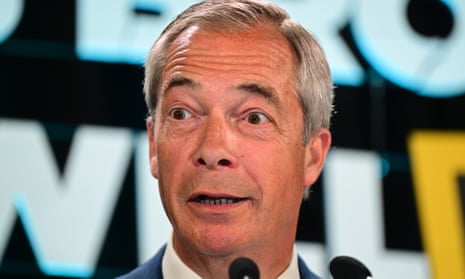
For Farage, the dispute represents an opportunity to accuse the Labour leadership of using inflammatory language to discredit a growing political movement.
For Starmer and his allies, however, the argument is about something much more fundamental: the boundaries of acceptable political debate.
The clash illustrates how rapidly Britain’s political conversation has become polarised.
Policies that once might have been discussed as questions of economics, immigration or public administration can now become arguments about identity, fairness and discrimination.
And once those accusations enter the political arena, they can be extremely difficult to contain.
Farage Hits Back
Farage has never been reluctant to confront his political opponents.
Throughout his career, he has built his public image around direct confrontation, particularly on issues involving immigration, national identity and Britain’s relationship with international institutions.
His response to Starmer’s criticism followed the same pattern.
Rather than allowing the allegation to define the conversation, Farage attempted to turn the accusation back against Labour.
His argument was straightforward.
Reform, he suggested, should be judged on what its policies actually propose rather than on the labels attached to them by political opponents.
That distinction is central to the party’s wider strategy.
The Battle Over Language
Political language has become increasingly important in modern Britain.
Words such as “racist”, “extreme”, “far-right” and “discriminatory” carry enormous political weight.
Supporters of such descriptions argue that they are sometimes necessary to identify genuinely harmful policies.
Opponents argue that using them too casually can shut down legitimate political debate.
The dispute between Starmer and Farage therefore goes beyond one policy.
It is also about who gets to define the boundaries of political legitimacy.
Starmer’s Position
For Starmer, the issue provides an opportunity to draw a sharp line between Labour and Reform.
The Prime Minister has repeatedly sought to present Labour as a mainstream governing party committed to national stability.
Reform, by contrast, presents itself as a movement willing to challenge political conventions.
That difference is increasingly visible in debates over immigration and national identity.
Labour argues that political change must remain within a framework of fairness and social cohesion.
Reform argues that established politicians have become too cautious about discussing subjects that concern ordinary voters.
The Immigration Question
Immigration sits at the centre of the dispute.
Few political issues have generated more intense debate in Britain during the past decade.
Supporters of tighter controls argue that high levels of migration can place pressure on housing, infrastructure and public services.
They also argue that voters have repeatedly demanded greater control over Britain’s borders.
Opponents warn that immigration is often discussed in ways that unfairly target particular communities.
That disagreement has become one of the defining political divisions of modern Britain.
Reform’s Argument
Reform’s position is that immigration policy should be determined by democratic accountability.
The party argues that governments should be able to decide who enters the country, under what conditions and for what purposes.
Farage frequently frames the issue around sovereignty.
His argument is that a country cannot maintain public confidence if citizens believe that political leaders have lost control over borders.
Supporters regard that as a legitimate democratic concern.
Critics believe the rhetoric can encourage division.
Labour’s Counterargument
Labour’s response is that immigration policy must be balanced with Britain’s economic needs and social responsibilities.
The country relies on international workers in numerous sectors.
Businesses require skilled employees.
The NHS depends on overseas recruitment.
Universities rely heavily on international students.
And Britain’s major cities have become deeply multicultural.
The government therefore faces a complicated balancing act.
It must respond to public concern without creating unnecessary economic disruption or social tension.
Where the Argument Becomes Toxic
The difficulty arises when disagreements over immigration move from policy into identity.
A debate about numbers can become a debate about people.
A discussion about border enforcement can become a discussion about nationality.
A disagreement about citizenship can become a question of belonging.
That is where political language becomes particularly sensitive.
Farage’s Political Strategy
Farage has built his political career by pushing controversial issues into the mainstream.
He believes that politicians should be willing to discuss subjects that other parties avoid.
His supporters see this as political courage.
His opponents see it as provocation.
The latest dispute fits neatly into that long-running pattern.
Farage can argue that criticism from Labour demonstrates precisely why Reform believes Britain’s political system needs changing.
Starmer’s Challenge
Starmer faces an equally difficult political calculation.
If he attacks Reform too aggressively, he risks giving Farage more publicity.
If he ignores Reform, he risks allowing the party to define the political conversation.
And if he uses exceptionally strong language, Reform can portray Labour as an establishment party attempting to silence opposition.
This is a familiar problem for mainstream parties confronting populist movements.
The Politics of Outrage
Modern political campaigns increasingly depend on outrage.
A controversial statement can dominate social media within minutes.
A short video clip can become more influential than a lengthy policy document.
A political disagreement can become a viral confrontation.
Farage has considerable experience operating in this environment.
His political style is particularly suited to headline-driven politics.
Social Media and Political Conflict
The online environment also changes the nature of political debate.
Statements are frequently stripped of context.
Supporters circulate favourable clips.
Opponents circulate damaging ones.
The original argument can quickly disappear beneath competing interpretations.
That creates an incentive for politicians to use increasingly dramatic language.
The result can be a political conversation that is louder but not necessarily more informative.
The Need for Policy Detail
The controversy also highlights a fundamental question facing Reform.
Can the party explain its policies in enough detail to survive serious scrutiny?
It is relatively easy to campaign on a simple message.
It is considerably harder to govern.
A government must specify exactly how policies would operate.
It must consider unintended consequences.
It must calculate costs.
It must determine how laws would be enforced.
It must anticipate legal challenges.
These details matter.
The Government Test
Reform’s growing political ambitions mean that it is increasingly being judged by a different standard.
When the party was primarily a protest movement, voters could support it as a way of expressing dissatisfaction.
If it seeks to become a governing party, however, voters will ask much harder questions.
Who would administer its policies?
How much would they cost?
Would they work?
What would happen if they failed?
And what would Reform do when circumstances changed?
The Question of Racism
The accusation of racism is particularly serious.
It should not be used merely as a political insult.
At the same time, allegations of discriminatory effects deserve serious examination when policies potentially affect different groups of people differently.
The important distinction is between examining a policy and attacking an entire group of voters.
A responsible political debate should be capable of doing the former without automatically becoming the latter.
Farage’s Defence
Farage’s response is likely to focus on the distinction between political policy and personal prejudice.
He can argue that supporting stricter immigration controls does not automatically make someone racist.
Millions of people can hold concerns about immigration for economic, social or political reasons without hostility towards individuals from particular backgrounds.
That is an important point in the broader debate.
Critics’ Response
Critics, however, may argue that political intentions are not the only issue.
They may focus on the potential consequences of policies.
A policy can have unequal effects even if its supporters claim neutral intentions.
That is why policy details matter.
The debate should therefore focus on evidence rather than simply exchanging accusations.
The Wider Political Context
The confrontation comes against a background of intense competition between Labour and Reform.
Both parties are attempting to build coalitions that extend beyond their traditional support.
Labour wants to retain working-class voters while appealing to younger and more socially liberal groups.
Reform wants to attract former Conservative voters as well as traditional Labour supporters who have become disillusioned with the party.
Immigration sits at the intersection of those competing strategies.
The Working-Class Battle
The political importance of working-class voters cannot be overstated.
For much of the twentieth century, Labour enjoyed a strong relationship with industrial communities.
That relationship has weakened.
Many former Labour voters supported Brexit.
Some subsequently moved towards the Conservatives.
Increasing numbers have considered Reform.
Farage wants to make that realignment permanent.
Labour wants to reverse it.
Why Starmer Is Concerned
For Starmer, Reform’s success represents more than a threat to Labour’s parliamentary position.
It challenges Labour’s understanding of its own identity.
If voters who historically regarded Labour as their natural political home increasingly support Reform, Labour must ask why.
The answer cannot simply be that those voters have changed.
Political parties must adapt when their electorates change.
The Reform Opportunity
For Farage, the dispute creates an opportunity to reinforce his central political narrative.
He can argue that Reform is being attacked because it is challenging the political establishment.
Every criticism from Labour can potentially be presented as evidence that Reform is becoming politically significant.
This is one of the advantages of opposition politics.
Even attacks can generate momentum.
But There Is a Risk
The strategy also carries dangers.
Constant confrontation can energise supporters.
But it can alienate undecided voters.
Some people are attracted to Reform because they want political change.
Others may be uncomfortable with highly confrontational political rhetoric.
To become a governing party, Reform will eventually need to persuade both groups.
The Moderation Question
The question facing Farage is whether Reform should moderate its presentation as it grows.
Some supporters would strongly oppose that idea.
They believe the party’s strength comes precisely from refusing to compromise.
Others argue that political expansion requires a broader message.
The challenge is finding a balance.
Badenoch’s Position
The Conservative Party also has an interest in the dispute.
Kemi Badenoch is attempting to rebuild the Conservatives while preventing Reform from taking permanent control of the political right.
She can argue that voters can support stronger border controls and conservative policies without choosing Farage.
That makes the political competition even more complicated.
Three Parties, One Issue
The same immigration debate is therefore being used by three different political forces.
Labour presents itself as responsible and pragmatic.
The Conservatives seek to combine stronger controls with traditional government experience.
Reform presents itself as the party willing to make the most radical changes.
The electorate must decide which approach it trusts.
London and the Immigration Debate
The issue is particularly complicated in London.
The capital has one of the most diverse populations in Britain.
International migration has played an important role in its economic development.
At the same time, London faces significant pressure on housing and public services.
This creates competing political narratives.
One side sees diversity as an economic and cultural strength.
Another focuses on the pressures created by rapid population growth.
Both arguments resonate with different sections of the electorate.
Farage’s National Ambition
Farage’s political ambition extends far beyond immigration.
He wants Reform to become a major governing force.
That means the party must establish credibility on the economy, defence, healthcare, education and infrastructure.
The controversy with Starmer is therefore only one part of a much bigger political battle.
The Economy Could Change Everything
Economic conditions will probably determine how voters respond.
If living standards improve, voters may become less willing to support radical political change.
If wages stagnate and housing remains unaffordable, dissatisfaction could grow.
Reform’s argument becomes stronger when people feel that the existing system is failing them.
Labour’s argument becomes stronger if it can demonstrate tangible improvements.
Public Services
The NHS will also play a major role.
Voters want shorter waiting times.
They want access to doctors.
They want reliable emergency services.
They want social care to function.
Reform must explain how it would improve those services.
Labour must demonstrate that its own approach is working.
Political Trust
The deeper issue behind the confrontation may actually be trust.
Many voters no longer automatically believe politicians.
They have heard promises about immigration.
They have heard promises about the NHS.
They have heard promises about economic growth.
When results fail to match expectations, trust deteriorates.
Farage’s political appeal is partly built on that distrust.
Starmer’s Response
Starmer’s challenge is therefore not simply to attack Farage.
He needs to demonstrate that mainstream politics can still deliver.
That means showing measurable improvements.
It means explaining difficult decisions.
And it means acknowledging where government policy has failed.
If Labour can restore some public confidence, Reform’s appeal could weaken.
If it cannot, Farage will continue to benefit.
A Battle Over Britain
At a deeper level, the argument between Farage and Starmer reflects two competing visions of Britain.
One sees the country as a nation that needs stronger borders, lower taxes and a fundamental break with established political assumptions.
The other sees Britain as a modern, diverse society requiring pragmatic government and social cohesion.
The disagreement is profound.
It cannot be resolved by one speech.
The Importance of Evidence
The most useful political debate would therefore move beyond accusations.
Instead of simply asking whether a policy is “racist”, voters should be able to examine what the policy actually proposes.
How would it work?
Who would be affected?
What evidence supports it?
What would the economic consequences be?
Would it treat people equally?
Those are the questions that can produce meaningful political debate.
Farage’s Greatest Strength
Farage’s greatest strength remains his ability to simplify complicated political arguments.
He can take an issue that might require dozens of pages of policy analysis and reduce it to a sentence.
That is extremely effective politically.
But government cannot operate entirely through slogans.
Eventually, every slogan encounters reality.
Starmer’s Greatest Strength
Starmer’s strength is almost the opposite.
He can present himself as cautious and institutional.
He can emphasise evidence and administrative competence.
But that approach can appear uninspiring when voters are angry.
If people want dramatic change, a cautious politician can struggle to compete with an insurgent.
The Battle for the Middle
The decisive voters may therefore be those in the middle.
They may share some of Reform’s concerns.
They may also worry about the consequences of radical change.
They may be dissatisfied with Labour.
But they may not want to support Farage.
Whoever wins those voters could determine the next phase of British politics.
What Reform Must Do
Reform must show that it can discuss sensitive subjects without unnecessarily alienating voters.
It must demonstrate policy competence.
It must broaden its appeal.
And it must develop a team capable of operating beyond Farage.
The party’s success will ultimately depend on whether it can move from political protest to credible government.
What Labour Must Do
Labour has its own responsibilities.
It must avoid dismissing legitimate public concerns.
It must communicate clearly about immigration.
It must demonstrate that its policies are effective.
And it must distinguish between criticism of a policy and criticism of the people who support it.
If Labour simply attacks Reform voters, it risks pushing them further away.
The Political Battlefield
The latest clash is therefore unlikely to be the last.
Immigration will remain one of Britain’s most contentious political issues.
Farage will continue to campaign on it.
Labour will continue to challenge him.
The Conservatives will attempt to compete with both.
And voters will continue to make increasingly unpredictable choices.
The Final Verdict
Nigel Farage’s angry response to Keir Starmer reflects a much larger political struggle than a single dispute over a controversial Reform proposal.
At its heart is a question about how Britain should discuss difficult issues.
Farage wants voters to believe that concerns about immigration and national identity have been ignored for too long.
Starmer wants to draw a line between legitimate political debate and rhetoric that he believes risks dividing communities.
Neither side can afford to underestimate the importance of the argument.
For Reform, the controversy is an opportunity to demonstrate that it will not retreat when attacked.
For Labour, it is an opportunity to argue that political change must be accompanied by responsibility.
For the Conservatives, it is another reminder that the political right is now fiercely contested.
And for voters, the crucial question is not which politician can produce the strongest headline.
It is which political programme can withstand serious scrutiny.
Britain needs a debate about immigration.
It needs a debate about borders.
It needs a debate about economic growth.
It needs a debate about housing and public services.
But those debates are most useful when they are based on evidence rather than labels.
Farage has built his political career by challenging the language and assumptions of the establishment.
Starmer has built his leadership around the promise of responsible government.
Their confrontation therefore represents two competing approaches to politics.
One relies on disruption.
The other relies on institutional authority.
The coming political battles will determine which approach voters trust.
And as Reform continues to challenge Labour across traditional political boundaries, one thing is becoming increasingly clear.
The argument between Farage and Starmer is not going away.
It is becoming one of the defining political conflicts of modern Britain.