


Nigel Farage’s Message to Britain: Reform Says It Stands Ready to Fix the Country
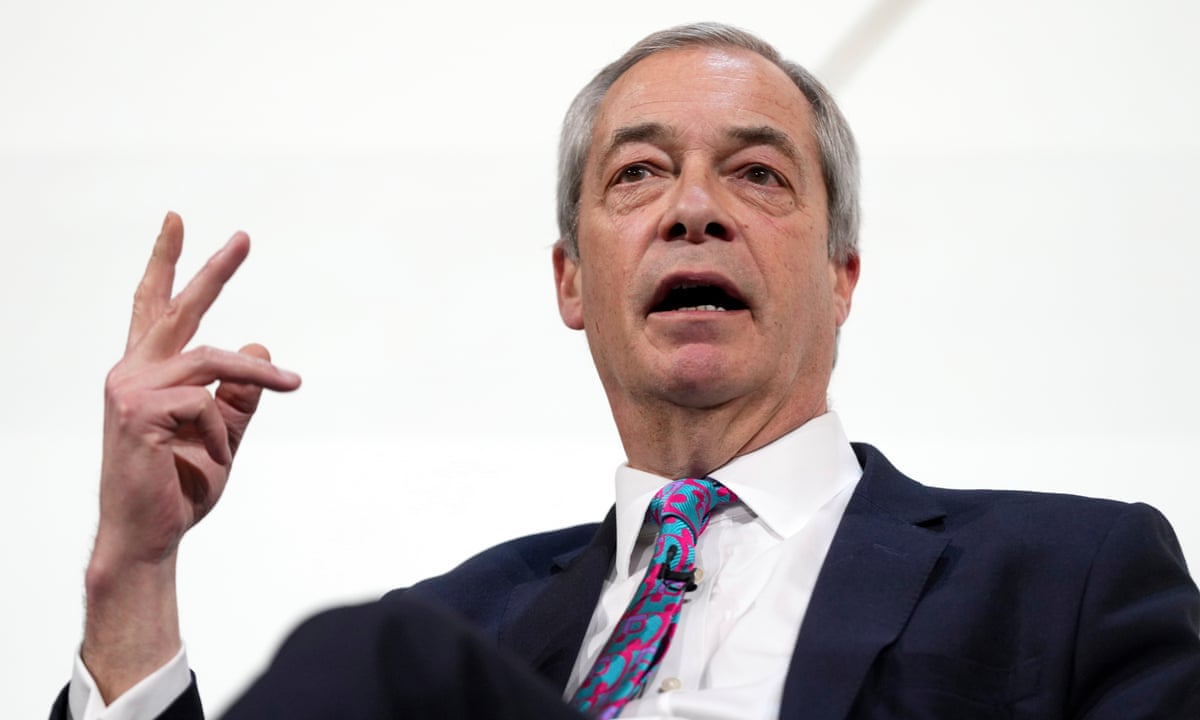
Nigel Farage has issued a direct message to voters, presenting Reform UK as a political force that believes it is ready to take responsibility for Britain’s future.
The message comes at a significant moment in British politics.
For years, Farage has positioned himself as an outsider challenging the established political parties.
Now, however, Reform UK is attempting to move beyond protest politics.
The party wants voters to believe that it is not simply capable of criticising governments, but capable of replacing them.
That distinction could prove crucial.
It is relatively easy for an opposition movement to identify problems.
It is much harder to demonstrate that it has practical answers.
Farage’s latest appeal therefore represents more than another political intervention.
It is an attempt to convince voters that Reform is ready for the responsibilities of government.
A Message About Change
At the heart of Farage’s argument is a simple idea.
Britain needs change.
The Reform leader has repeatedly argued that the traditional political parties have failed to address some of the country’s most persistent problems.
Immigration.
Housing.
Public services.
Taxation.
Economic growth.
National debt.
Political accountability.
These issues have become central to Reform’s political identity.
Farage’s message is that voters should not simply accept gradual adjustments to an existing system.
Instead, they should consider a more fundamental change in the way Britain is governed.
From Protest to Power
This represents an important evolution for Reform.
Political movements built around protest can attract attention quickly.
They can benefit from public anger.
They can win votes from people who want to punish established parties.
But eventually voters ask a much harder question.
What would you actually do?
That question becomes especially important when a party begins to look capable of winning significant numbers of seats.
Reform now has to provide answers.
The “Fix Britain” Argument
The phrase “fix Britain” is politically powerful because it suggests that the country is fundamentally broken.
Farage’s argument relies heavily on that perception.
He presents Britain as a country with enormous potential but serious structural problems.
The economy has struggled with weak productivity.
Housing costs have become difficult for many families.
Public services face intense pressure.
Trust in politicians remains low.
And immigration has become one of the most controversial issues in the country.
Reform says these problems require decisive action.
Immigration at the Centre
Immigration is likely to remain one of the most important parts of Reform’s message.
Farage has spent much of his political career campaigning for tighter border controls.
He argues that Britain should have greater control over who enters the country and under what conditions.
Supporters say that position reflects concerns about pressure on housing and public services.
Critics argue that Reform’s approach risks oversimplifying a complicated economic and social issue.
The debate is unlikely to disappear.
The Difference Between Legal and Illegal Migration
One of the challenges facing Reform is explaining the distinction between illegal migration and legal migration.
Britain’s economy depends on workers from around the world in a number of industries.
At the same time, voters remain concerned about the scale and management of migration.
A government must therefore balance economic needs with public expectations about border control.
If Reform wants to govern, it will need detailed answers.
The Housing Crisis
Housing could provide another major test.
Many young Britons struggle to buy homes.
Rents have increased significantly in many parts of the country.
Planning restrictions can make new construction difficult.
Local communities often oppose large developments.
Yet without additional housing, affordability can remain under pressure.
A serious Reform housing policy would need to address these competing interests.
The Cost of Living
For ordinary households, politics is often judged through everyday expenses.
Can a family pay the mortgage?
Can they afford rent?
Can they heat their home?
Can they buy food?
Can they save money?
Can their children afford to move out?
These questions are more important to many voters than political arguments in Westminster.
Farage knows that.
His message therefore attempts to connect national political change with personal economic pressure.
The Economy
Economic growth is likely to become one of Reform’s biggest tests.
It is relatively easy to promise lower taxes.
It is harder to explain how lower taxation would interact with government spending.
Britain has enormous demands on its budget.
The NHS requires funding.
Schools require funding.
Defence requires funding.
Infrastructure requires investment.
Local government requires money.
Any government promising major tax reductions must explain the numbers.
The Tax Question
Reform has positioned itself as a party seeking to reduce what it regards as excessive taxation.
Its supporters argue that high taxes can discourage work, investment and entrepreneurship.
Critics warn that reducing taxes without sufficient spending reductions could increase borrowing or weaken public services.
That disagreement will become increasingly important as Reform attempts to establish itself as a governing party.
Public Services
The NHS remains one of Britain’s most politically sensitive institutions.
Almost every government promises to improve it.
Almost every government struggles to do so.
Reform therefore faces the same fundamental problem as Labour and the Conservatives.
It must explain how to improve healthcare while controlling costs.
That requires more than political slogans.
It requires a detailed programme for staffing, hospitals, social care and prevention.
Reform and the NHS
A Reform government would be judged quickly on public services.
Voters may tolerate ideological experimentation in some areas.
They are less likely to tolerate failures that affect their health or their families.
That means Reform would need experienced ministers and credible policy experts.
The transition from campaign organisation to government machinery would be enormous.
The Conservative Challenge
The rise of Reform has created an existential problem for the Conservatives.
For decades, the Conservatives were the main alternative to Labour.
Now Reform is competing for many of the same voters.
Some Conservatives believe the answer is to move closer to Reform.
Others believe the party must occupy a more moderate position.
Both strategies carry risks.
Moving towards Reform could alienate centrist voters.
Ignoring Reform could allow Farage’s party to continue taking support.
Labour’s Dilemma
Labour faces a different challenge.
Reform is increasingly targeting working-class voters who historically supported Labour.
This is particularly significant in former industrial communities.
Many of these voters have become less loyal to Labour over the past decade.
Farage wants to turn that political shift into a permanent realignment.
Labour therefore has to answer a difficult question.
Why should these voters return?
The Working-Class Vote
The battle for working-class support may ultimately determine Reform’s success.
If Farage can convince former Labour voters that Reform is their new political home, the consequences could be enormous.
The traditional Labour coalition could fragment.
But winning these voters permanently requires more than anger.
It requires credibility.
People need to believe that Reform understands their economic circumstances.
The Reform Identity
Farage has built Reform around several themes.
National sovereignty.
Lower taxation.
Immigration control.
Political accountability.
Opposition to what the party sees as excessive regulation.
And rejection of what it describes as establishment politics.
The message is deliberately straightforward.
That clarity is one of Reform’s strengths.
The Risk of Oversimplification
But simplicity can also become a weakness.
Britain’s problems are rarely caused by one policy.
Housing, for example, involves planning, finance, infrastructure, wages, land prices and population growth.
Immigration affects the labour market, public services, housing and demographics.
Economic growth depends on investment, education, productivity, trade and infrastructure.
A government cannot solve these problems with slogans alone.
The Question of Competence
That is why competence may become Reform’s biggest political test.
Voters who support Reform as a protest may be forgiving of inexperienced candidates.
Voters considering Reform as a governing party will be much less forgiving.
They will want to know who will become ministers.
Who will run the Treasury?
Who will manage the NHS?
Who will lead the Foreign Office?
Who will run defence?
Who will negotiate with international partners?
These questions matter.
Farage’s Personal Role
Farage remains the centre of Reform’s political identity.
That has helped the party grow.
His public profile is enormous.
But it also creates a potential weakness.
If Reform becomes too dependent on one personality, the party could struggle to demonstrate that it is a mature political organisation.
A governing party needs institutions.
It needs policy departments.
It needs experienced parliamentarians.
It needs disciplined communication.
From Movement to Machine
This transformation is already becoming one of Reform’s most important challenges.
Campaign movements thrive on enthusiasm.
Governments require administration.
A government has to produce budgets.
It has to pass legislation.
It has to negotiate with civil servants.
It has to deal with courts.
It has to manage international relationships.
It has to respond to emergencies.
The reality of government is much more complicated than campaigning.
Britain Wants Something Different
Despite those challenges, Reform’s message is clearly resonating with a significant part of the electorate.
That tells the established parties something important.
Many voters are dissatisfied with the current political system.
They do not necessarily agree with every Reform policy.
But they may agree with the broader argument that Britain needs change.
That sentiment cannot simply be dismissed.
Political Trust
Trust is one of the biggest issues in modern British politics.
Voters have become increasingly sceptical of political promises.
They have heard ambitious commitments from successive governments.
When those promises are not fulfilled, cynicism grows.
Farage attempts to exploit that distrust by presenting himself as someone who has been warning about Britain’s problems for years.
The Brexit Legacy
Farage’s political career remains closely associated with Brexit.
He spent decades campaigning for Britain’s departure from the European Union.
Brexit eventually happened.
But its political consequences remain contested.
Supporters argue that leaving the EU restored sovereignty.
Critics argue that it created economic and diplomatic difficulties.
For Reform, Brexit remains part of a broader argument about national independence.
Sovereignty as a Political Weapon
The concept of sovereignty remains powerful.
Farage argues that Britain should make its own decisions.
That includes immigration.
Trade.
Regulation.
Foreign policy.
And domestic law.
Supporters see this as democratic accountability.
Critics argue that modern countries cannot operate completely independently in a globalised economy.
The debate is unlikely to disappear.
Reform’s Foreign Policy
A governing Reform party would also face questions about Britain’s international role.
The party would have to maintain relationships with NATO allies.
It would need a policy towards Russia and Ukraine.
It would need to manage Britain’s relationship with the United States.
It would need to negotiate trade agreements.
It would need to deal with China.
Those responsibilities would test the party’s experience.
Defence
Defence is another area in which Reform would need to demonstrate seriousness.
Britain remains a major military power.
But defence spending faces competing demands.
The armed forces require modern equipment.
Personnel need recruitment and training.
Britain’s nuclear deterrent is enormously expensive.
And NATO commitments remain important.
Any government seeking to increase defence spending must explain how it will pay for it.
The Immigration-Defence Connection
Farage often links national security with border control.
His argument is that a country must know who is entering its territory.
Critics argue that national security requires broader international cooperation.
Both issues are complicated.
A government cannot simply choose isolation.
Britain’s security depends heavily on intelligence-sharing and alliances.
The Local Government Test
Reform’s growing presence in local government provides another important test.
Councillors have to manage real budgets.
They deal with planning applications.
They oversee local services.
They face residents directly.
This provides an opportunity for Reform to demonstrate whether its political promises can become practical policies.
The Importance of Councillors
A successful local government operation could strengthen Reform nationally.
If its councillors deliver visible improvements, the party can point to evidence.
If they struggle, opponents will use those failures as proof that Reform is not ready to govern.
This makes local politics strategically important.
The Media Strategy
Farage is highly skilled at generating media attention.
That has been one of his greatest political advantages.
A single interview can dominate political coverage.
A controversial statement can produce hours of debate.
But governing requires a different communication style.
A government cannot operate permanently in campaign mode.
It has to communicate uncertainty.
It has to explain compromises.
It has to admit when policies are difficult.
That may test Reform’s political culture.
The Opposition Problem
Reform will also face increasingly coordinated attacks from established parties.
Labour will argue that Reform lacks experience.
The Conservatives will attack its economic plans.
Other parties will challenge its immigration policies.
Trade unions and campaign groups will scrutinise its proposals.
The media will examine its candidates.
The greater Reform’s chances of power become, the greater the scrutiny will be.
The Farage Strategy
Farage appears to understand that.
His message is designed to frame Reform not as a protest party but as an alternative government.
The phrase “ready to fix Britain” captures that ambition.
It says to voters:
We are no longer simply opposing.
We are preparing to govern.
That is a significant political shift.
The Danger of Overpromising
However, the more ambitious Reform becomes, the greater the risk of overpromising.
Voters may be attracted by promises of rapid change.
But government operates slowly.
Legislation takes time.
Budgets involve compromises.
Courts can intervene.
International negotiations can take years.
Even a government with a large majority cannot simply change everything overnight.
The First Hundred Days
If Reform ever entered Downing Street, its first hundred days would receive enormous attention.
Voters would expect immediate action.
Markets would react to economic policies.
International governments would assess the new administration.
Civil servants would begin implementing reforms.
The party would have to demonstrate competence immediately.
There would be little room for error.
The Political Opportunity
Despite the risks, the opportunity for Reform is enormous.
The traditional parties are vulnerable.
Labour is struggling to maintain support among some groups.
The Conservatives are rebuilding.
Many voters are politically disengaged.
And Reform has a leader with extraordinary name recognition.
If the party can combine that political energy with credible policy, it could become one of the most important forces in British politics.
The Political Ceiling
But Reform also has a ceiling.
Some voters will never support Farage.
Some are uncomfortable with the party’s rhetoric.
Some disagree with its economic policies.
Others fear political instability.
Breaking through that ceiling will require Reform to broaden its appeal.
Winning Beyond the Base
A party can win attention by energising its supporters.
It wins elections by persuading people who are uncertain.
That means Reform needs to speak to voters who are not naturally Farage supporters.
It needs to appeal to professionals.
Young families.
Business owners.
Public-sector workers.
Pensioners.
Young voters.
Ethnic minority communities.
And people living in Britain’s major cities.
London and Reform
London may therefore become an important test.
Farage has increasingly turned his attention towards the capital.
If Reform can gain meaningful support in London, it would demonstrate that the party can expand beyond its traditional base.
But London’s electorate presents a difficult challenge.
Its voters tend to be younger and more diverse.
Reform will need a broader message.
The Generational Battle
Younger voters may be particularly important.
Many have grown up in an era of high housing costs and political instability.
They are less attached to traditional party identities.
But they are also often more socially liberal.
Reform must therefore find issues that resonate with younger voters without abandoning its existing supporters.
Housing could become a bridge.
So could employment and economic opportunity.
The Business Question
Businesses will also watch Reform closely.
Lower taxes could be attractive.
But political uncertainty can be damaging.
Companies want predictable regulation.
They want access to skilled workers.
They want stable international relationships.
They want confidence in the economy.
Reform will need to demonstrate that its programme can provide those conditions.
The “Fix Britain” Promise
Ultimately, the phrase “fix Britain” creates a high standard.
If Britain is supposedly broken, voters will expect measurable improvements.
They will expect lower bills.
Better services.
More affordable housing.
Greater security.
Higher wages.
More efficient government.
If those improvements do not materialise, the political backlash could be severe.
The Responsibility of Power
That is the central difference between campaigning and governing.
When you are campaigning, you can identify every problem.
When you are governing, you inherit responsibility for solving them.
You must choose priorities.
You must accept trade-offs.
You must explain disappointments.
And you must take responsibility when things go wrong.
That will be the ultimate test of Reform.
A Historic Opportunity
For Farage personally, the opportunity is extraordinary.
He has spent decades challenging Britain’s political establishment.
He has fought elections.
He has built political movements.
He helped transform the debate over Britain’s relationship with Europe.
Now he is attempting to reach the final stage.
Government.
Whether he succeeds remains uncertain.
But the fact that the possibility is being discussed seriously demonstrates how much British politics has changed.
The Establishment’s Response
The established parties cannot simply ignore Reform.
They can criticise it.
They can challenge its policies.
They can warn voters about its risks.
But they also need to understand why people are voting for it.
If Reform is attracting support because voters feel ignored, the solution cannot simply be to tell those voters that they are wrong.
The mainstream parties must address the underlying dissatisfaction.
The Real Message
Farage’s letter therefore matters because of what it says about the political moment.
The message is not merely that Reform has policies.
It is that Reform believes it is ready.
Ready to govern.
Ready to make difficult decisions.
Ready to challenge established assumptions.
Ready, in its own words, to “fix” Britain.
Whether voters believe that is another matter.
The Final Test
The coming years will determine whether Reform can make the transition from political insurgency to government.
The party has momentum.
It has a recognisable leader.
It has a clear identity.
It has growing organisational strength.
But it still faces enormous challenges.
It must demonstrate competence.
It must explain its economic programme.
It must broaden its electoral appeal.
It must maintain discipline.
It must recruit credible politicians.
And it must convince sceptical voters that its promises can become reality.
The Final Verdict
Nigel Farage’s message to Express readers represents an important moment in Reform UK’s political development.
For years, Farage’s central role was to challenge the political establishment.
Now he wants voters to see him differently.
Not simply as a protest politician.
Not simply as a campaigner.
Not simply as a critic.
But as someone who believes he could lead a government.
That is a much more ambitious proposition.
It also creates a much higher standard.
Reform can no longer be judged only by the effectiveness of its attacks on Labour or the Conservatives.
It must be judged by the quality of its alternatives.
If it promises lower taxes, voters will ask how those reductions will be funded.
If it promises lower immigration, voters will ask how businesses will recruit workers.
If it promises better public services, voters will ask how those services will be paid for.
If it promises stronger defence, voters will ask where the money will come from.
If it promises to restore political trust, voters will expect transparency and competence.
Those questions cannot be avoided.
They are the questions that every government eventually faces.
Farage has spent much of his career telling Britain that the established political system needs to change.
Now the political system is beginning to offer him the opportunity he has spent years seeking.
The challenge is no longer simply convincing voters that Britain has problems.
Most voters already know that.
The challenge is convincing them that Reform has the people, policies and discipline required to solve those problems.
That is a much harder task.
Britain is entering a period of political uncertainty in which traditional loyalties are weakening and new movements are competing for power.
Labour cannot assume that its voters will remain loyal.
The Conservatives cannot assume that Reform will eventually disappear.
And Reform cannot assume that popularity automatically translates into governing competence.
The next stage of the political battle will therefore be about credibility.
Farage has made his pitch.
Reform says it is ready.
Now voters will decide whether they believe it.