


Panic for Sadiq Khan as Nigel Farage Has London in His Sights
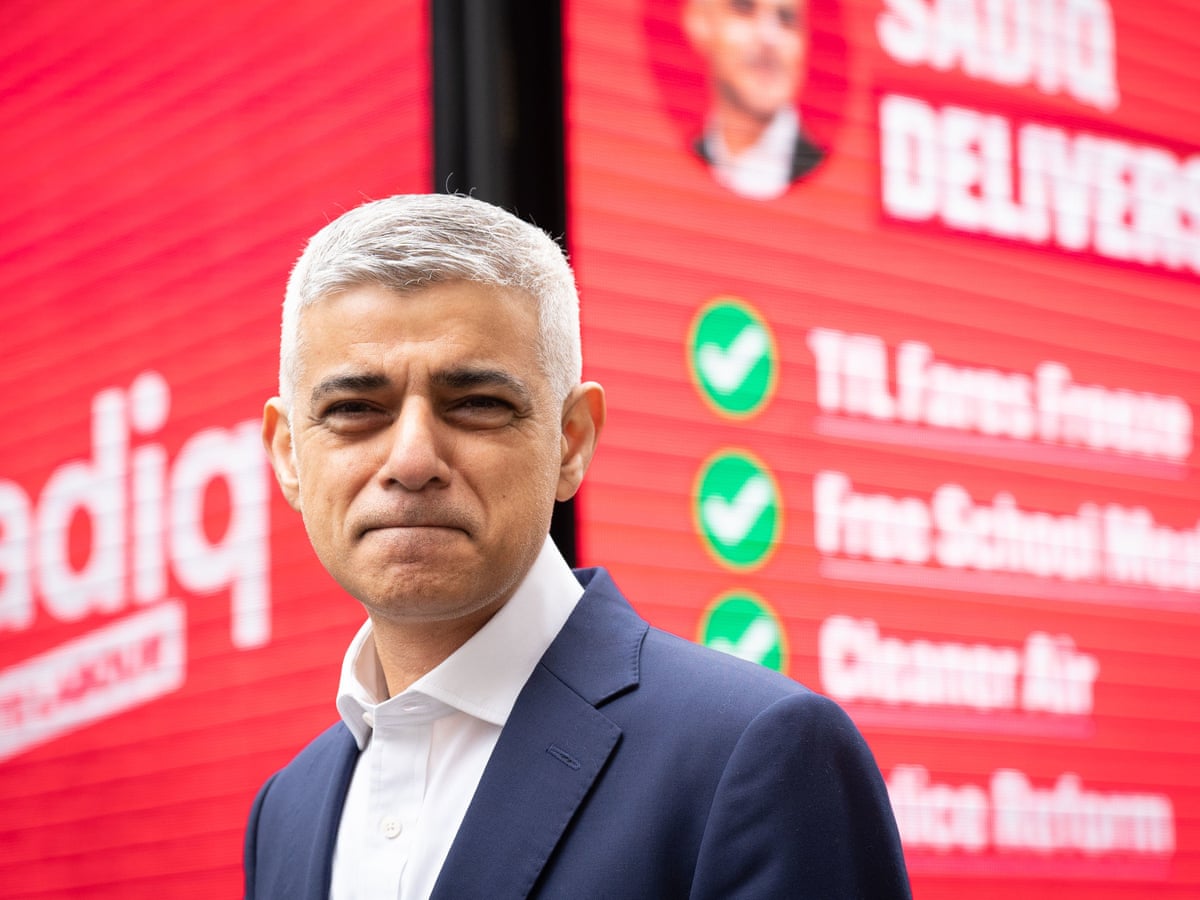
Sadiq Khan is facing a new political challenge as Nigel Farage and Reform UK increasingly turn their attention towards London, raising the prospect of a much more aggressive battle for the capital’s voters.
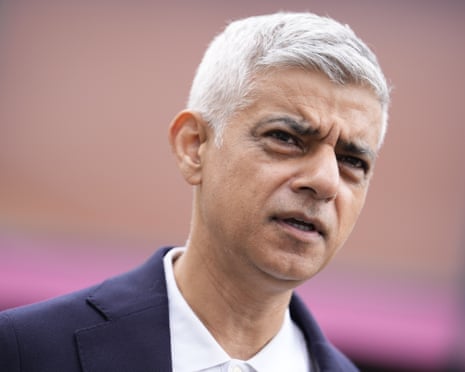
For years, London appeared to be one of the least promising territories for Reform.
The capital has traditionally been more politically diverse and more supportive of Labour than many other parts of England. Its electorate is younger, more internationally connected and considerably different from the communities in which Reform has made some of its strongest gains.
But British politics is changing.
Reform is no longer simply attempting to build support in areas traditionally associated with the Conservative Party.
It is increasingly targeting Labour territory as well.
And London, despite its political complexity, represents one of the most important prizes in the country.
For Khan, that presents a potentially uncomfortable challenge.
The London mayor has built a powerful political identity over several terms in office. Yet the emergence of Reform creates a new source of pressure, particularly if Farage succeeds in turning dissatisfaction with established parties into a broader movement in the capital.
Farage Turns Towards London
Nigel Farage has made clear that he believes Reform can expand its presence in London.
The party has already begun developing its organisation in the capital, while Farage has repeatedly attacked Khan’s record on issues including crime, transport, taxation and the wider direction of the city.
Reform’s London strategy is not simply about winning a mayoral election.
It is about building a political organisation capable of contesting council seats, influencing the national political debate and establishing itself as a permanent force among London voters.
That is a much bigger ambition.
Reform has publicly celebrated its growing London organisation, arguing that voters who once believed the party had no place in the capital are increasingly willing to consider it.
Why London Matters
London is unlike anywhere else in Britain.
It is the country’s largest city.
It is the centre of finance, business, culture and international diplomacy.
It contains some of Britain’s wealthiest neighbourhoods and some of its most deprived communities.
Its voters include people with radically different political priorities.
That makes London difficult to predict.
A party can perform strongly in one part of the capital while struggling badly elsewhere.
The political map is fragmented.
For Reform, that fragmentation could actually create opportunities.
The Khan Factor
Sadiq Khan remains one of Labour’s most recognisable politicians.
He has served as London’s mayor for multiple terms and has built a national profile far beyond City Hall.
His supporters point to investment in public transport, environmental policies and efforts to tackle inequalities.
His critics argue that London faces serious problems with crime, housing, transport costs and the cost of living.
That disagreement has produced a deeply polarised political environment.
And polarisation can create opportunities for challengers.
Reform’s Message
Farage’s political strategy is based on a simple proposition.
The established parties have failed.
Reform therefore presents itself as an alternative.
In London, that argument is more difficult than elsewhere because voters have different priorities.
But Reform has attempted to frame the capital’s problems in terms of political accountability.
The party argues that London needs a change of direction.
It attacks what it describes as years of Labour administration.
And it seeks to persuade voters that the capital’s problems require a fundamentally different approach.
Crime and Public Safety
Crime is likely to become one of the central issues.
Londoners have concerns about visible disorder, knife crime, policing and antisocial behaviour.
Reform can use those concerns to argue for a tougher approach.
Khan and Labour, meanwhile, can point to policing investment and existing crime-reduction programmes.
The political argument will therefore be about competing definitions of success.
Reform will ask whether Londoners feel safe.
Labour will ask whether measurable crime indicators have improved.
Those are not always the same question.
The Cost of Living
Housing and living costs could be even more important.
London is one of the most expensive cities in Europe.
Renters face enormous financial pressure.
Home ownership is beyond the reach of many younger residents.
Transport costs consume a significant part of household budgets.
A party seeking to challenge Labour therefore needs more than criticism.
It needs an economic offer.
That will be one of Reform’s biggest tests.
The Transport Battle
Transport represents another obvious area of confrontation.
London’s public transport system is essential to millions of people.
Any disruption affects commuters immediately.
Any increase in fares can become politically explosive.
Farage has repeatedly positioned Reform as a party willing to challenge what it sees as policies hostile to motorists.
That could resonate outside central London.
But it may be more complicated inside the capital, where millions of people depend on buses, Underground services and rail.
The Motorist Question
The battle over London’s roads could become symbolic.
Reform has criticised policies that it says unfairly target drivers.
Supporters argue that motorists have been treated as political enemies.
Labour and environmental campaigners argue that London’s pollution and congestion require measures that reduce car dependency.
The disagreement is therefore about more than transport.
It represents two competing visions of the city.
One prioritises mobility and individual choice.
The other prioritises public transport, environmental goals and reducing congestion.
Farage’s Bigger Argument
Farage’s objective is unlikely to be limited to City Hall.
His broader argument is that Britain’s political establishment has lost touch with ordinary voters.
London provides an opportunity to test that argument in a completely different environment.
If Reform can gain significant support in the capital, it would demonstrate that the party is no longer restricted to traditional protest-vote territory.
That would have national consequences.
The Difficulty of Winning London
But London presents enormous challenges for Reform.
The city’s demographic composition is unique.
Many Londoners have strong international connections.
The capital has a large immigrant population.
It contains large communities from every region of the world.
Issues such as immigration and multiculturalism are therefore particularly sensitive.
Reform must convince voters that its policies apply to London as well as the rest of Britain.
A Message Problem
This may become one of Farage’s biggest difficulties.
Reform’s strongest national themes do not necessarily translate perfectly into London.
A message that works in a small former industrial town may not work in central London.
A political slogan aimed at older voters may have limited appeal among younger professionals.
A campaign focused heavily on immigration may alienate voters who see London’s diversity as one of its greatest strengths.
That means Reform will have to adapt.
The London Organisation
The party’s growing local organisation will be crucial.
Reform has sought to establish a stronger network of councillors and activists.
Its London chair has argued that the party has moved from having almost no representation to becoming a growing movement in the capital.
That organisational development matters.
Political parties cannot win elections through social media alone.
They need candidates.
They need volunteers.
They need local knowledge.
They need fundraising.
And they need people willing to knock on doors and speak to voters.
The Mayoral Contest
A mayoral contest would give Reform a national platform.
The mayor of London is one of Britain’s most visible elected politicians.
A Reform candidate could use the campaign to challenge Khan directly.
Even if Reform did not win, a strong performance could demonstrate that the party is competitive.
That could help it build support for future elections.
Khan’s Response
Khan is unlikely to ignore the challenge.
His political strategy has traditionally involved presenting himself as a defender of London’s public services and multicultural identity.
He can argue that Reform represents a disruptive political experiment.
He can warn voters that protest voting does not necessarily improve everyday life.
This argument has already appeared in London’s political debate, with Khan attacking Reform’s populist approach.
The “Protest Vote” Problem
There is an important distinction between supporting Reform and voting Reform as a protest.
Some voters may genuinely want the party’s policies.
Others may simply want to punish Labour.
If dissatisfaction with Labour declines, some protest voters could return to traditional parties.
But if dissatisfaction becomes permanent, Reform could establish itself as a long-term competitor.
That is what Khan must worry about.
Labour’s Wider Problem
The London battle also reflects a wider issue for Labour.
The party cannot assume that London will remain permanently loyal.
Political generations change.
Young voters do not automatically remain Labour voters forever.
Cost-of-living pressures can transform political preferences.
And dissatisfaction with national government can influence local elections.
Khan therefore has to defend both his own record and Labour’s wider reputation.
The Starmer Legacy
The relationship between national Labour politics and London politics is complicated.
Khan remains a prominent Labour figure.
But voters may judge him partly through the performance of the national party.
If Labour is unpopular nationally, opposition parties can argue that voting against Labour in London is part of a wider demand for change.
That could make the mayoral contest much more competitive.
Reform’s National Momentum
Reform’s London strategy also comes at a time when the party is attempting to demonstrate that it can win outside its original electoral strongholds.
The party has highlighted its successes in areas that Labour traditionally dominated.
Farage has argued that Britain’s old two-party system is breaking down.
If that argument is correct, London may eventually become another battlefield in the wider realignment.
The Conservative Question
The Conservatives also have a major problem.
If Reform becomes competitive in London, Conservative support could be squeezed further.
Some voters who traditionally support the Conservatives may move to Reform.
Others may vote tactically against Labour.
That makes the Conservative position increasingly complicated.
A three-way contest can produce unexpected results.
Could Reform Actually Win?
Winning London would be extraordinarily difficult.
The capital’s electoral geography remains challenging.
Labour has deep roots.
The Greens have significant support.
The Liberal Democrats are competitive in particular areas.
The Conservatives remain relevant in some constituencies.
Reform would therefore need to build a broad coalition.
That is much harder than winning protest votes.
The Importance of Second Place
Even if Reform does not win, coming second could be politically valuable.
A strong performance could establish Farage’s party as the main alternative to Labour in parts of London.
It could attract more donors.
It could encourage more candidates to join.
It could increase media coverage.
And it could create momentum for future elections.
Politics is often about building slowly.
The Demographic Challenge
London’s demographics also create a fundamental challenge.
Reform has often been strongest among older voters.
London has a younger electorate.
Younger voters have historically been less receptive to Farage’s politics.
That does not mean Reform cannot win their support.
But it means the party needs a message that goes beyond immigration and Brexit.
The Younger Generation
Housing could provide that message.
Young Londoners face enormous rents.
Many cannot afford to buy homes.
They face expensive transport.
They face insecure employment.
A political party that promises cheaper housing and better opportunities could attract younger voters.
But Reform would need to explain how it intends to achieve those goals.
The Business Community
London’s business community is another important constituency.
The capital depends heavily on international investment.
Financial services are central to its economy.
Global companies employ hundreds of thousands of people.
Any party seeking to govern London therefore needs to reassure businesses that its policies will support economic growth.
This could become another difficult balancing act for Reform.
Immigration and London’s Economy
Immigration is particularly complicated in London.
Many industries rely on migrant workers.
At the same time, immigration is one of Reform’s strongest political issues.
Farage will therefore face pressure to distinguish between illegal immigration, legal migration and the economic role of international workers.
That distinction could determine whether his message gains broader acceptance in the capital.
The Khan Counterattack
Khan has his own political advantages.
He knows London.
He has an established political network.
He has a high level of name recognition.
And he can point to years of experience in City Hall.
A Reform challenger would have to overcome that familiarity.
Farage’s national profile can help.
But it can also make the election more about Farage than London’s actual problems.
The Farage Factor
That is both the party leader’s greatest strength and greatest weakness.
Farage attracts attention.
He generates headlines.
He can dominate political coverage.
But some voters strongly dislike him.
In London, where political opinions are often sharply divided, that could become a major obstacle.
A Personal Battle
The contest could therefore become a personal confrontation.
Khan could present himself as the experienced mayor defending London’s identity.
Farage could present Reform as the movement challenging the political establishment.
The choice would be framed as continuity versus disruption.
That is a powerful political narrative.
The Risk of Overreach
Farage must also be careful not to overestimate Reform’s strength.
A successful national campaign does not automatically translate into success in London.
The capital requires different political tactics.
Local issues matter.
Community relationships matter.
Candidates matter.
A national slogan may not be enough.
The Risk for Khan
Khan faces the opposite danger.
If he dismisses Reform as irrelevant, he could underestimate a genuine shift in public opinion.
Political movements often appear weak until suddenly they are not.
The safest strategy may be to take the challenge seriously without allowing Reform to define the entire campaign.
The Importance of Local Councils
Council politics could be particularly important.
Reform has been trying to build its presence at local level.
Councillors provide the party with visibility.
They can demonstrate whether its policies work in practice.
They can also become the foundation for future parliamentary candidates.
London’s boroughs could therefore become the laboratory for Reform’s political strategy.
From Protest to Government
This is perhaps the central question facing Reform.
Can it move from protest politics to governing politics?
Winning seats is one thing.
Running councils is another.
Managing budgets is another.
Delivering services is another.
If Reform wants Londoners to trust it with City Hall, it will eventually need to demonstrate competence at local level.
The Accountability Test
That creates a new standard for the party.
It can no longer simply criticise Labour.
It must explain what it would do differently.
If it promises lower taxes, how would services be financed?
If it promises tougher policing, how would officers be recruited?
If it wants cheaper transport, how would that be funded?
If it wants changes to immigration, what would the economic consequences be?
These questions will become increasingly important.
Khan’s Own Record
Khan, meanwhile, must defend his record honestly.
London has achieved successes under his leadership.
But it also faces serious problems.
Housing affordability remains difficult.
Transport costs remain contentious.
Crime remains a major political concern.
The city continues to face inequalities.
A strong campaign will therefore require more than pointing to Reform’s weaknesses.
Khan must persuade voters that his own approach is working.
The Battle for Working-Class London
One of the most interesting aspects of the coming political contest could be the battle for working-class London.
Many parts of the capital have undergone enormous demographic and economic changes.
Traditional working-class communities have experienced rising housing costs.
Some have been displaced.
Others have experienced rapid cultural transformation.
Reform will attempt to turn those frustrations into votes.
Labour will argue that it remains the party most capable of protecting working people.
The Battle for Outer London
Outer London may be particularly important.
The political character of outer boroughs can be different from central London.
Car ownership is often higher.
Public transport options vary.
Housing pressures remain significant.
Voters may also have different attitudes towards immigration and policing.
This could provide Reform with opportunities.
Inner London
Inner London is likely to remain much more difficult.
The electorate is younger.
Labour is traditionally strong.
The Greens and Liberal Democrats are competitive.
Political attitudes are often more socially liberal.
Reform would need to substantially broaden its appeal to make major gains there.
A New Political Geography
If Reform does gain ground in London, the consequences could be significant.
It would indicate that the political realignment taking place elsewhere in Britain has reached the capital.
It could force Labour to rethink its strategy.
It could pressure the Conservatives to reconsider their relationship with Reform.
And it could make London a much more competitive political environment.
The National Consequences
A strong Reform performance in London would also strengthen Farage nationally.
It would give him evidence that Reform could compete everywhere.
It would make it harder for opponents to describe the party as a regional or protest movement.
It could also increase pressure on Labour to change its policies.
In that sense, the London battle could become a national referendum on the direction of British politics.
The Bigger Question
The real question is not simply whether Farage can defeat Khan.
It is whether Reform can make itself relevant to Londoners.
That requires understanding the city’s complexity.
It requires acknowledging London’s economic importance.
It requires developing policies for housing.
It requires credible plans for transport.
It requires serious policing policy.
And it requires a message that can appeal beyond the party’s existing base.
The Final Verdict
Nigel Farage’s decision to turn his attention towards London represents a significant political challenge for Sadiq Khan.
Reform is clearly attempting to build a stronger presence in the capital, and the party has publicly presented its growing London organisation as evidence that it can challenge the city’s established political order.
But a genuine takeover of London politics would be far more difficult than winning headlines.
Khan remains an experienced and well-known political figure.
Labour retains significant support.
London’s electorate is unusually diverse.
And Reform faces the challenge of adapting its national message to a city with very different political priorities.
For Farage, however, London offers an enormous prize.
If Reform can establish itself as a serious competitor in the capital, it would demonstrate that the party’s rise is not confined to traditional Conservative or Labour heartlands.
For Khan, the danger is not necessarily that Farage will immediately defeat him.
The deeper danger is that Reform could gradually change the political conversation.
If voters begin to see the party as a credible alternative, Labour could find itself facing a challenge that is much harder to dismiss.
The battle will therefore be fought over more than City Hall.
It will be fought over crime.
Over housing.
Over transport.
Over immigration.
Over the cost of living.
Over London’s identity.
And ultimately, over what kind of city Londoners want their capital to become.
Farage wants to turn dissatisfaction into a political movement.
Khan wants to defend the record and identity of the city he has governed for years.
Between them lies an electorate that is increasingly willing to change its mind.
That may be the biggest political threat of all.
Because in a rapidly changing Britain, no party can assume that yesterday’s loyalties will survive tomorrow.
London may once have looked like Reform’s greatest obstacle.
Farage now appears determined to prove that it can become one of his greatest opportunities.