


Andy Burnham Thinks He’s the ‘Messiah of Manchester’ – But His Makerfield Victory Wasn’t Quite the Triumph He Wanted
Andy Burnham has long enjoyed a reputation that few British politicians can match.
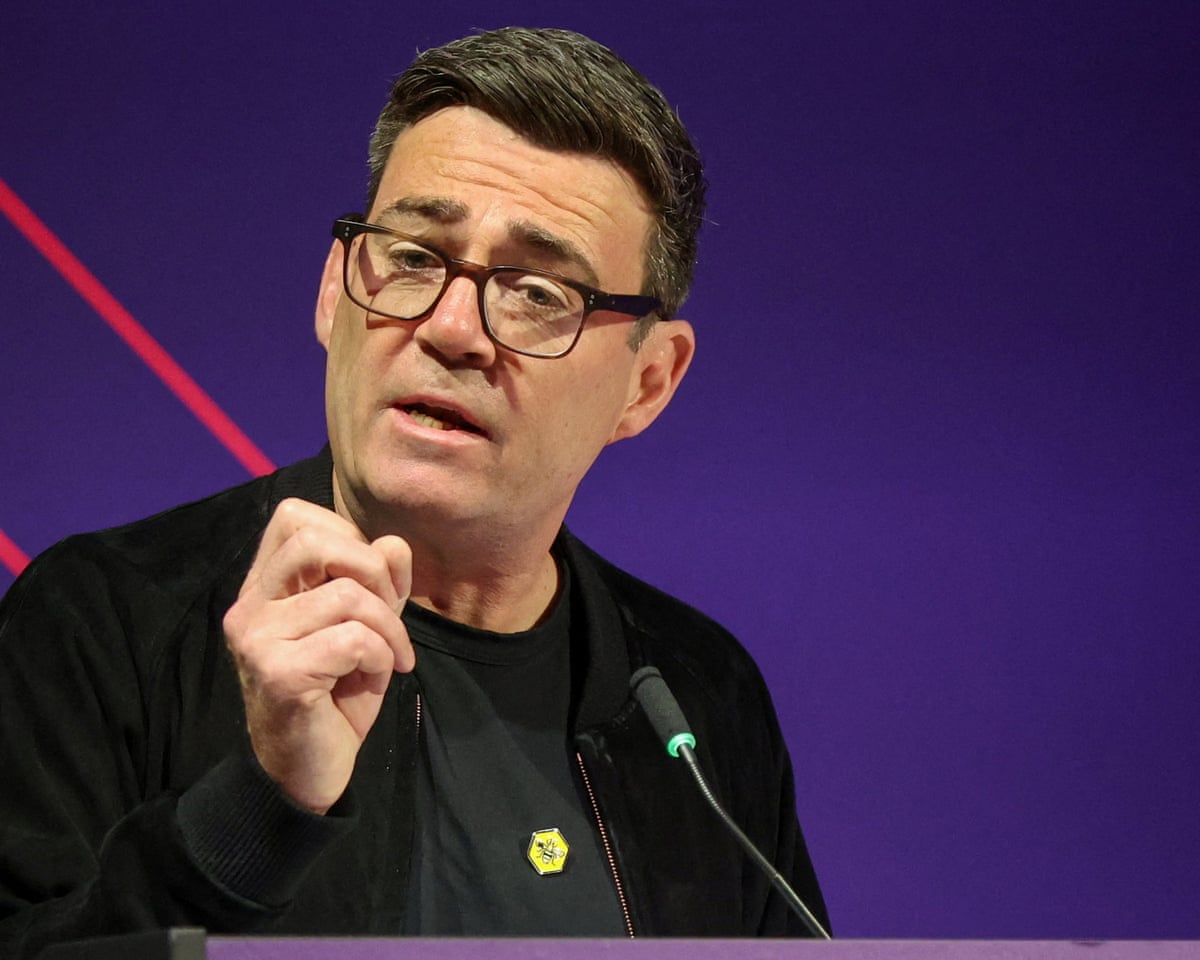
In Greater Manchester, he built himself into a political brand as much as a politician — the Northern champion, the defender of public services and the man who repeatedly told Westminster that Britain needed to listen to regions outside London.
Now, with Burnham back in Westminster after winning the Makerfield by-election, the temptation is obvious.
Perhaps the so-called “Messiah of Manchester” has finally arrived on the national stage.
But there is a problem.
For all the excitement surrounding his return, Makerfield did not quite deliver the political earthquake that some of Burnham’s admirers may have hoped for.
Yes, he won.
Yes, he won comfortably.
And yes, the result gave him a parliamentary platform from which to challenge the direction of Labour.
But the result was not the kind of crushing political mandate that automatically transforms a popular mayor into an unstoppable future Prime Minister.
That distinction matters.
Burnham secured 54.8 per cent of the vote, taking 24,927 votes, while Reform UK finished second with 34.5 per cent. His majority was 9,231.
That is a substantial victory.
But it also tells another story.
More than a third of voters chose Reform.
That should concern Labour.
And it should certainly concern Burnham if he intends to present himself as the politician capable of rebuilding Labour’s relationship with working-class voters.
The Makerfield result demonstrated that Burnham can still win Labour voters.
It did not prove that he has solved the problem facing Labour across the country.
That is the difference between winning a by-election and establishing a national political movement.
Burnham’s greatest political asset has always been his ability to turn personal popularity into something bigger.
As Mayor of Greater Manchester, he became associated with a distinctive Northern political identity.
He positioned himself as a politician who understood the frustrations of communities outside Westminster.
He championed devolution.
He attacked excessive centralisation.
He promoted public transport and public services.
And he developed a political style that was often more emotional and personal than the carefully controlled language associated with Westminster.
That approach worked exceptionally well in Greater Manchester.
Burnham was re-elected as mayor with a huge majority in 2024, demonstrating just how strong his personal political base had become.
It was therefore easy for supporters to believe that the same formula could work nationally.
Makerfield was supposed to be the next step.
And in one important respect, it was.
Burnham’s return to Parliament gave him something he had been missing for years: a seat in the Commons.
That immediately changed the conversation around his future.
Before Makerfield, Burnham could criticise Westminster from outside.
After Makerfield, he could challenge the Government from inside Parliament.
That is a powerful difference.
But the political reality is less dramatic than the mythology.
Winning Makerfield does not automatically make Burnham Labour leader.
It does not automatically make him Prime Minister.
And it certainly does not mean that Labour MPs will suddenly abandon their existing leadership arrangements and line up behind him.
A leadership challenge requires much more than personal popularity.
It requires organisation.
It requires parliamentary support.
It requires money, activists, allies and — most importantly — a convincing political argument.
Burnham now has to provide that argument.
And this is where his Makerfield victory may have missed the mark.
The central question is not whether Burnham can win a Labour seat.
The central question is whether his political model can win back voters who have moved away from Labour.
That is much harder.
Reform’s 34.5 per cent share in Makerfield is a warning.
The party did not win.
But it did not collapse either.
Its candidate secured more than 15,000 votes.
That means a very large group of voters remains open to a political alternative to Labour.
If Burnham wants to present himself as Labour’s great Northern saviour, he needs to explain why so many voters in a traditional Labour area still preferred Reform.
That is the real test.
A political leader cannot simply point to his own victory and declare the problem solved.
He has to understand why the problem exists in the first place.
Burnham’s answer is likely to involve many of the themes that have defined his career.
More regional power.
More investment outside London.
Better public services.
A stronger role for the state.
Greater economic security.
And a Labour Party that speaks more directly to working-class communities.
Those are powerful messages.
But they are not exclusive to Burnham.
Labour has spent years debating how to reconnect with former supporters.
The challenge is turning political rhetoric into measurable results.
Voters have heard promises before.
They want to know what changes.
This is where Burnham’s record in Greater Manchester becomes both his greatest strength and his greatest vulnerability.
He can point to tangible achievements.
But national government is vastly more complicated than running a city region.
A mayor can focus heavily on transport, local investment, housing and regional development.
A Prime Minister must deal with defence, foreign policy, taxation, immigration, national debt, energy, pensions, welfare and the entire machinery of the state.
The political skill required is different.
Burnham has spent years arguing that Westminster should become more like Manchester.
The real question is whether Westminster voters want Britain to become more like Greater Manchester.
That remains unproven.
There is another problem.
Burnham’s political persona can sometimes become bigger than the policies themselves.
The “Messiah of Manchester” image is useful because it creates a simple story.
Here is the Northern politician who knows what Britain needs.
But the danger of becoming a political celebrity is that voters eventually expect miracles.
No Prime Minister can deliver everything.
Economic problems cannot be solved by personality.
NHS waiting lists cannot disappear because a new leader gives a passionate speech.
Housing shortages require years of construction.
Public finances impose hard limits.
And every major policy creates winners and losers.
The moment Burnham moves from campaigning to governing, the mythology will face reality.
That may be why Makerfield was both a triumph and a warning.
He won strongly enough to return to Parliament.
But he did not win the entire constituency.
More importantly, he did not defeat the broader political forces that have been threatening Labour’s traditional coalition.
Reform remains a formidable opponent.
The Conservatives remain capable of recovering.
The Greens have demonstrated that Labour can also face pressure from the other side.
And voters are increasingly willing to move between parties.
The age of automatic Labour loyalty is gone.
Burnham understands this better than many Westminster politicians.
His entire political career has been built around that understanding.
But understanding a problem is not the same as solving it.
His return to Westminster therefore begins a much more difficult chapter.
As mayor, Burnham could position himself as the alternative to Westminster.
As an MP, he is once again part of Westminster.
If he eventually wants to lead the country, he will have to prove that he can operate within the system he spent years criticising.
That means compromise.
It means difficult decisions.
It means disappointing supporters.
And it means accepting that national politics is rarely as simple as a Manchester campaign speech.
There is also the question of Keir Starmer.
Burnham’s return inevitably creates speculation about Labour’s leadership.
He has a history of leadership ambitions, and his political arguments have increasingly been interpreted as a challenge to the direction of the party.
Makerfield gave him a platform.
But a platform is not a coronation.
If Burnham wants to become leader, he will need to convince Labour MPs that he represents more than a protest against Starmer.
He needs to demonstrate that he has a credible programme for government.
He needs to show that his appeal extends beyond Greater Manchester.
And he needs to prove that he can unite a party whose voters hold wildly different views on the economy, Brexit, immigration, public spending and Britain’s future.
That is a much tougher challenge than winning one by-election.
So perhaps the “Messiah of Manchester” should enjoy his victory — but not get carried away by it.
Makerfield was undoubtedly a major personal success.
It gave Burnham the parliamentary comeback he wanted.
It strengthened his national profile.
And it ensured that his voice will be heard inside Labour rather than from the sidelines.
But the result also contained a warning.
Reform remains strong.
Labour’s old loyalties are fragile.
And the voters Burnham most wants to win back are not automatically convinced.
The real test begins now.
Can Burnham turn personal popularity into national support?
Can he transform Manchester’s political model into a credible national programme?
Can he persuade voters who have abandoned Labour to return?
And can he convince his own party that he is more than a charismatic critic of the current leadership?
Those questions cannot be answered by one by-election.
Makerfield gave Burnham a victory.
It did not give him the keys to Downing Street.
The road from the “Messiah of Manchester” to Prime Minister is considerably longer than the road from Manchester to Makerfield.
And if Burnham wants to complete that journey, he will need something more powerful than a good election result.
He will need to prove that the political magic he created in Greater Manchester can work across the whole of Britain.