
Andy Burnham Launches Savage Five-Word Attack on Keir Starmer as Makerfield Battle Begins

Andy Burnham wasted little time putting the pressure on Keir Starmer as his dramatic return to Westminster campaign got underway.
The former Greater Manchester mayor entered the Makerfield by-election with one message above all others: Labour needs to change.
It was a short message, but politically it carried enormous weight.
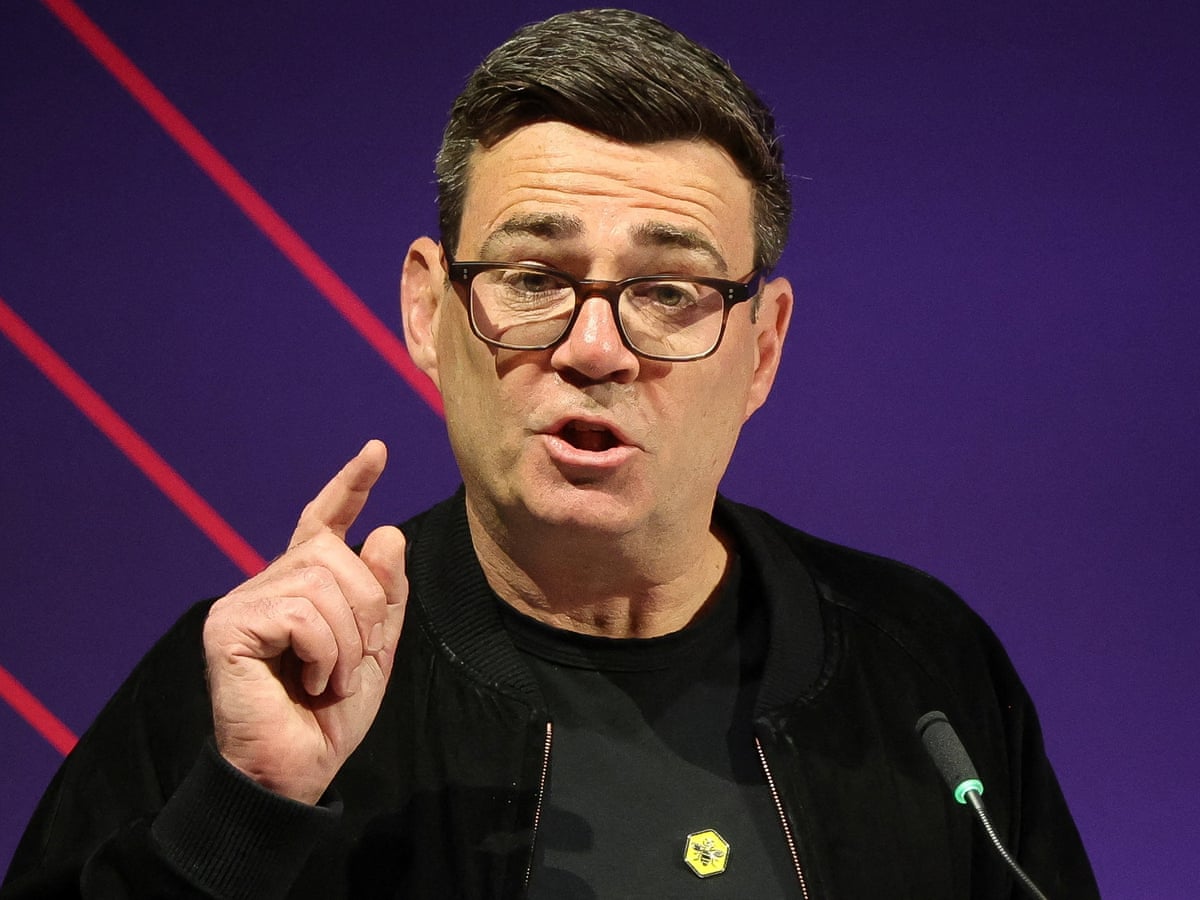
Burnham was not simply fighting for a parliamentary seat.
He was challenging the direction of his own party.
And, whether his supporters admitted it or not, the contest quickly became a test of Keir Starmer’s leadership.
The Makerfield by-election was already expected to attract intense attention because of Burnham’s decision to return to the House of Commons.
But his campaign became considerably more significant when he began openly arguing that Labour had lost touch with voters and needed a new direction.
The language was carefully chosen.
Burnham did not need to launch a personal assault on Starmer every day.
He did not need to demand that the Prime Minister resign.
Instead, he could make the criticism broader.
Labour needed to change.
That was enough.
The message immediately created a political dilemma for Starmer.
If the Prime Minister ignored Burnham, his critics could claim that he was refusing to listen.
If he attacked Burnham, he risked turning the by-election into an even bigger leadership contest.
And if Burnham won, the result could become difficult to dismiss.
That is precisely what eventually happened.
Burnham secured a decisive victory in Makerfield, winning around 55 per cent of the vote and defeating Reform UK’s Robert Kenyon by 9,231 votes. ITV described the result as setting up a potential leadership showdown between Burnham and Starmer.
But the political significance of the contest was already clear before polling day.
Burnham had deliberately framed the campaign as something larger than a local election.
He argued that his campaign would focus on national issues where Labour was failing.
That was an extraordinary decision for a candidate seeking a parliamentary seat.
Most by-election candidates concentrate on local concerns.
Burnham did the opposite.
He used Makerfield as a platform to discuss the future of the Labour Party.
That strategy carried enormous risks.
If he lost, critics could argue that voters had rejected his attempt to turn a local contest into a national leadership campaign.
If he won, however, the political consequences could be enormous.
Starmer therefore had every reason to watch the contest carefully.
The five-word attack became powerful precisely because it did not require a long speech.
“Labour needs to change.”
Those words could mean almost anything.
They could refer to policy.
They could refer to messaging.
They could refer to Labour’s relationship with working-class voters.
They could refer to the party’s economic strategy.
Or, more dramatically, they could be interpreted as a challenge to the person leading Labour.
That ambiguity was politically useful.
Burnham could insist that he was talking about the party rather than personally attacking Starmer.
At the same time, everybody understood that a demand for change at the top of a political party inevitably raises questions about its leader.
The tension was particularly significant because Burnham had already established himself as one of Labour’s most prominent alternative voices.
He had previously stood for the Labour leadership and had spent years building a political base outside Westminster.
As Mayor of Greater Manchester, he developed a distinctive political identity centred on devolution, public services and regional power.
That gave him something many potential challengers do not have.
A record.
Burnham could point to policies implemented in Greater Manchester and argue that his approach was not simply theoretical.
His political brand had been developed over a decade outside Westminster.
Returning to Parliament therefore represented more than a career move.
It was a return to national politics with a political identity already established.
That made the challenge to Starmer particularly uncomfortable.
Starmer had inherited the leadership with a promise to make Labour electorally credible and return the party to government.
Yet Burnham’s argument was that Labour’s national direction still needed fundamental change.
The implication was difficult to ignore.
If Labour had lost the trust of voters, perhaps the party needed a different political approach.
And Burnham believed he knew what that approach should look like.
His emphasis was strongly connected to voters outside Westminster.
He repeatedly argued that the political system had failed places such as Greater Manchester and communities like Makerfield.
That was central to his political appeal.
He presented himself as someone who had spent years fighting against the concentration of power in London.
His return to Westminster could therefore appear contradictory.
Why return to the institution he had criticised?
Burnham’s answer was that experience outside Westminster had shown him what needed to change inside it.
That argument became central to his campaign.
The message was not simply that Burnham wanted a seat.
It was that he wanted to take the lessons of Greater Manchester into national government.
That was a much more ambitious proposition.
It also explains why Starmer became an unavoidable part of the story.
The two politicians represented different political approaches.
Starmer’s Labour had sought to emphasise discipline, economic credibility and electoral caution.
Burnham’s political identity was more closely associated with regional devolution, public ownership and reconnecting Labour with voters who felt ignored by Westminster.
The differences were not always absolute.
But politically, they were significant enough to create a natural leadership narrative.
Then came the Reform factor.
Makerfield was not a safe political environment in the way Labour’s historic strength might once have suggested.
Reform UK had become a major force in British politics and was targeting traditional Labour areas.
That made Burnham’s campaign even more important.
If he could win convincingly, he could argue that Labour still had a route back to voters who had become attracted to Reform.
If he lost, the consequences would have been devastating.
The political establishment would have been given a powerful symbol of Labour’s decline.
Burnham’s personal reputation would have taken a serious hit.
And Starmer’s position would have been strengthened.
That is why the by-election became a pressure cooker.
Every doorstep conversation mattered.
Every interview mattered.
Every poll mattered.
And every statement from Burnham was examined for clues about what he really wanted.
Was he genuinely focused on representing Makerfield?
Or was the seat simply a route back into Parliament so that he could challenge for Labour’s leadership?
Burnham’s refusal to completely separate those two ambitions was part of the fascination.
He could argue that becoming an MP was necessary to influence national politics.
Critics could argue that the national ambition was the real reason for the campaign.
Either way, the result would settle the first question.
Could Burnham win?
He did.
And he did so decisively.
His victory transformed the political calculation.
What had previously been dismissed as speculation about a possible leadership challenge suddenly became a much more serious issue.
Burnham’s victory speech made the message even clearer.
He described Labour as having a “final chance to change” and said the party “must act upon it”. ITV reported that his victory increased Labour’s vote share by 9.61 per cent compared with the previous general election.
Those words were not the language of a politician content simply to become a backbench MP.
They sounded like a challenge.
The question was no longer whether Burnham had ambitions.
The question was what he intended to do with them.
For Starmer, the problem was now much larger.
A political rival with a strong public profile had entered Parliament after winning a major by-election.
He had demonstrated that he could attract voters.
He had shown that Labour could defeat Reform in a constituency where the party had faced serious pressure.
And he had a clear political argument.
Change Labour.
That does not automatically mean Starmer would be forced out.
Political leadership contests require parliamentary support, party rules and timing.
A by-election victory alone does not determine who becomes Prime Minister.
But politically, the result changed the atmosphere.
Burnham now had something he did not have before.
A parliamentary platform.
And that meant his criticism could no longer be dismissed as the intervention of a politician speaking from outside Westminster.
He was back inside the institution.
His five-word message had therefore become much more powerful.
The remarkable thing about the attack was its simplicity.
Burnham did not need a twenty-minute speech attacking Starmer personally.
He did not need a long list of accusations.
He needed only a few words to create an enormous political question.
Does Labour need to change?
And if it does, who should lead that change?
That question remains at the heart of Burnham’s political comeback.
His Makerfield victory proved that he could still win.
His next challenge is proving that he can persuade enough of his own party that his alternative vision is the right one.
Starmer, meanwhile, faces the most difficult part of any leadership battle: proving that he can survive one.
The Makerfield contest began as a by-election.
It ended as something much bigger.
It became a test of Labour’s identity, a measure of Reform’s strength and a referendum of sorts on the future direction of the party.
And at the centre of it all was Burnham’s remarkably simple message.
Labour needs to change.
Five words.
But in the turbulent world of Westminster politics, they may have been five of the most consequential words spoken during the entire campaign.