
Andy Burnham Slammed Over Brexit as Critics Accuse PM Hopeful of ‘Running Away’ From the Issue
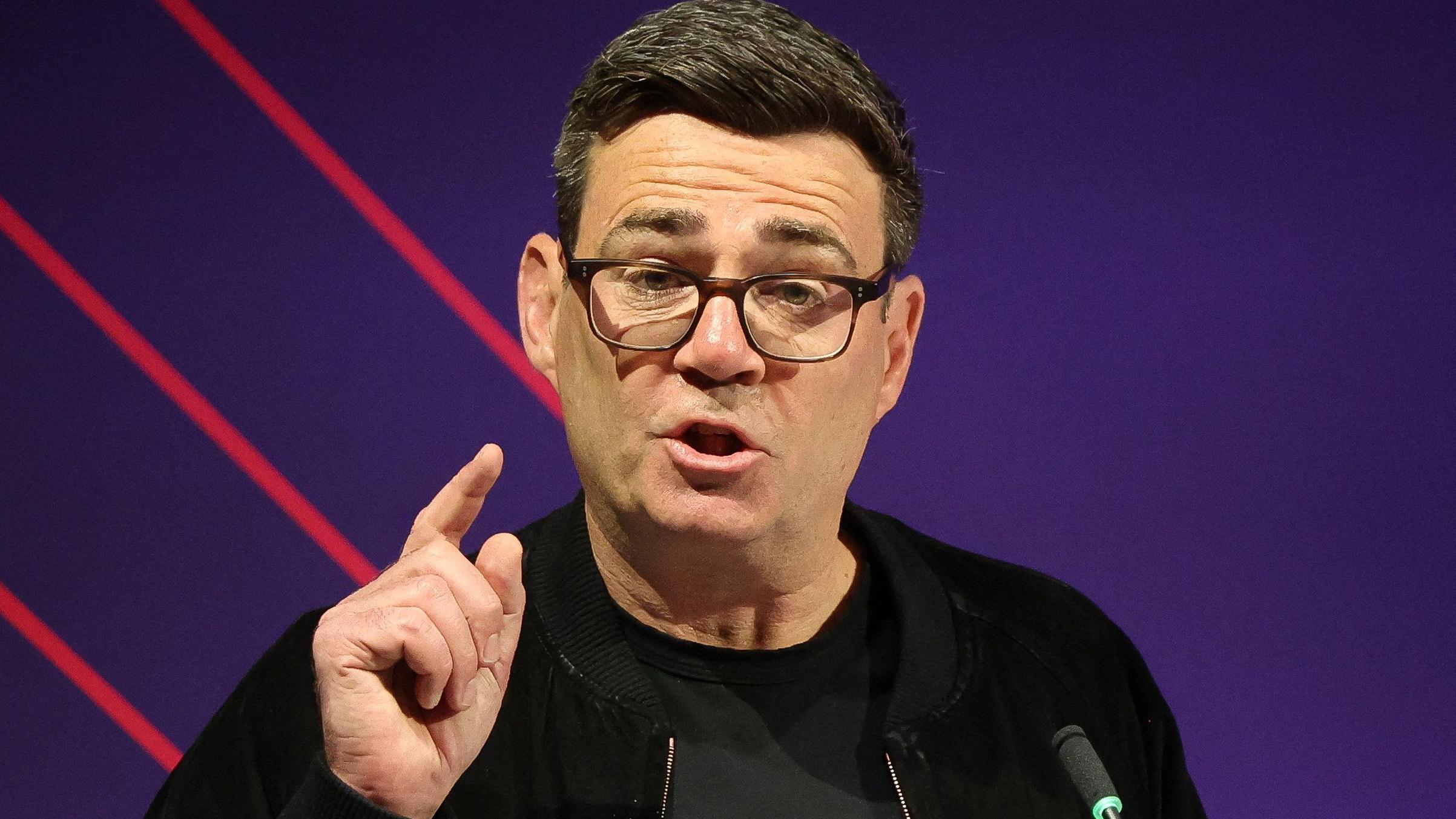
Andy Burnham has been warned that he cannot simply walk away from the Brexit debate as his return to Westminster places his political ambitions under renewed scrutiny.

The former Greater Manchester mayor has spent years establishing himself as one of the most recognisable figures in British politics.
Now, after returning to Parliament through the Makerfield by-election, every position he takes is being examined for clues about what kind of national politician he intends to become.
Brexit is no exception.
For Burnham, the issue presents a particularly awkward political challenge.
He was a prominent supporter of remaining in the European Union during the 2016 referendum.
Yet Britain has now spent years outside the EU, and Burnham has made clear that he does not believe a future government should immediately attempt to reverse Brexit.
That position has allowed his critics to accuse him of trying to avoid an issue that once played a major role in his political identity.
Supporters see it differently.
They argue that accepting the reality of Brexit does not mean pretending the original disagreement never happened.
Instead, Burnham’s argument is that Britain needs to concentrate on improving its relationship with Europe and dealing with domestic problems rather than reopening the fundamental question of EU membership.
That distinction may be politically sensible.
But it is also vulnerable to attack.
For opponents, the accusation is simple.
Burnham supported Remain.
He now accepts that Britain is outside the European Union.
He does not want to campaign for immediate re-entry.
Therefore, they argue, he is attempting to move away from an issue on which he once took a very clear position.
The phrase “running away” is designed to make that criticism particularly damaging.
It suggests not merely a change in strategy, but a refusal to confront an uncomfortable political reality.
Whether that description is fair is another matter.
Politicians routinely change their emphasis when circumstances change.
A position taken during a referendum does not necessarily have to remain the central issue of a politician’s programme a decade later.
The political environment has changed dramatically since 2016.
Britain has left the EU.
A new generation of voters has grown up with Brexit as an established fact rather than an imminent political decision.
The public debate has also moved towards questions about trade, immigration, economic growth and the practical relationship between Britain and its European neighbours.
For Burnham, that means the argument is no longer simply “Leave or Remain”.
The more immediate question is what Britain should do with the relationship it now has.
That is where his position becomes more complicated.
Burnham has argued that Britain should seek closer cooperation with Europe while accepting that Brexit itself should not simply be reversed.
He has also indicated that his priority would be fixing the domestic economy and public services.
For his supporters, this represents pragmatism.
For critics, it represents political caution.
The difference between the two interpretations may ultimately come down to trust.
Do voters believe Burnham has genuinely changed his priorities because the circumstances have changed?
Or do they believe he is avoiding the subject because he knows Brexit remains politically divisive?
That question is particularly important because of Burnham’s ambitions.
His name has repeatedly been mentioned in discussions about the future of the Labour Party.
He has already attempted to become Labour leader in the past and has maintained a national political profile during his years outside Parliament.
His return to Westminster has inevitably intensified speculation.
If he wants to become Prime Minister, his opponents will scrutinise every major political position.
Brexit is therefore unlikely to disappear simply because Burnham would prefer to focus on other issues.
A potential national leader must be able to explain difficult questions from his past.
That does not mean he must apologise for every previous position.
It means he must be able to explain how his thinking has developed.
This is where Burnham has an opportunity.
Rather than allowing critics to define his Brexit position, he can explain why his priorities have changed.
He can argue that the referendum was almost ten years ago.
He can point to the political and economic realities that have developed since then.
And he can make the case that voters are more interested in practical cooperation with Europe than another constitutional battle.
That would turn a potential weakness into an argument about maturity.
But it requires clarity.
The worst outcome for Burnham would be to appear evasive.
Voters can forgive politicians for changing their minds.
They are often less forgiving when they believe a politician is refusing to admit that they have changed their minds.
That distinction has followed many politicians throughout British political history.
Changing circumstances can justify a change in policy.
But changing the language without explaining the reason can look like opportunism.
Burnham therefore faces a straightforward political test.
Can he convince voters that his current position is based on principle rather than electoral calculation?
The answer will matter beyond Brexit.
It will shape how voters interpret his entire political career.
Burnham has built much of his reputation around presenting himself as a politician who understands working-class communities.
His years in Greater Manchester gave him an opportunity to develop that image.
He frequently argued that Westminster had failed northern communities and that the political establishment had ignored concerns outside London.
Brexit itself was partly driven by exactly that sense of political frustration.
Many voters who supported Leave believed that the existing political system had failed them.
That makes Burnham’s Brexit position especially sensitive.
He cannot simply treat the issue as a Westminster argument.
For many voters, Brexit was about sovereignty, immigration, wages, identity and trust.
For others, it was about economic opportunity and Britain’s place in the world.
A politician hoping to lead Labour nationally has to understand all of those perspectives.
That is why critics believe Burnham should confront the issue rather than sidestep it.
They want him to explain what he believes Brexit achieved, what it damaged and what Britain should do next.
Those are legitimate questions.
They do not necessarily require Burnham to support rejoining the EU.
Indeed, a politician can accept Brexit while arguing for closer European cooperation.
But voters deserve to know precisely what that means.
Would Burnham support a closer trading relationship?
Would he seek changes to existing arrangements?
Would he support greater cooperation on security?
Would he reconsider freedom of movement?
Would he accept greater alignment with European regulations?
Each answer would reveal something about the kind of government he would lead.
That is why Brexit remains politically useful to his opponents.
It gives them a way to test his consistency.
And it gives journalists a way to test his political ambitions.
If Burnham wants the highest office in the country, he cannot expect every difficult subject to disappear.
There is also a wider political calculation.
Labour has spent years attempting to build a coalition of voters who hold very different views about Brexit.
Some traditional Labour voters strongly supported Leave.
Others strongly supported Remain.
A successful Labour leader must prevent Brexit from reopening old divisions.
Burnham’s current position could therefore be an attempt to move the party beyond the argument.
Instead of asking voters to choose between Leave and Remain, he can ask them to judge the government on whether it is improving Britain’s relationship with Europe.
That approach could appeal to voters exhausted by the old argument.
But it could also frustrate those who want a much clearer position.
Reform UK, in particular, has little incentive to allow the Brexit debate to disappear.
The party has made sovereignty and immigration central to its political identity.
Any suggestion that Britain should move closer towards EU structures can therefore be portrayed as an attempt to reverse the referendum.
Burnham must consequently be careful.
Too much emphasis on Europe could alienate Leave voters.
Too little could alienate Remain voters.
The safest political position may be somewhere in between.
But safe positions can also appear vague.
That is the dilemma.
Ultimately, Burnham’s critics are asking him a question that he will probably face repeatedly if he continues pursuing national leadership ambitions.
What exactly does he believe?
The question is not unreasonable.
Politicians are entitled to change their minds.
They are entitled to respond to new circumstances.
But they must also accept that voters will ask why.
Burnham’s Brexit journey gives him a chance to demonstrate the difference between political flexibility and political opportunism.
If he can explain clearly why he once supported Remain but now believes Britain should focus on making Brexit work rather than reversing it, he can close down much of the criticism.
If he avoids the subject, his opponents will continue to fill the silence.
And that may be the biggest danger of all.
In politics, refusing to answer a difficult question rarely makes the question disappear.
It usually makes people more interested in the answer.
For Andy Burnham, the Brexit argument may be uncomfortable.
But if he genuinely intends to become Britain’s next Labour Prime Minister, he will eventually have to confront it.
Running away from the issue will not be enough.
He will need to explain where he stood, where he stands now, and most importantly, why.