

What Does Diversity Really Mean in a Changing City?

In modern Britain, few words carry as much political weight as “diversity”. It is used by politicians, community leaders, campaigners and businesses to describe a society in which people from different backgrounds live, work and build their futures alongside one another.
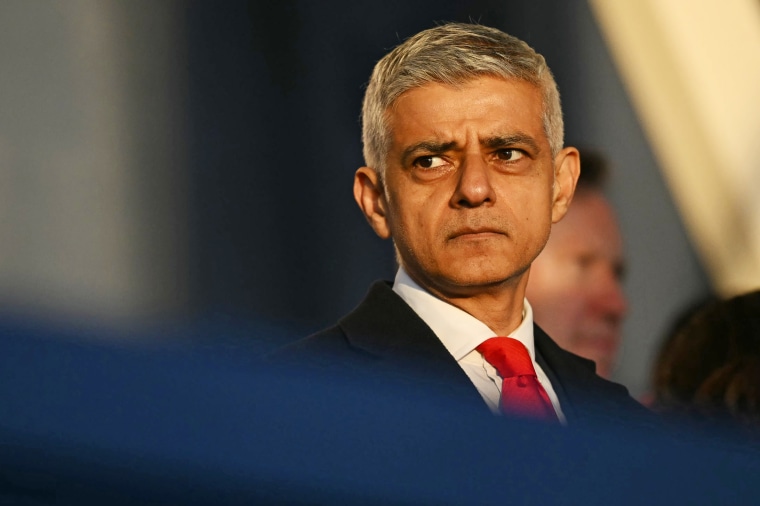
But as Britain’s cities become increasingly multicultural, an important question is emerging: what does diversity actually mean?
Is it simply the presence of people from different ethnic, cultural and religious backgrounds? Or does genuine diversity also require equality, individual freedom and the ability of people with different beliefs to participate equally in public life?
The debate is becoming increasingly important, particularly in London.
The capital is one of the world’s most internationally connected cities. Its streets contain restaurants representing almost every corner of the globe. Its neighbourhoods are home to people whose families may have lived in Britain for generations as well as recent arrivals seeking education, employment or a new beginning.
Different languages can be heard on public transport. Religious buildings stand alongside one another. Cultural festivals take place throughout the year, while international businesses employ people from dozens of countries.
For many Londoners, this mixture is one of the city’s greatest strengths.
Yet diversity is not always as simple as celebrating different cultures.
A genuinely diverse society must also consider how different communities interact with one another and whether individuals are able to enjoy the same fundamental freedoms.
That is where the political debate becomes more complicated.
Supporters of multiculturalism argue that people should be free to maintain their cultural and religious identities. They believe a successful modern society does not require everyone to dress, worship, eat or live in exactly the same way.
Instead, they argue, Britain should provide a common democratic framework within which different traditions can flourish.
This approach has shaped much of London’s identity over recent decades.
At the same time, critics of multiculturalism sometimes argue that cultural differences can become a source of division if communities live completely separate lives. They believe that integration requires more than simply living in the same geographical area.
According to this argument, citizens should share certain basic principles even when their cultures and beliefs are different.
Freedom of expression, equality before the law, democratic participation and protection from discrimination are often cited as examples.
The challenge is finding the right balance.
A society that demands complete cultural conformity risks suppressing legitimate differences.
A society that refuses to discuss shared values risks creating isolated communities with little connection to one another.
The answer may therefore lie somewhere between the two extremes.
People should be free to preserve their identities while also recognising that membership of a democratic society comes with shared responsibilities.
This question has become particularly relevant to politicians.
Public figures frequently use words such as “inclusive”, “multicultural” and “diverse” when describing their cities. These words can be powerful because they communicate an image of openness and opportunity.
But political language also creates expectations.
When a leader praises diversity, the public may reasonably ask what standards are being applied.
Does diversity mean different communities simply existing alongside each other?
Does it mean equal representation in government and public institutions?
Does it mean equal economic opportunity?
Does it require protection for minority religions and beliefs?
Or does it encompass all of these things?
There is no universally accepted answer.
Different societies have developed different approaches to multiculturalism, and what works in one country may not necessarily work in another.
Britain itself has changed significantly over the past century.
Large-scale migration transformed cities such as London, Birmingham, Leicester and Manchester. Communities from South Asia, Africa, the Caribbean, Europe and elsewhere established new lives while contributing to Britain’s economy and cultural identity.
Over time, these communities became an integral part of British society.
Today, it is difficult to imagine London without its extraordinary mixture of cultures.
However, multiculturalism also creates political responsibilities.
Government institutions must ensure that discrimination is addressed. Schools must teach children how to live in a society where people may hold very different beliefs. Police forces must maintain public trust across communities. Politicians must communicate carefully when discussing sensitive subjects involving religion, immigration or identity.
The responsibility is not limited to government.
Communities themselves also have a role.
Successful integration requires people to meet one another rather than simply living next door to one another. Schools, workplaces, sports clubs, charities and community organisations can all provide opportunities for people from different backgrounds to build relationships.
Personal contact can often achieve what political speeches cannot.
A person who has never met anyone from another culture may rely on stereotypes. Someone who works alongside colleagues from different backgrounds may discover that the differences between them are much smaller than expected.
This is one reason cities can be powerful engines of social integration.
Urban life creates opportunities for people to encounter different languages, religions, foods and traditions every day.
But cities can also expose inequalities.
Two families living only a few miles apart may have dramatically different experiences of education, employment, housing and public services.
For that reason, economic equality should also be part of the conversation about diversity.
A city cannot reasonably describe itself as inclusive if large sections of its population feel permanently excluded from economic opportunity.
Education is another crucial factor.
Children growing up in diverse communities need both an understanding of their own heritage and an appreciation of the wider society around them.
Teaching cultural history can help young people understand where their classmates’ families come from. Teaching democratic values can help ensure that cultural differences do not become barriers to equal citizenship.
The same principle applies to religion.
A diverse society should allow people to practise their faith peacefully, while also ensuring that religious belief does not become a justification for discrimination or intimidation.
The principle should be universal.
No particular religion should receive special permission to discriminate against others, just as no religious community should be treated as inherently suspicious because of the actions of individuals.
This distinction is essential.
Criticising a law, institution or political decision is not the same thing as attacking an entire religious population.
In an increasingly polarised political environment, those distinctions are sometimes lost.
Social media has made the problem even more serious.
A short statement can be removed from its original context and shared with thousands of people within minutes. What may have begun as a discussion about a specific policy can quickly become an argument about entire communities.
Politicians therefore face an enormous communication challenge.
They must be able to discuss difficult issues without encouraging prejudice.
Citizens face a similar responsibility.
Before sharing controversial claims online, people should consider whether the information comes from a reliable source and whether the headline accurately reflects what was actually said.
Healthy democracies depend on disagreement.
People should be able to criticise politicians, question government policies and challenge popular ideas.
But disagreement works best when it is based on evidence rather than assumptions about entire groups of people.
The debate over diversity ultimately reflects a larger question about Britain’s future.
The country is unlikely to become less culturally diverse in the coming decades. Technology, international education, migration, global business and family connections will continue to bring people together.
The challenge is deciding how that diversity should be managed.
The goal should not be to create a society in which everyone becomes identical.
Nor should the goal be to create completely separate communities that rarely interact.
Instead, Britain needs a model in which people can retain their cultural identities while sharing a common commitment to fundamental rights and democratic institutions.
That means accepting difference without abandoning equality.
It means allowing debate without allowing disagreement to become hatred.
And it means recognising that diversity is not simply about how many different people live in a city.
It is about whether those people can live together with dignity, freedom and mutual respect.
For a city such as London, that may be the most important definition of all.
Diversity is strongest when difference and equality exist together.
A successful multicultural city should not ask people to choose between their heritage and their citizenship. It should give them the opportunity to celebrate both.
That is a difficult ambition, and no city will achieve it perfectly.
But the debate itself is valuable.
Because the future of a diverse society will not be determined by slogans alone. It will be determined by whether millions of ordinary people are willing to live alongside those who are different from them, defend equal rights, challenge prejudice and recognise the humanity they share.
That is what turns diversity from a description into a genuine social principle.