
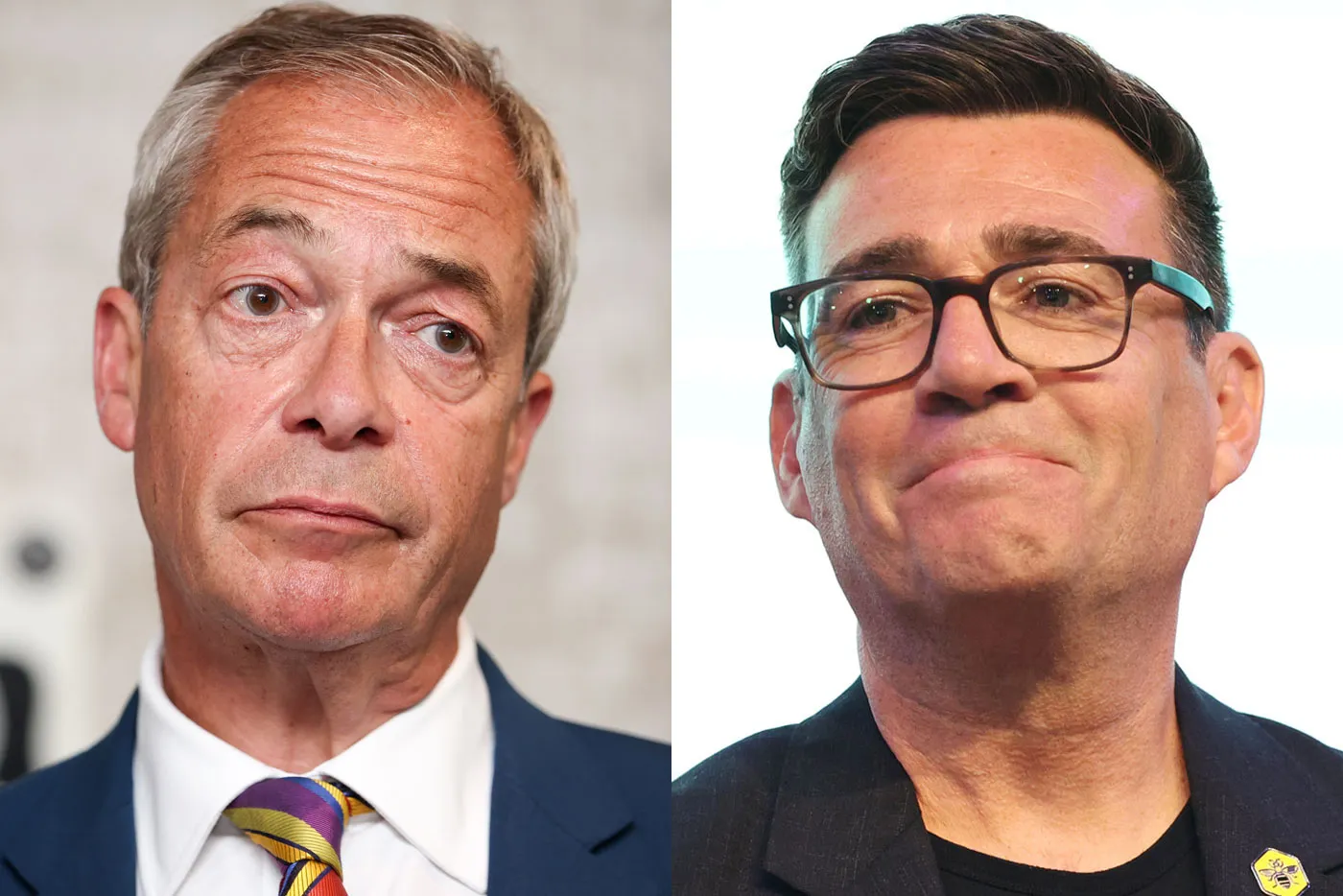
What a Strong Poll for Andy Burnham Could Mean for Labour – and Why It Would Raise Questions for Nigel Farage
Opinion polls have long played a powerful role in British politics. Although they do not determine election results, they can shape political narratives, influence campaign strategies, and affect public perceptions of party leaders. Whenever a poll suggests momentum for one politician or difficulties for another, commentators quickly begin debating what the findings could mean for the wider political landscape.
If a future opinion poll were to show growing support for Andy Burnham while indicating a decline in enthusiasm for Nigel Farage, it would likely trigger an intense discussion about the changing priorities of British voters. Such a shift would not necessarily predict an election result, but it could signal changing attitudes toward leadership, economic policy, public services, and political direction.
Burnham has spent much of his political career focusing on regional development, transport, housing, public services, and greater devolution for England’s city regions. As Mayor of Greater Manchester, he has frequently argued that local communities should have more control over investment and decision-making. Supporters see this approach as practical and rooted in everyday concerns rather than Westminster politics.
Farage, by contrast, has built his political reputation on issues such as Brexit, immigration, national sovereignty, and criticism of the political establishment. His supporters argue that he has consistently raised concerns that mainstream parties were slow to address. Critics, however, contend that long-term political success requires broader policy programmes extending beyond those issues.
If polling were to indicate stronger support for Burnham, analysts might interpret it as evidence that voters are increasingly focused on domestic priorities such as the cost of living, healthcare, housing affordability, and economic management. During periods of financial pressure, practical questions about household budgets often move to the top of the political agenda.
That does not mean issues such as immigration or constitutional reform disappear. Rather, voters may begin evaluating political parties across a wider range of subjects, including taxation, education, transport, policing, and economic growth.
Opinion polls should always be interpreted with caution. Individual surveys represent a snapshot of public opinion at a particular moment and can be influenced by recent political events, media coverage, economic announcements, or major speeches. Different polling organisations may also produce varying results depending on methodology and sampling.
For this reason, political parties rarely base strategy on a single poll. Instead, they examine broader trends across multiple surveys conducted over time.
If Burnham’s popularity were increasing, Labour could view it as evidence that messages about regional investment and public services are resonating with voters. The party might choose to place greater emphasis on policies relating to transport, NHS funding, local government, and economic development.
At the same time, such polling would likely generate discussion about Burnham’s future role within Labour. High-profile regional leaders often attract attention whenever questions arise about national leadership or the party’s long-term direction.
For Farage and Reform UK, less favourable polling would not necessarily represent a lasting setback. Political fortunes can change rapidly, particularly in periods of economic uncertainty or political volatility. Reform has previously demonstrated an ability to attract attention through campaigns on issues that resonate strongly with parts of the electorate.
The challenge for any political movement is maintaining momentum once public attention shifts. Protest politics can generate strong support when voters are dissatisfied, but long-term success usually requires convincing the electorate that a party is prepared to govern and implement detailed policies.
Economic credibility remains one of the most important tests facing every political party. Voters consistently rank inflation, wages, taxation, housing costs, and public services among their highest priorities. As a result, parties seeking national office must explain not only what they oppose but also how they would finance and deliver their proposed policies.
Leadership also plays a significant role in polling. Personal approval ratings can influence perceptions of competence, trustworthiness, and communication. However, British elections are typically shaped by a combination of leadership, party reputation, local candidates, and national issues rather than by personalities alone.
Media coverage can amplify polling results, sometimes creating narratives of momentum or decline. While such narratives may influence political debate, history shows that they do not guarantee electoral outcomes. Campaigns, televised debates, manifesto launches, and unexpected events can all alter public opinion before polling day.
Another important consideration is voter turnout. Polls measure preferences among respondents, but elections are decided by those who actually vote. Motivating supporters to participate remains one of the greatest challenges for every political party.
The broader political context is also significant. Labour, the Conservatives, Reform UK, the Liberal Democrats, the Green Party, and regional parties all compete for different segments of the electorate. Changes in support for one party can influence the strategies of all the others.
If Burnham’s political profile continued to grow, commentators would likely debate whether his style of leadership reflects changing public expectations. His emphasis on local decision-making, transport reform, and regional investment has distinguished him from many national political figures.
Meanwhile, Farage’s future influence would depend on whether Reform UK continues to persuade voters that its policies address the issues they consider most important. The party has demonstrated an ability to shape national debate, but translating public attention into long-term electoral success remains a separate challenge.
Ultimately, polls are valuable because they offer insight into public sentiment, not because they predict the future with certainty. They provide political parties with information, but voters make the final decision at the ballot box.
Whether future surveys favour Burnham, Farage, or another political leader, the fundamental questions facing British politics are likely to remain the same. How can the economy grow? How should public services be funded? How can housing become more affordable? How should immigration be managed? And how can confidence in political institutions be strengthened?
These issues will continue to shape political debate long after individual polls have faded from the headlines.
For politicians, favourable polling can provide encouragement but also higher expectations. Less favourable polling may prompt reflection and strategic adjustments rather than signal permanent decline.
In the end, elections are won not by headlines alone but by sustained public confidence, credible policies, effective campaigning, and the choices made by millions of voters across the United Kingdom.