
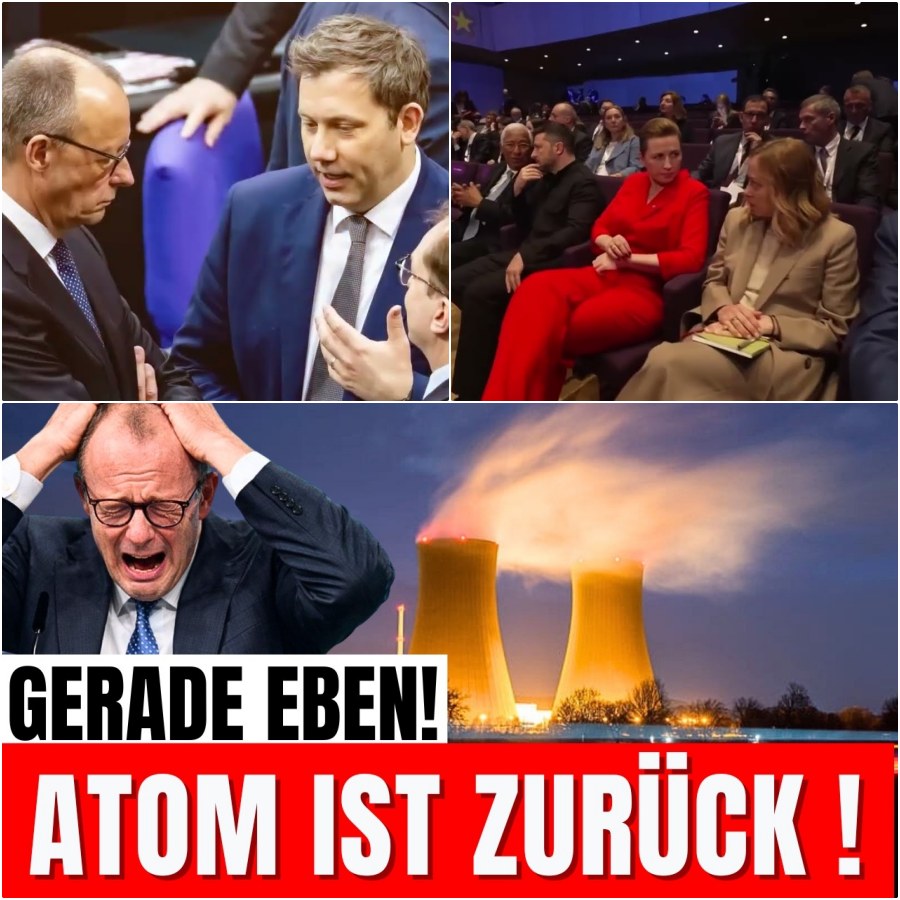
When Political Interviews Turn Into Spectacle: The Battle Between Questions and Power

Political interviews have always been a place where journalism and politics collide. A carefully prepared conversation can quickly become a confrontation when a presenter pushes for clear answers and a politician attempts to control the message. In the modern media environment, moments of tension often attract more attention than the policies being discussed, turning a serious debate into a public spectacle.

The fictional exchange described here reflects a broader trend in contemporary broadcasting: the struggle between interviewers seeking accountability and public figures trying to defend their positions. The pressure of a live television studio, combined with the expectations of millions of viewers, can transform an ordinary discussion into a dramatic test of communication skills.
For journalists, the purpose of a political interview is not simply to allow a guest to repeat prepared statements. The role of the interviewer is to challenge claims, question contradictions, and explore issues that affect the public. Strong questioning is considered a vital part of democratic debate because it forces leaders and representatives to explain their decisions.
However, the balance between challenging a guest and creating a productive conversation is delicate. When an interview becomes too aggressive, some viewers may feel that the journalist is seeking conflict rather than clarity. Others argue that politicians often avoid direct answers and that persistent questioning is necessary to reveal the truth behind carefully crafted statements.
This tension has become even more visible in the age of social media. A single heated exchange from a television programme can spread across the internet within minutes. Short clips are shared, debated, and often removed from their original context. Instead of focusing on the entire interview, audiences may remember only one dramatic moment, one raised voice, or one emotional reaction.
For politicians, live interviews present both an opportunity and a risk. A confident performance can strengthen public support, while an uncomfortable exchange can damage a carefully developed image. Political communication has become increasingly focused on presentation, with advisers preparing politicians not only for the substance of questions but also for the emotional challenges of the interview environment.
For broadcasters, the challenge is maintaining credibility. Audiences expect journalists to be independent and fearless, but they also expect fairness. A successful interviewer must know when to press harder and when to allow a guest to explain their position. The goal should be understanding, not simply creating a dramatic television moment.
The public response to confrontational interviews is often divided. Some viewers praise journalists who refuse to accept vague answers, seeing them as defenders of accountability. Others believe that excessive confrontation prevents meaningful discussion and encourages politicians to become even more defensive.
Behind every tense interview is a larger question about the relationship between media and power. Politicians need the media to communicate with voters, while journalists depend on political figures to provide information and explanations. At the same time, both sides have competing interests: politicians want to persuade, while journalists want to investigate.
The future of political interviews will likely continue to involve this struggle. As audiences become more accustomed to fast-moving online content, broadcasters face pressure to create moments that attract attention. Yet the value of journalism remains connected to deeper principles: accuracy, fairness, and the responsibility to inform the public.
A memorable interview should not only be remembered because someone became angry or because a conversation became uncomfortable. Its importance should come from the questions asked, the answers provided, and the insight gained by viewers.
In the end, political interviews are a reflection of democracy itself. They are sometimes uncomfortable, sometimes dramatic, and occasionally chaotic. But when handled responsibly, they provide a necessary space where those with influence can be challenged and where the public can better understand the decisions that shape society.
The Heated World of Political Interviews: When Television Becomes a Battlefield
Political interviews have always been among the most intense moments in modern journalism. A television studio may appear calm from the outside, with bright lights, cameras, and carefully prepared questions, but behind the scenes it represents a complicated battle of ideas, personalities, and public expectations. When a journalist challenges a politician during a live broadcast, the result can sometimes become more than a simple conversation. It can become a dramatic confrontation that captures the attention of millions.
In recent years, political interviews have changed significantly. The rise of social media, online news platforms, and instant video sharing has transformed the way audiences consume political discussions. A single exchange lasting only a few minutes can dominate public conversation for days. Often, the most memorable moments are not detailed explanations of policy but emotional reactions, interruptions, or moments when a guest appears uncomfortable under pressure.
This reflects a wider question about the role of journalists in democratic societies. Should interviewers simply provide politicians with a platform to explain their views, or should they actively challenge statements that appear unclear, incomplete, or inconsistent? Supporters of tough interviewing argue that politicians have powerful positions and therefore must be questioned rigorously. They believe that without pressure from journalists, important issues may remain hidden behind carefully prepared messages.
Critics, however, argue that some interviews have become focused too much on confrontation. They claim that when journalists appear more interested in creating a dramatic moment than exploring a subject in depth, the public loses the opportunity to understand complex issues. A heated exchange may generate headlines, but it does not always produce meaningful discussion.
The tension between these two perspectives has become a defining feature of modern political broadcasting. Journalists are expected to be persistent, but also fair. Politicians are expected to answer difficult questions, but they also attempt to communicate their own messages. The result is often a carefully balanced performance where both sides attempt to control the direction of the conversation.
Live television makes this challenge even greater. Unlike written interviews, where participants can review their words before publication, live broadcasts leave no opportunity for correction or adjustment. A quick response, an emotional reaction, or a moment of hesitation can immediately influence how viewers perceive the people involved.
For politicians, communication skills have become almost as important as political knowledge. Leaders and public figures often receive professional media training designed to prepare them for difficult questions. They learn how to remain calm, repeat key messages, and avoid being drawn into arguments that could damage their public image.
However, experienced journalists also understand the importance of preparation. A strong interview is not created simply through aggressive questioning. It requires research, knowledge of the subject, and the ability to identify when an answer does not fully address the issue being discussed. The most effective interviewers are not necessarily those who speak the loudest, but those who ask precise questions that encourage genuine answers.
The popularity of intense political interviews also reveals something about modern audiences. Many viewers appreciate moments when journalists challenge powerful figures because they see these exchanges as examples of accountability. They believe that public officials should not be protected from difficult questions simply because they hold important positions.
At the same time, there is a danger that political discussions become entertainment rather than information. Television networks compete for attention, and dramatic moments often attract more viewers than calm explanations. As a result, both journalists and politicians can become part of a system where conflict receives more attention than cooperation.
Social media has increased this problem. A complete interview may last twenty or thirty minutes, but online audiences often see only a short clip. Without the surrounding context, viewers may interpret a moment differently from how it was originally intended. Supporters and critics can use the same video to argue completely opposite points.
This creates a difficult environment for public debate. A journalist may believe they are demanding accountability, while a politician’s supporters may believe they are witnessing unfair treatment. A politician may believe they are defending their position, while critics may see the response as an attempt to avoid answering questions.
Despite these challenges, political interviews remain an essential part of democratic communication. They provide a rare opportunity for direct questioning between those who hold influence and those responsible for examining their decisions. Without challenging conversations, public debate risks becoming nothing more than carefully controlled messaging.
The best political interviews are not remembered only because they contain conflict. They are remembered because they reveal something important. A good question can expose a weakness in an argument, clarify a complicated issue, or encourage a public figure to explain their position more clearly. The value of journalism comes not from creating anger but from creating understanding.
The relationship between politicians and journalists will probably always involve tension. Politicians naturally want to present themselves positively, while journalists are expected to examine their claims critically. This disagreement is not necessarily a problem; in many ways, it is a necessary part of a healthy democratic system.
However, both sides share a responsibility. Journalists must avoid turning every interview into a personal confrontation, while politicians must accept that difficult questions are part of public life. When either side ignores this responsibility, the quality of public discussion suffers.
The future of political interviews will continue to evolve as technology changes the way people receive information. Artificial intelligence, social media platforms, and new forms of digital communication will create new challenges for accuracy and trust. Yet the fundamental purpose of political journalism will remain the same: asking questions, seeking answers, and helping citizens understand the decisions that affect their lives.
Ultimately, the drama of a political interview is not just about raised voices or moments of disagreement. It is about the relationship between power and accountability. A challenging interview can be uncomfortable, but discomfort is sometimes necessary when important issues are being discussed.
In a world where public figures can communicate directly with millions of people through social media, independent journalism remains more important than ever. The strongest interviews are those that move beyond conflict and create meaningful conversations. They remind audiences that democracy depends not only on leaders speaking, but also on someone being willing to ask difficult questions.