

New Projections Suggest Two of Nigel Farage’s Highest-Profile Recruits Face Tough Conservative Challenge
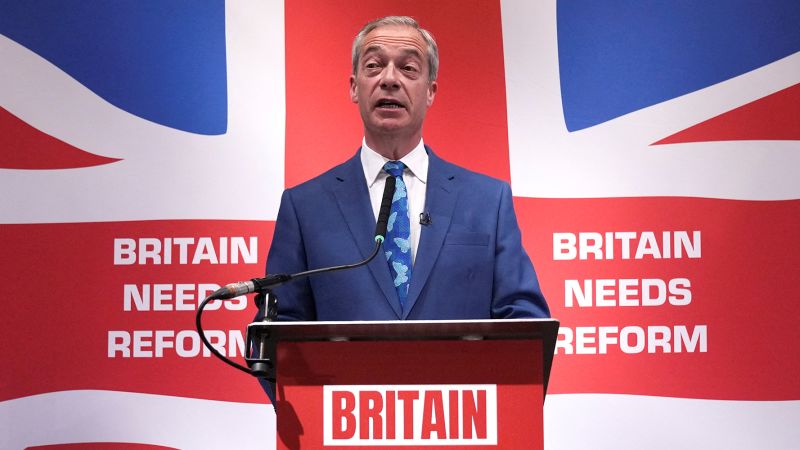
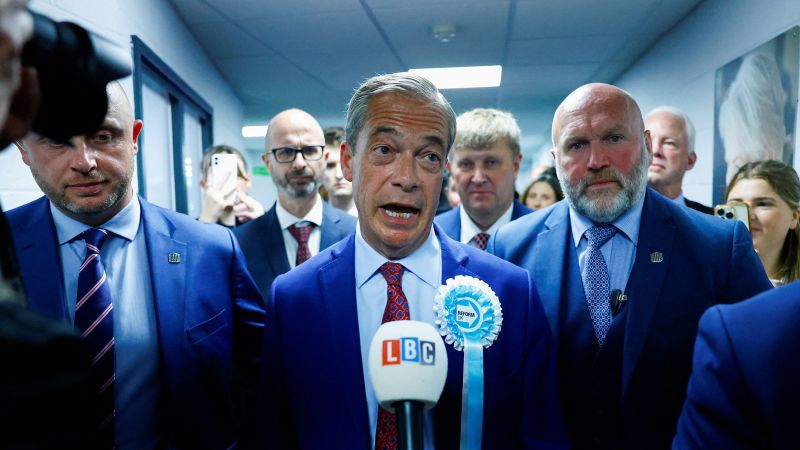
New political projections have sparked fresh debate over the future of Reform UK’s electoral strategy, suggesting that two of Nigel Farage’s most prominent recruits could face unexpectedly competitive races against Conservative candidates at the next UK general election. While Reform UK continues to poll strongly nationwide, analysts warn that individual constituency battles may prove far more difficult than national polling alone suggests.
The projections, produced by political analysts using recent polling data and constituency-level voting trends, indicate that although Reform UK has expanded its support significantly over the past two years, translating national popularity into parliamentary victories remains a major challenge. Britain’s first-past-the-post electoral system rewards concentrated local support rather than overall national vote share, meaning even well-known candidates can struggle if opposition parties successfully consolidate their voters.
The findings are particularly significant because the two candidates are regarded as some of Nigel Farage’s highest-profile political recruits. Both joined Reform UK after building reputations elsewhere in British public life and have become familiar faces through television appearances, campaign events, and national media interviews. Their recruitment was widely viewed as evidence that Reform UK was attracting experienced political figures capable of challenging both Labour and the Conservatives.
However, the latest constituency forecasts suggest that their campaigns may be far more competitive than initially expected. In both seats, Conservative strategists believe they retain strong local organizations, experienced campaign volunteers, and longstanding voter relationships that could offset Reform UK’s national momentum.
Political scientists note that constituency elections often differ significantly from national polling. Voters may support one party nationally while choosing a different local representative based on personal reputation, constituency service, or tactical voting. This creates unpredictable contests in areas where multiple parties remain competitive.
Conservative officials have responded confidently to the projections, arguing that many traditional centre-right voters still regard the party as the most experienced governing force. Senior Conservatives insist that although Reform UK has succeeded in attracting media attention, winning individual constituencies requires years of local campaigning and community engagement rather than national popularity alone.
Reform UK dismissed suggestions that its candidates face serious difficulties. Party representatives argued that recent opinion polls consistently demonstrate growing public frustration with both Labour and the Conservatives, particularly regarding immigration, taxation, public spending, and economic growth. According to Reform officials, many lifelong Conservative supporters are now willing to back alternative candidates for the first time.
Nigel Farage himself has repeatedly argued that British politics is entering a period of historic realignment. He believes millions of former Conservative voters no longer feel represented by the party’s leadership and are searching for a movement that places greater emphasis on border security, lower taxes, economic reform, and national sovereignty.
Campaign advisers within Reform UK remain optimistic despite the latest projections. They point to recent by-elections and local election performances that demonstrated significant increases in the party’s vote share across many regions of England. They also argue that national opinion polls continue to show Reform UK competing closely with—or even outperforming—the two traditional major parties in several surveys.
Independent analysts caution that much could change before the next general election. Economic conditions, leadership popularity, government performance, and major domestic or international events all have the potential to reshape voter preferences. Election campaigns themselves frequently alter public opinion as parties publish manifestos, participate in televised debates, and intensify local campaigning.
Another important factor is tactical voting. In closely contested constituencies, supporters of smaller parties sometimes vote strategically to prevent a particular candidate from winning. Political experts suggest that if anti-Reform or anti-Conservative tactical voting becomes widespread, the outcome in several key seats could become extremely unpredictable.
Local campaign organization may also prove decisive. Constituency elections require thousands of volunteers to deliver leaflets, canvass voters, organize public meetings, and encourage turnout on election day. Established parties often possess stronger local infrastructure, while newer parties must rapidly build volunteer networks capable of competing across hundreds of constituencies.
Opinion polling experts emphasize that projections should not be interpreted as election predictions. Instead, they provide statistical estimates based on current information, which can change considerably over time. Even relatively small movements in public opinion may produce dramatic differences in parliamentary seat totals because of Britain’s electoral system.
The apparent vulnerability of several high-profile Reform candidates illustrates both the opportunities and the challenges facing Nigel Farage’s party. On one hand, Reform UK has successfully transformed itself from a fringe political movement into one of Britain’s most influential parties. On the other hand, converting national support into parliamentary representation remains a complex task requiring strong local campaigns and disciplined organization.
Political commentators believe the coming months will be critical. If Reform UK continues expanding its support while maintaining campaign discipline, it could become an increasingly powerful force at Westminster. Conversely, if the Conservatives succeed in rebuilding support among centre-right voters, several projected marginal constituencies may return to traditional Conservative control.
For voters, the emerging contests promise some of the most closely watched electoral battles of the next general election. High-profile candidates, intense media scrutiny, and narrow projected margins suggest these races could become symbols of the broader struggle to reshape Britain’s political landscape.
Regardless of the final outcome, the latest projections demonstrate that the next general election is unlikely to be decided solely by national opinion polls. Instead, hundreds of individual constituency contests—each shaped by local issues, candidate quality, and campaign organization—will determine who ultimately forms the next government.