

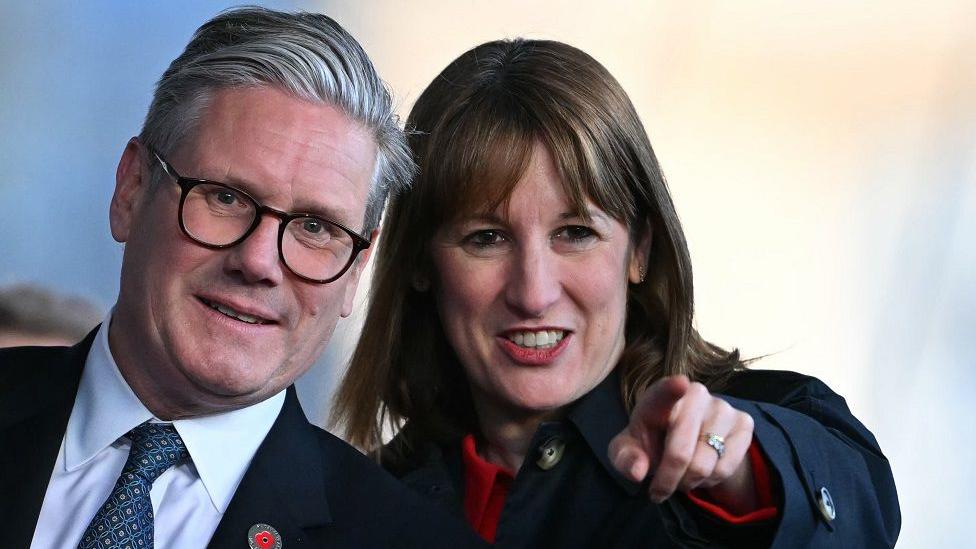
Keir Starmer’s ‘Plan B’ Debate: Why Any Change of Strategy Could Put Pressure on Rachel Reeves
Political leaders are often judged by their ability to adapt when circumstances change.
A government may enter office with a clear set of priorities, but economic pressures, public expectations, and political challenges can force leaders to reconsider their approach.
For Keir Starmer and the Labour government, questions about strategy have become increasingly important as they attempt to balance promises of change with the realities of governing.
Any suggestion of a “Plan B” immediately creates political speculation.
Supporters may describe a change of approach as sensible adaptation.
Critics may portray it as evidence that the original strategy has failed.
For Rachel Reeves, the Chancellor of the Exchequer, such debates are particularly significant because economic policy is central to Labour’s credibility.
The relationship between political ambition and economic reality is one of the biggest challenges facing the government.
The Pressure on Labour’s Economic Message
Before entering government, Labour placed strong emphasis on economic stability and rebuilding public confidence.
The party argued that growth and financial responsibility were essential foundations for improving public services and living standards.
Rachel Reeves became a key figure in this message, presenting herself as a Chancellor focused on discipline and credibility.
Supporters argue that this approach was necessary because governments must maintain confidence among businesses, investors, and the wider public.
They believe economic stability creates the conditions for long-term improvement.
However, critics argue that caution can create political difficulties.
They question whether voters who supported Labour expecting major change may become frustrated if improvements appear slower than expected.
This creates a difficult balancing act.
The Challenge of Managing Expectations
Every government faces a gap between expectations and reality.
During elections, parties present ambitious visions for the future.
Once in office, they must deal with financial limitations, existing problems, and unexpected events.
This can create tension between what supporters want and what governments believe is achievable.
For Labour, the challenge is especially important because many voters expect visible improvements in areas such as healthcare, housing, wages, and public services.
Economic policy therefore becomes more than a technical issue.
It becomes a test of whether the government can deliver the change it promised.
Why Rachel Reeves Is Central to the Debate
As Chancellor, Rachel Reeves carries significant responsibility for Labour’s economic direction.
Her decisions influence taxation, public spending, investment, and the government’s wider credibility.
Supporters argue that a careful approach is essential.
They believe that avoiding financial instability protects the country from greater problems in the future.
Critics argue that economic caution must be balanced with ambition.
They believe voters may question whether a government focused heavily on financial restraint can deliver meaningful improvements.
This disagreement reflects a broader debate about how governments should respond to economic challenges.
Should they prioritise immediate investment?
Should they focus first on creating conditions for growth?
Can they achieve both?
The Politics of a Change in Direction
If a government adjusts its strategy, the political consequences depend heavily on how the change is explained.
A successful government can present a policy shift as evidence of flexibility and responsible leadership.
An unsuccessful government may appear uncertain or inconsistent.
This is why political communication matters.
Voters do not only judge decisions.
They judge whether those decisions appear logical and trustworthy.
For Starmer and Reeves, maintaining confidence requires explaining how economic choices connect to everyday experiences.
The Growth Question
Economic growth is likely to remain at the centre of Labour’s political strategy.
Governments often argue that stronger growth provides more resources for public services and improves living standards.
However, achieving growth is complicated.
It depends on factors including productivity, investment, skills, infrastructure, and global economic conditions.
A government can influence these areas but cannot control all of them.
This creates a challenge for politicians because voters often expect quick results while economic change can take years.
Internal Political Pressure
Economic debates can also create pressure within political parties.
Different members may have different ideas about priorities.
Some may argue that government should increase spending to address urgent problems.
Others may argue that controlling debt and maintaining credibility must come first.
Managing these disagreements is part of the challenge of leadership.
A successful government must maintain unity while making difficult decisions.
The Role of Opposition Parties
Political opponents will always attempt to use economic difficulties to challenge governments.
If growth is weak or public dissatisfaction increases, opposition parties may argue that the government’s approach has failed.
They may present alternative policies and attempt to attract voters who feel disappointed.
This is particularly important in a competitive political environment where traditional party loyalties have weakened.
Governments cannot assume that previous support will automatically continue.
They must constantly demonstrate why voters should remain confident.
Is a Plan B a Sign of Failure?
A change of strategy is not automatically evidence of failure.
Successful governments often adjust policies when circumstances change.
The ability to adapt can be a strength.
However, repeated changes without a clear explanation can create uncertainty.
The key question is whether voters believe a government is responding intelligently or simply reacting to problems.
For Starmer and Reeves, the challenge is ensuring that any adjustment appears deliberate and connected to a wider vision.
The Road Ahead
The future of Labour’s economic strategy will depend on whether the government can demonstrate progress.
Voters will ultimately judge results rather than political arguments.
They will look at whether living standards improve, whether public services become more effective, and whether the economy creates new opportunities.
For Rachel Reeves, the task is balancing economic credibility with the demand for visible change.
For Keir Starmer, the challenge is ensuring that government decisions create confidence rather than uncertainty.
Conclusion
Claims about a “desperate Plan B” reflect the intense political pressure facing any government attempting to deliver major change.
However, political strategy is rarely simple.
Adjusting plans can be a sign of realism rather than weakness.
The real test is whether those adjustments produce better outcomes and whether the public understands the reasons behind them.
For Labour, the central challenge remains the same: turning political promises into practical improvements.
The success or failure of the government will ultimately be measured not by headlines, but by whether people believe their lives are getting better.