

Brexit Betrayal Fears Surge as Rejoin Petition Hits Huge Milestone – The Battle Over Britain’s Future Relationship with Europe

Britain’s relationship with the European Union remains one of the most divisive political issues of the modern era. Years after the Brexit referendum, the debate has not disappeared. Instead, it has evolved into a new argument about whether the country should seek closer ties with Europe, maintain its current position, or eventually consider reversing Brexit altogether.
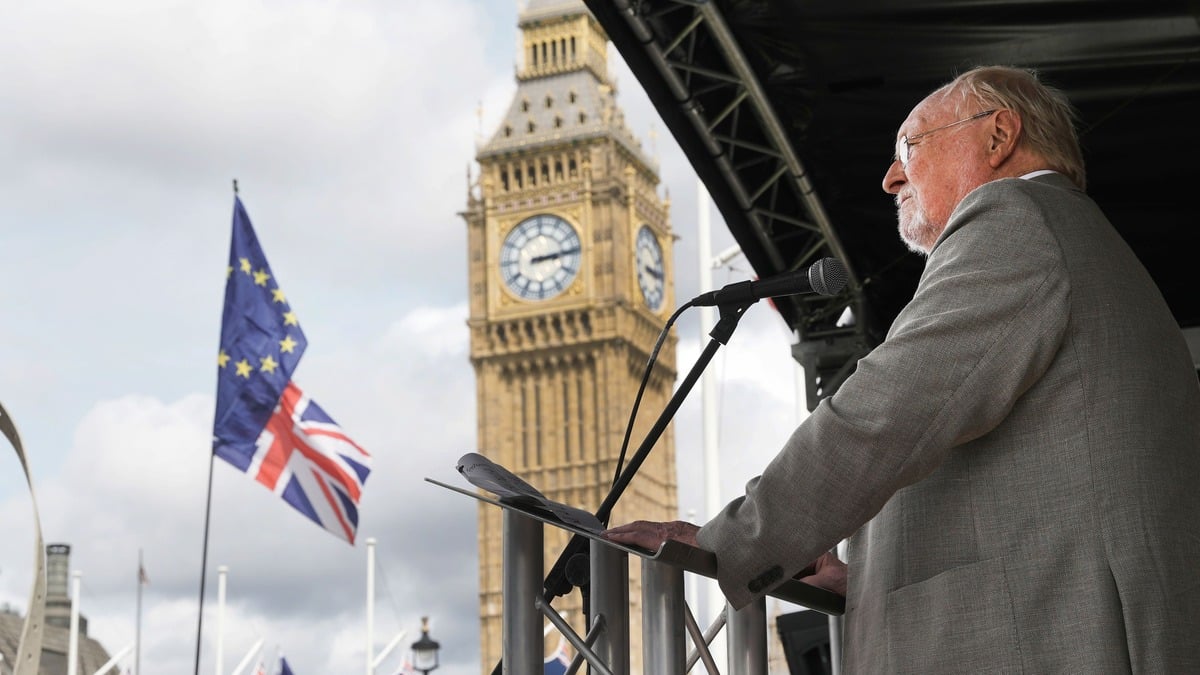
The renewed attention surrounding a Rejoin petition reaching a significant milestone has once again reopened those divisions. Supporters see growing public interest as evidence that attitudes toward Brexit are changing. Critics argue that any attempt to reverse course would ignore the democratic decision made by voters and risk reopening deep political divisions.
At the centre of the debate is a fundamental question:
Has Britain’s relationship with the EU delivered the benefits voters expected, or is the country better served by remaining outside the bloc?
The answer depends heavily on political perspective.
For those supporting closer European ties, the argument is that Brexit has created economic challenges that require a new approach. They point to concerns about trade barriers, business costs, labour shortages, and reduced influence in European decision-making. In their view, rebuilding relations with the EU is a practical response to changing circumstances.
For Brexit supporters, however, the argument is very different.
They believe leaving the European Union was about restoring democratic control, allowing Britain to set its own laws, manage its own borders, and make independent decisions. From this perspective, any move toward rejoining EU structures would represent a rejection of the referendum result.
This explains why the issue remains so emotionally charged.
Brexit was never only about economics.
It was also about identity, sovereignty, and trust in political institutions.
A petition calling for closer ties with Europe may therefore represent very different things to different groups. To some, it reflects frustration with the consequences of Brexit. To others, it represents an attempt to revisit a decision that should remain settled.
The scale of public interest in such campaigns is politically significant, but petitions alone do not determine government policy. They can demonstrate public concern, encourage debate, and influence political conversations, but any major constitutional change would require substantial political support and a clear democratic mandate.
This distinction is important.
Political movements often gain attention before they gain practical influence.
The challenge for the Rejoin movement is transforming public discussion into a credible political programme. That would require answering difficult questions about timing, public consent, economic arrangements, and the terms under which Britain might seek a closer relationship with Europe.
Simply arguing that Brexit has created problems is not enough.
A successful political campaign would need to explain what comes next.
Would Britain seek full membership of the EU?
Would it pursue membership of the single market?
Would it negotiate a closer partnership while remaining outside EU institutions?
Each option carries different economic and political consequences.
Meanwhile, Brexit supporters argue that the country needs more time to benefit from leaving the EU. They claim that major changes require years to implement and that early criticism ignores potential opportunities in areas such as global trade, regulation, and domestic policymaking.
They also argue that repeated debates about reversing Brexit create unnecessary uncertainty for businesses and voters.
For them, the priority should be making Brexit work rather than reopening the original decision.
This disagreement reflects a wider challenge in British politics: how to respond when public opinion changes after a major national decision.
Political views are not fixed.
People change their minds.
Circumstances change.
Economic conditions change.
A decision supported by voters at one moment may be viewed differently years later.
However, changing circumstances do not automatically invalidate previous democratic choices.
This creates a difficult balance between respecting past decisions and responding to new public concerns.
For successive governments, Brexit has remained a complicated issue because it affects almost every area of policy. Trade, immigration, agriculture, science, security cooperation, and environmental regulation all involve questions about Britain’s relationship with European countries.
Even governments that support Brexit have generally accepted the importance of maintaining practical cooperation with European neighbours.
Geography has not changed.
Economic connections have not disappeared.
The debate is therefore increasingly about the depth and structure of cooperation rather than whether Britain should have any relationship with Europe at all.
This has created a political middle ground where many voters support closer practical links but remain divided over formal membership.
For the Labour government and Keir Starmer, the issue presents particular challenges. Labour has sought to improve relations with the EU while ruling out a return to membership or major aspects of the pre-Brexit arrangement. Supporters describe this as a pragmatic approach focused on economic benefits without reopening the referendum debate.
Critics from both sides argue that this position may not satisfy anyone completely.
Some pro-European campaigners believe it does not go far enough.
Some Brexit supporters fear even limited alignment represents a gradual return to EU influence.
This demonstrates the political difficulty of finding a stable position.
Brexit has created a landscape where almost every policy choice can be interpreted through the wider sovereignty debate.
Even technical agreements can become symbols of a larger argument.
A trade arrangement can be portrayed either as practical cooperation or as a loss of independence.
A regulatory agreement can be viewed either as reducing unnecessary barriers or as accepting external rules.
The language surrounding Brexit remains powerful because it reflects deeper concerns about national direction.
Supporters of closer European ties often argue that modern challenges require cooperation. Issues such as climate change, security threats, and economic competition are international in nature, making collaboration essential.
Brexit supporters respond that cooperation does not require membership of political institutions and that democratic accountability must remain national.
Both arguments reflect genuine concerns.
The future relationship between Britain and Europe is therefore unlikely to be resolved through slogans alone.
It will depend on economic evidence, political leadership, and public opinion.
A major change would require more than dissatisfaction with current arrangements. It would require a convincing argument about what alternative would deliver and why voters should support it.
The renewed attention around Rejoin campaigns shows that Brexit remains unfinished business in the minds of many people.
For some, it represents an opportunity to correct what they see as a historic mistake.
For others, it represents a refusal to accept a democratic outcome.
The political battle is therefore not simply about Europe.
It is about trust, identity, and the future direction of Britain.
Whether the country moves closer to the EU, maintains its current relationship, or eventually considers a different path will depend on future elections, negotiations, and public debate.
One thing is clear: Brexit may have changed Britain’s relationship with Europe, but it has not ended the argument about where the country belongs.