
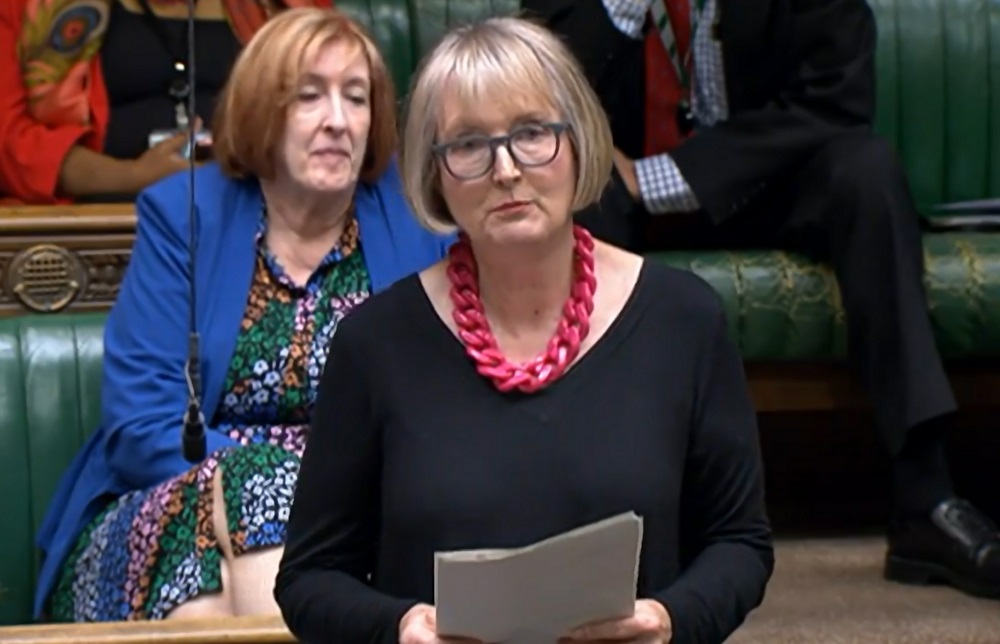
Men Should Be Banned from Standing in Next Labour Leadership Race, Says Party Grandee

A senior Labour figure has sparked debate by suggesting that men should be barred from standing in the party’s next leadership election, arguing that it is time for Labour to elect its first female leader. The proposal has reignited discussions about gender representation, positive discrimination, and equality within one of the United Kingdom’s largest political parties.

The comments come at a time when Labour is considering its future leadership following significant political changes. Although the party has produced several prominent female politicians over the decades, it has never elected a woman as its permanent leader. Supporters of the proposal argue that this historical imbalance should now be addressed, while critics contend that leadership contests should remain open to all qualified candidates regardless of gender.
Labour has a long history of promoting gender equality within British politics. The party pioneered the use of all-women shortlists for many parliamentary constituencies during the 1990s, significantly increasing the number of female Members of Parliament. These measures have been widely credited with improving women’s representation in the House of Commons and encouraging greater diversity within British political life.
Despite these achievements, Labour has yet to elect a woman to lead the party permanently. Several women have served in senior cabinet positions or contested previous leadership elections, but none has ultimately become party leader through a full leadership contest. This fact has prompted some senior members to argue that stronger action is needed to ensure women have an equal opportunity to reach the party’s highest office.
The latest proposal suggests that the next leadership election should be restricted to female candidates only. Advocates believe such an approach would guarantee that Labour finally elects its first woman leader, sending a powerful message about gender equality and modern political representation.
Supporters argue that structural barriers continue to limit women’s opportunities in politics despite significant progress over recent decades. They contend that women often face greater scrutiny regarding their appearance, communication style, family responsibilities, and leadership abilities than their male counterparts. According to this perspective, temporary measures may be justified to overcome long-standing inequalities.
Proponents also point to Labour’s previous experience with all-women parliamentary shortlists. Although controversial when first introduced, these shortlists substantially increased female representation within Parliament and were later adopted in various forms by other political organizations. Supporters believe a women-only leadership contest would represent a similar step toward achieving genuine equality at the highest level of political leadership.
However, the proposal has also attracted considerable criticism from within and outside the Labour Party. Opponents argue that excluding candidates solely because they are male would contradict the principle of equal opportunity. They maintain that leadership contests should focus on experience, ability, vision, and public support rather than gender.
Some critics have also questioned whether such a policy would be legally or constitutionally straightforward. While political parties possess considerable freedom to establish their own internal rules, any restrictions based on protected characteristics may require careful consideration under equality legislation. Legal experts note that although all-women shortlists have specific exemptions under UK law for parliamentary candidate selection, applying similar principles to party leadership contests could involve different legal questions.
Political analysts observe that the debate reflects broader discussions about diversity in leadership across many sectors, including business, education, and public administration. Organizations increasingly seek to improve representation among senior leaders while balancing equality initiatives with principles of open competition and merit-based selection.
The discussion has also highlighted Labour’s broader commitment to diversity. In recent years, the party has emphasized increasing representation across gender, ethnicity, disability, and other backgrounds. Many supporters believe that leadership should reflect the diversity of both the party’s membership and the wider British population.
Others argue that symbolic milestones, while important, should not become the primary consideration in selecting political leaders. According to this view, voters are more concerned with policies, competence, and effective government than with the demographic characteristics of individual candidates. They believe the strongest candidate should be chosen regardless of gender.
Several female Labour politicians have previously spoken about the challenges women continue to face in political life. They have highlighted issues including online abuse, media scrutiny, balancing public responsibilities with family life, and gender stereotypes. Many believe further reforms are needed to make politics more accessible and inclusive for future generations of women.
The proposal has generated discussion beyond Labour itself, with commentators noting that other major British political parties have already elected female leaders. The Conservative Party has had several women serve as leader and prime minister, including Margaret Thatcher, Theresa May, and Liz Truss. Labour’s inability to elect a permanent female leader therefore stands out despite its long-standing emphasis on equality and social justice.
At the same time, Labour supporters emphasize that the party has consistently promoted women into senior cabinet positions, parliamentary committees, and local government leadership. They argue that while progress has sometimes been slower than hoped, the party remains committed to expanding opportunities for women at every level of politics.
Political scientists suggest the debate illustrates the continuing tension between two important principles: promoting greater representation for historically underrepresented groups and ensuring open, competitive democratic processes. Different democracies have adopted varying approaches, including quotas, reserved positions, voluntary party targets, and open competition.
Ultimately, whether Labour chooses to introduce any restrictions on future leadership candidates remains uncertain. Party members, governing bodies, and legal advisers would all likely play important roles in determining whether such proposals are practical and consistent with party rules.
The controversy nevertheless reflects a broader conversation about the future of political leadership in Britain. Questions about representation, diversity, equality, and merit continue to shape debates within all major political parties as they seek to attract wider public support and reflect the society they aspire to govern.
As Labour prepares for future leadership decisions, balancing its commitment to equality with democratic competition is likely to remain a central challenge. Whatever approach the party ultimately adopts, the discussion underscores the continuing importance of ensuring that talented individuals from all backgrounds have genuine opportunities to lead Britain’s political institutions.
Leave a Reply
You must be logged in to post a comment.