
A massive political storm is brewing! Tommy Robinson just announced a nationwide campaign that could change the future of the United Kingdom forever!  Cruising through major cities, his latest move is targeting a silent majority…
Right-wing activist Tommy Robinson has announced a sweeping national voter registration campaign, declaring the upcoming 2029 general election as the final opportunity for his supporters to enact “peaceful” political change in the United Kingdom.
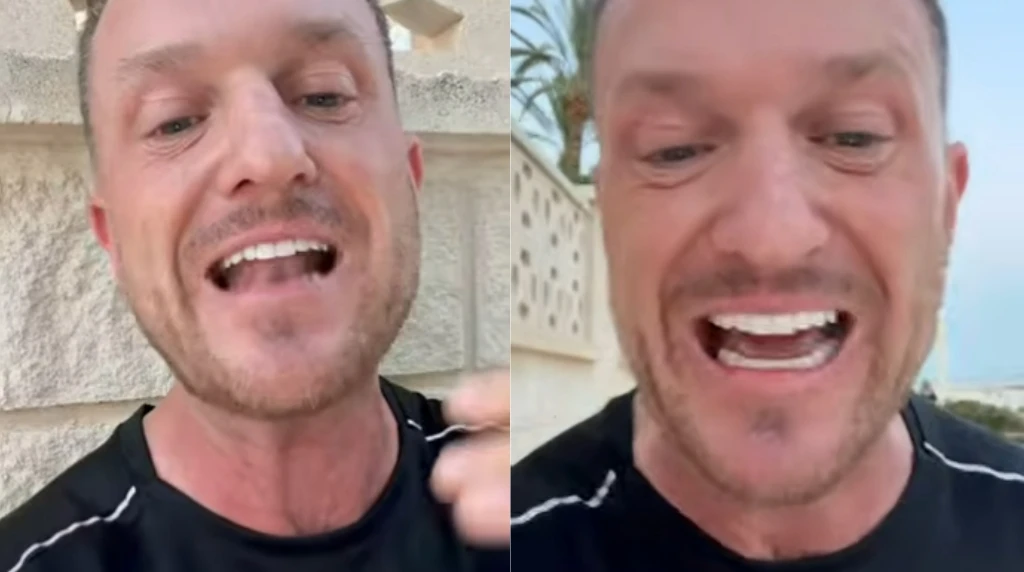
In a newly released video address, Robinson laid out a strategic shift toward grassroots electoral politics while simultaneously injecting himself into the explosive national debate surrounding the murder of 18-year-old Henry Nowak.
The “Unite the Kingdom” Campaign
Robinson outlined plans for a nationwide tour targeting heavily deprived, working-class estates in major cities, including Newcastle, Manchester, Sheffield, and Leeds. He identified the estimated 50% of eligible voters who do not participate in elections as his primary demographic target.
To mobilize this base, Robinson announced that his organization will deploy teams to set up registration booths utilizing QR technology to drive turnout. He framed the next general election in stark, existential terms.
“We have one chance to solve this peacefully, and it’s in three years’ time at the ballot box,” Robinson warned his audience. “Beyond that, we’re f***ed. I don’t see much hope for this nation.”
Defending the Sikh Community
The broadcast also saw Robinson address the highly publicized murder of Henry Nowak, who was fatally stabbed by Vikram Digua using a Sikh ceremonial knife (Kirpan).
Despite his frequent criticisms of multiculturalism, Robinson forcefully defended the broader British Sikh community against calls for mass deportations or religious bans. He categorized the Digua family as “scumbags” and a “rogue” faction, arguing they do not represent the Sikh faith. Robinson commended Sikh community leaders for rapidly issuing statements condemning the murder, contrasting their response with his highly critical view of the Islamic community’s reaction to domestic terrorism.
Scathing Attack on UK Police
While defending the Sikh community, Robinson directed unrelenting fury at the police officers who responded to the Nowak murder. The officers controversially handcuffed the heavily bleeding teenager after his killer falsely alleged that Nowak had racially abused him.
Robinson characterized the police response as definitive evidence of “institutional racism against white people.” He accused the officers of allowing Nowak to “choke to death on his own blood” because they were indoctrinated by political correctness, prioritizing a false accusation of racism from a minority suspect over the critical medical needs of a white victim.
Concluding his address, Robinson demanded the immediate naming, shaming, and criminal prosecution of the arresting officers, throwing his support behind a private legal pursuit against the force.
A Nation at a Crossroads: A Fictional Political Drama
Disclaimer: The following story is entirely fictional. It is a work of imagination and does not describe real events or real political developments.
The morning began like any other across the United Kingdom. Commuters filled railway stations, cafés welcomed their first customers, and headlines competed for attention on every smartphone screen. Then, shortly after 9 a.m., social media exploded with breaking news. Tommy Robinson had reportedly announced a nationwide campaign, promising what supporters described as “a new chapter” while critics warned of growing political tensions. Within minutes, hashtags surged to the top of online trends, and television networks interrupted their scheduled programming to discuss the announcement.
No one could agree on what the campaign would ultimately mean. Some believed it represented a significant shift in public debate, while others dismissed it as another headline destined to fade within days. Regardless of opinion, one thing became clear almost immediately: the announcement had captured the nation’s attention.
Throughout the day, commentators filled television studios with competing analyses. Political analysts debated whether the campaign would influence public conversations or simply energize existing supporters. Newspapers published opinion pieces from every perspective imaginable, each reaching dramatically different conclusions. Online, millions of people shared clips, reactions, and speculation, often long before verified information became available.
In London, conversations unfolded in coffee shops, offices, and university campuses. Some people argued that the campaign reflected growing frustration among parts of the public. Others insisted that the country’s biggest challenges required practical policy discussions rather than emotionally charged political movements. Across the nation, families gathered around dinner tables, discussing what they had seen in the news.
The fictional campaign itself centered on a promise to travel across dozens of British cities, holding public meetings where citizens could express their concerns about issues ranging from economic uncertainty to community development. Organizers described the events as opportunities for open discussion, while opponents questioned whether they would increase political polarization.
As preparations began, local councils faced unexpected logistical challenges. Security arrangements had to be reviewed. Community organizations scheduled alternative events encouraging peaceful dialogue among residents with different political opinions. Universities announced public forums featuring historians, economists, and constitutional experts to provide broader context for ongoing national debates.
Meanwhile, journalists worked around the clock to separate facts from rumors. Every hour brought fresh speculation online. Some claims proved accurate, while others quickly collapsed under closer examination. The fictional media landscape became a reminder of how rapidly information—and misinformation—could spread during moments of heightened public interest.
In Manchester, one fictional town hall meeting drew hundreds of attendees. Inside the packed venue, speakers expressed a wide variety of opinions. Some praised greater political engagement regardless of ideology, arguing that democracy depends on active participation. Others emphasized the importance of respectful disagreement and warned against allowing emotional rhetoric to replace evidence-based discussion.
Outside, peaceful demonstrations reflected the diversity of public opinion. Different groups carried signs expressing entirely different messages. Police officers maintained a visible but calm presence, ensuring that everyone could exercise their rights while minimizing the risk of confrontation.
As the campaign continued across the country, opinion polls in this fictional story suggested that many people remained undecided. Rather than embracing one side completely, a large portion of the public simply wanted answers about housing affordability, healthcare services, public safety, and economic opportunity. Analysts observed that these everyday concerns often mattered more to voters than dramatic political headlines.
International media also took notice. Broadcasters across Europe published stories examining the fictional campaign as part of a broader discussion about changing political movements throughout Western democracies. Some commentators viewed the events as evidence of increasing political fragmentation, while others argued they reflected citizens seeking new ways to participate in public life.
At universities, political science professors encouraged students to examine historical examples of periods when national debates became especially intense. They emphasized that democratic societies have repeatedly experienced moments of deep disagreement while continuing to evolve through elections, public dialogue, and legal institutions.
Weeks later, the fictional campaign reached its largest gathering yet. Thousands of people filled a public square under heavy media coverage. Television helicopters circled overhead while reporters delivered live updates throughout the day. Yet despite predictions of dramatic developments, the event concluded peacefully. Participants dispersed, conversations continued online, and attention shifted toward upcoming parliamentary debates and local elections.
Looking back, historians in this fictional future would later describe the campaign less as a turning point and more as a symbol of a country wrestling with difficult questions about identity, governance, and the future. Rather than producing immediate political transformation, it sparked countless conversations in homes, workplaces, schools, and communities.
Ultimately, the fictional story demonstrates that major political announcements rarely determine a nation’s future on their own. Instead, lasting change emerges through institutions, elections, public participation, debate, and the everyday decisions made by millions of ordinary citizens. Headlines may capture attention for a moment, but history is usually written over years rather than days.
As the media cycle eventually moved on, the discussions continued. People still disagreed passionately, yet many recognized that disagreement itself was not the defining feature of democracy. The real challenge lay in finding ways to debate difficult issues without abandoning respect for one another.
Whether viewed as a significant political moment or simply another chapter in an ongoing national conversation, the fictional campaign left behind an important reminder: societies are constantly changing, and their future is shaped not by a single announcement, but by the collective choices of their citizens over time.