

Bad News for Andy Burnham – France Migrant Deal Isn’t Doing Nearly Enough

Prime Minister Andy Burnham is facing mounting pressure over his government’s strategy to tackle illegal migration across the English Channel, as critics argue that the UK’s latest agreement with France is failing to deliver the dramatic reduction in small-boat crossings that ministers had promised.
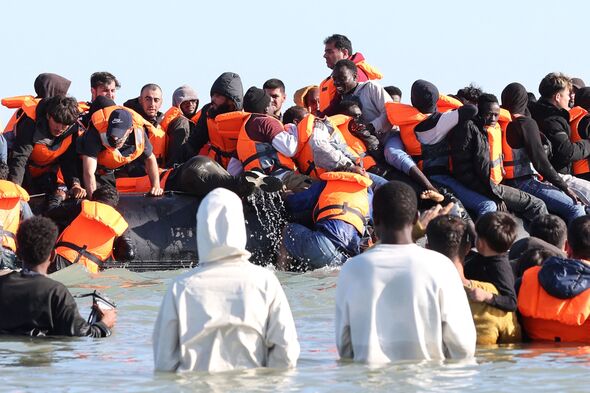
The renewed criticism follows a series of busy days in the Channel, during which hundreds of migrants successfully reached the south coast of England despite increased cooperation between British and French authorities. Opposition politicians claim the continued crossings demonstrate that the expensive bilateral agreement has significant weaknesses, while the government insists the overall trend remains positive and that meaningful progress is being made.
At the centre of the debate is the new UK-France migration partnership, which commits hundreds of millions of pounds in British funding to strengthen French patrols, surveillance technology, intelligence sharing and enforcement against criminal smuggling gangs. Ministers argue that the agreement is more ambitious than previous arrangements because it links funding to operational performance and gives French authorities additional resources to intercept migrant boats before they leave the coast.
However, recent events have raised fresh doubts about whether those measures are proving effective enough.
Journalists and politicians observing beaches in northern France have reported multiple occasions where overloaded inflatable boats entered the water without physical intervention from French police. According to eyewitness accounts, officers often remained on shore after boats became heavily crowded, explaining that they either lacked the legal authority to intervene safely or had been instructed not to board vessels once they were in the water.
These scenes have provided fresh ammunition for the Conservative Party. Shadow Home Secretary Chris Philp has argued that British taxpayers deserve far stronger enforcement after years of substantial financial contributions to French border operations. Following his visit to the French coast, Philp claimed that officers admitted they had been instructed to avoid direct physical confrontation with departing migrant boats, although French authorities have not accepted his interpretation of events.
The timing could hardly be worse for Burnham.
Only days earlier, the Prime Minister had defended Labour’s approach by insisting that the government’s overall strategy was “working.” He acknowledged that individual days could see spikes in arrivals depending on weather conditions but pointed to year-on-year reductions in total crossings, record numbers of removals and increased action against organised criminal gangs as evidence that the policy was beginning to have an impact.
Official figures do support part of the government’s argument. Compared with the same stage of the previous year, total Channel crossings have fallen significantly, while enforcement activity and deportations have increased. Ministers also say tens of thousands of attempted crossings have been prevented through joint operations involving British and French authorities.
Nevertheless, critics argue that headline statistics mask continuing operational problems.
One particular concern is the emergence of increasingly large inflatable boats capable of carrying well over 100 passengers. These larger vessels allow smugglers to transport more people in a single journey, potentially offsetting improvements made elsewhere in border enforcement. Several recent crossings have involved record numbers of migrants aboard individual boats, illustrating how criminal networks continue to adapt their tactics despite greater policing efforts.
The practical limitations of the French agreement have also become clearer.
Reports indicate that French officers can intervene only under specific operational circumstances and that specialist units trained for maritime interceptions are not always available where crossings occur. Once boats are heavily loaded or already afloat, police often cite safety concerns that restrict direct action, allowing many vessels to continue toward British waters. These operational constraints have prompted questions about whether the agreement can realistically achieve the level of deterrence expected by the British public.
Opposition parties have responded by demanding a tougher approach.
Conservatives argue that future financial support should depend upon measurable enforcement results, while Reform UK has gone further by calling for payments to France to be suspended altogether until crossings decline substantially. Both parties contend that continued departures from French beaches undermine confidence in the government’s border strategy.
The government rejects those criticisms.
Home Office ministers maintain that no single policy can eliminate illegal migration overnight. They argue that tackling organised people-smuggling requires long-term cooperation with European partners, stronger intelligence gathering, faster asylum processing and increased deportations for those with no legal right to remain in Britain. Officials also point out that weather conditions can produce sharp short-term fluctuations in crossing numbers even when broader annual trends are improving.
For Andy Burnham, the political challenge extends beyond migration itself.
As a relatively new Prime Minister, his government is being judged on whether it can demonstrate visible progress on one of Britain’s most politically sensitive issues. Every day that large numbers of migrants successfully cross the Channel provides opponents with an opportunity to question Labour’s credibility on border security, regardless of longer-term statistical improvements.
Ultimately, the latest criticism does not necessarily prove that the UK-France agreement has failed. Official figures indicate that overall crossings have declined compared with last year, suggesting that some measures may be having an effect. At the same time, recent high-profile crossings and reports of limited intervention by French police illustrate that the deal still faces considerable operational challenges. Whether future adjustments can close those gaps may determine whether Burnham’s government can convince voters that its strategy is delivering the stronger border control it has promised.