
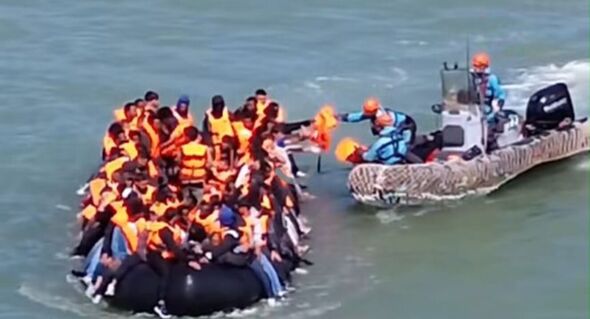
Dramatic Channel Rescue as French Authorities Throw Life Jackets to Migrants During Dangerous 70-Mile Crossing Attempt
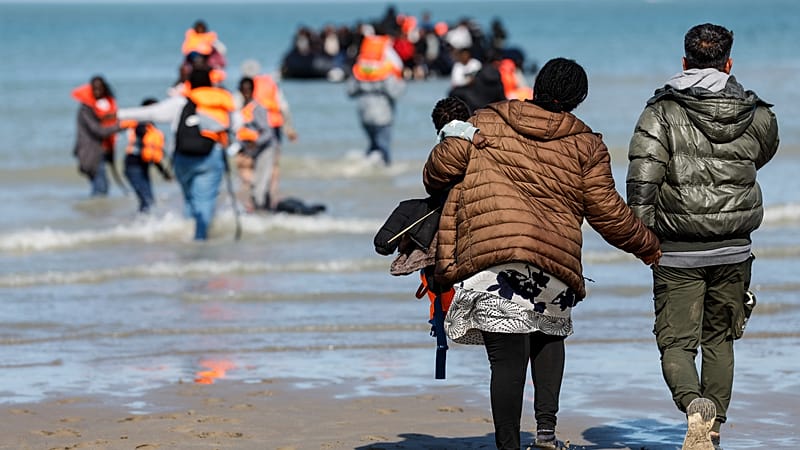
A dramatic rescue operation in the English Channel has reignited debate over migration, border security and the dangerous journeys organised by people-smuggling networks after French authorities were seen throwing life jackets to migrants attempting a lengthy sea crossing toward Britain.
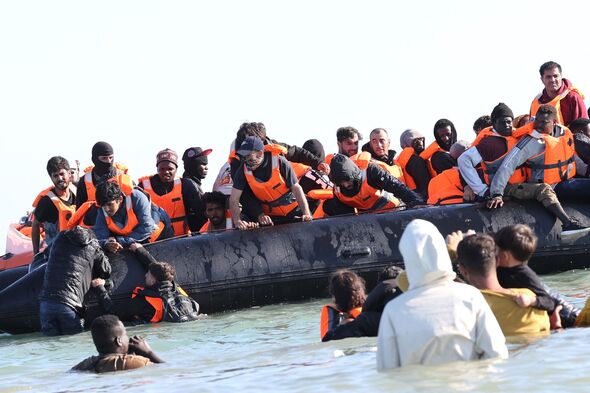
The incident highlighted the extreme risks faced by people attempting to cross one of the world’s busiest shipping routes in small and often unsuitable boats. It also renewed political arguments over how governments should respond to the growing challenge of Channel crossings, balancing humanitarian responsibilities with efforts to prevent dangerous journeys.
Images of migrants in distress at sea, with rescue teams rushing to provide assistance, once again brought attention to the human reality behind the statistics. For many of those attempting the crossing, the journey represents a desperate attempt to reach the United Kingdom. For authorities, however, it represents a complex challenge involving border control, public safety and international cooperation.
The English Channel is one of the busiest maritime areas in the world, with commercial ships travelling through the waters constantly. The narrow distance between France and Britain can create a misleading impression that the crossing is simple, but conditions can change quickly. Strong currents, cold temperatures, heavy ship traffic and unpredictable weather make small boat journeys extremely dangerous.
Despite these risks, thousands of people have attempted the route in recent years, often paying criminal gangs large sums of money for passage. Smuggling organisations frequently use overcrowded inflatable boats that are not designed for long journeys at sea.
The latest incident has once again focused attention on the role of smugglers. Many officials argue that criminal networks are responsible for encouraging vulnerable people to take life-threatening risks while profiting from their desperation.
Supporters of stronger enforcement measures say that preventing crossings requires targeting these organisations and disrupting their operations. They argue that rescue responses, while necessary to save lives, can unintentionally encourage smugglers if they believe passengers will eventually reach European or British authorities.
However, humanitarian organisations strongly disagree with any suggestion that rescue efforts should be reduced. They argue that saving lives at sea is an essential responsibility and that people in danger must receive immediate assistance regardless of their immigration status.
The image of French personnel throwing life jackets demonstrates the difficult position faced by frontline responders. Their immediate priority is preventing deaths and ensuring people survive dangerous situations, even while governments debate longer-term solutions.
For the officers and rescue workers involved, the situation is not simply a political issue. It is a matter of responding to people in immediate danger.
The Channel migration debate has become one of the most politically sensitive issues in Britain. Successive governments have promised to reduce illegal crossings, arguing that uncontrolled migration places pressure on housing, public services and local communities.
Critics of government policy say that continued arrivals demonstrate a failure to secure borders effectively. They argue that stronger action is needed to discourage people from attempting the journey and to prevent criminal gangs from operating.
Others argue that the issue cannot be solved through enforcement alone. They believe governments must address wider international factors, including conflict, poverty, instability and the lack of safe legal routes for people seeking protection.
The debate has also created tensions between Britain and France. Both countries have attempted to cooperate on border management, intelligence sharing and efforts to stop smuggling networks. However, political disagreements continue over responsibility, funding and the most effective approach.
French authorities have frequently found themselves at the centre of criticism because many crossings begin from French beaches. French officials argue that they face a difficult task managing large numbers of migrants while operating within legal and humanitarian obligations.
British officials, meanwhile, have stressed that international cooperation is essential because the Channel is a shared maritime route.
The situation has become increasingly important politically because immigration remains a major concern for many voters. Political parties across the spectrum have presented different solutions, ranging from stricter enforcement and faster deportation processes to expanded humanitarian programmes and international agreements.
For communities in coastal areas of northern France and southern England, the issue is also very visible. Residents, charities, police officers and local authorities often experience the practical consequences of repeated crossing attempts.
Some communities have expressed concerns about disruption and resources, while others have focused on providing humanitarian support to vulnerable people.
The debate surrounding Channel crossings often becomes highly emotional because it involves competing priorities. On one side is the desire for secure borders and effective immigration control. On the other is the responsibility to protect people from danger and treat vulnerable individuals humanely.
The life jacket incident represents this tension clearly. The act of throwing safety equipment to people at sea is a basic rescue response, but it occurs within a much larger political dispute about migration policy.
Experts generally agree that no single measure will solve the issue. Effective strategies usually require cooperation between countries, action against criminal networks, efficient asylum systems and policies that address the reasons people undertake dangerous journeys.
The continued use of small boats shows that existing approaches have not fully prevented crossings. At the same time, the dangers faced by migrants demonstrate why emergency responses remain essential.
For governments, the challenge is finding a solution that reduces dangerous journeys while maintaining commitments to human rights and international law.
As political debate continues, the images from the Channel serve as a reminder that migration is not only a question of numbers and policies. It involves real people making life-changing decisions, often under desperate circumstances.
The 70-mile crossing attempt and the dramatic rescue response will likely become another chapter in the ongoing debate over Britain’s borders and migration strategy. While politicians continue searching for answers, those working at sea remain focused on the immediate priority: keeping people alive in one of the world’s most dangerous migration routes.