
Democracy is often measured not only by who wins elections but also by whether citizens are given the opportunity to vote regularly and fairly. In Britain, local elections play an essential role in ensuring that councils remain accountable to the communities they serve. When a scheduled election is postponed or cancelled, even for administrative reasons, questions naturally arise about democratic legitimacy, public trust, and the balance between efficient government and electoral rights.
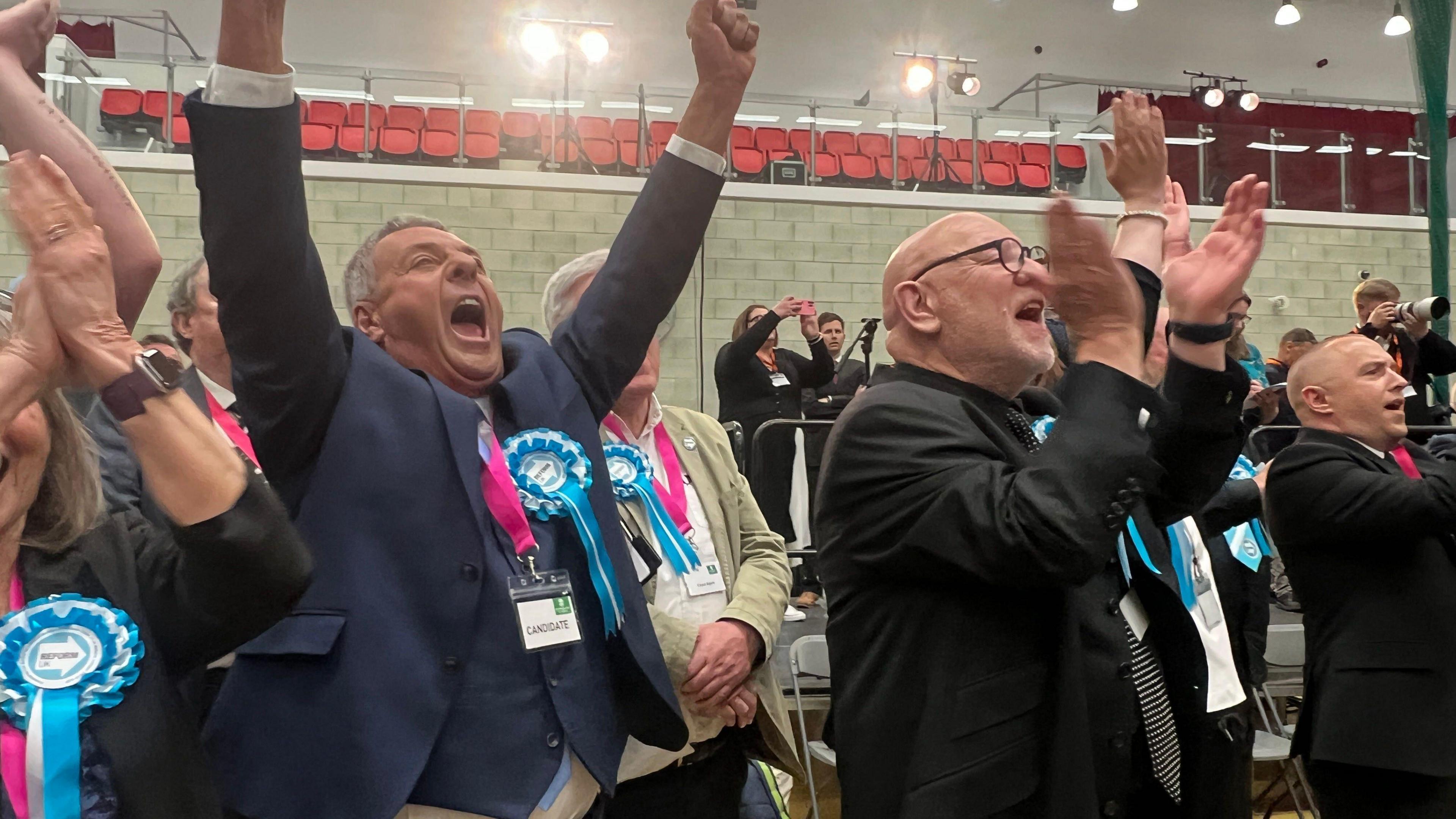
These issues have come into sharp focus in Plymouth following the decision to cancel the city’s scheduled 2027 local council elections as part of a broader programme of local government reorganisation. The proposal has prompted strong criticism from Plymouth Reform UK, whose leaders have indicated that they may pursue legal action to challenge the decision.

Although the dispute concerns one city, the debate reaches far beyond Plymouth. It raises important constitutional questions about how governments should modernise public administration without weakening democratic participation.
Why the Elections Were Cancelled
The cancellation of the 2027 elections is linked to plans to reorganise local government structures.
Instead of electing councillors to the existing council, voters are expected to elect members of a temporary governing body that will prepare for the introduction of a new local authority. This transitional organisation, often described as a shadow authority, will oversee planning, staffing, budgeting, and administrative arrangements before assuming full responsibility.
Supporters argue that holding elections for an authority that will soon disappear would be inefficient and expensive. They believe a single transitional election provides greater continuity and avoids unnecessary disruption during institutional change.
From an administrative perspective, the proposal appears logical.
However, democratic systems are judged not only by administrative efficiency but also by their commitment to regular public participation.
Many residents expected to vote in 2027 under the existing timetable. Changing those expectations has inevitably generated political controversy.
Reform UK’s Position
Reform UK has emerged as one of the strongest opponents of the decision.
The party argues that elections represent a fundamental democratic right and should only be postponed under exceptional circumstances.
According to its supporters, local government restructuring should not remove opportunities for voters to hold elected representatives accountable.
The party also argues that regular elections help maintain public confidence in democratic institutions.
If election dates can be changed whenever governments redesign administrative structures, critics worry that citizens may become less confident that political processes remain predictable and impartial.
Although Reform UK has not yet secured a legal victory, the possibility of court proceedings demonstrates how seriously the party views the issue.
The dispute is therefore as much about constitutional principles as it is about local politics.
The Government’s Argument
Those supporting the cancellation present a different perspective.
Large-scale administrative reform requires careful preparation.
Creating a new authority involves merging services, transferring staff, integrating financial systems, and establishing new governance arrangements.
These tasks require time and stability.
Holding elections for councillors whose authority may disappear shortly afterwards could create uncertainty and unnecessary expense.
Supporters argue that electing a transitional authority allows newly elected representatives to begin planning immediately, ensuring that the new council becomes operational without major disruption.
In their view, the temporary change to the election timetable is designed to improve local government rather than reduce democratic participation.
Democracy Versus Administrative Efficiency
The disagreement illustrates a recurring challenge in democratic government.
Efficiency and democracy do not always point in the same direction.
Administrative reform often seeks to simplify structures, reduce duplication, and improve public services.
Democratic systems, however, place equal importance on accountability, transparency, and regular elections.
Neither objective is inherently more important than the other.
Governments must therefore balance practical management with constitutional principles.
Finding that balance is rarely straightforward.
A decision that appears sensible from an administrative viewpoint may still create concerns about democratic legitimacy.
Could the Courts Become Involved?
If Reform UK proceeds with legal action, the courts would likely focus on whether the cancellation complies with existing legislation.
Judges would not decide whether reorganising local government is good or bad policy.
Instead, they would examine whether ministers acted within their legal authority and whether the proper procedures were followed.
Legal challenges of this kind often clarify constitutional principles.
Even if the government ultimately succeeds, court proceedings may provide valuable guidance for future reforms elsewhere in the country.
Such cases also reinforce an important democratic principle: government decisions affecting elections should remain open to legal scrutiny.
Public Opinion
Residents are unlikely to share a single view.
Some people may support the reforms because they hope larger or better-organised authorities will improve local services.
Others may believe that no administrative benefit justifies postponing an election.
Many citizens may hold more balanced opinions.
They may accept the need for structural reform while also believing that governments should communicate changes more clearly and protect public confidence throughout the process.
Public trust often depends less on the final decision than on whether people believe decisions have been made openly, fairly, and according to established rules.
Broader Political Implications
Although the dispute centres on Plymouth, similar debates could emerge elsewhere if additional councils undergo restructuring.
Future governments may need to consider how electoral timetables interact with institutional reform.
Clear legislation, transparent consultation, and consistent communication will become increasingly important whenever changes affect voting rights.
Political parties are also likely to use the issue to reinforce broader messages.
Reform UK presents the dispute as evidence that democratic accountability requires stronger protection.
Supporters of the reorganisation argue that modern public services sometimes require temporary constitutional adjustments.
The disagreement therefore reflects competing visions of how democratic systems should evolve.
The Importance of Local Elections
Local elections rarely attract the same national attention as general elections, yet they remain essential to democratic life.
Councils make decisions affecting housing, planning, waste collection, social care, transport, parks, libraries, and many other services that shape everyday life.
Regular elections ensure councillors remain accountable to local communities.
When election schedules change, even temporarily, governments must explain clearly why such changes are necessary.
Without effective communication, administrative reforms risk being interpreted as political rather than practical.
Transparency is therefore essential.
Conclusion
The cancellation of Plymouth’s 2027 local elections has become much more than a procedural change.
It has developed into an important debate about democracy, constitutional responsibility, and public confidence in political institutions.
Reform UK’s consideration of legal action reflects concerns that regular elections should remain protected even during periods of institutional reform.
Supporters of the government’s approach argue that temporary changes are necessary to ensure a smooth transition towards a more efficient system of local administration.
Both arguments contain legitimate concerns.
Efficient government is important, but democratic accountability remains the foundation of public trust.
Whatever the outcome of any legal challenge, the controversy serves as a reminder that electoral reforms must be handled with great care.
In democratic societies, citizens expect more than effective administration.
They expect their right to choose elected representatives to remain secure, predictable, and protected.
Maintaining that confidence is essential not only for Plymouth but also for the health of Britain’s democratic system as a whole.