
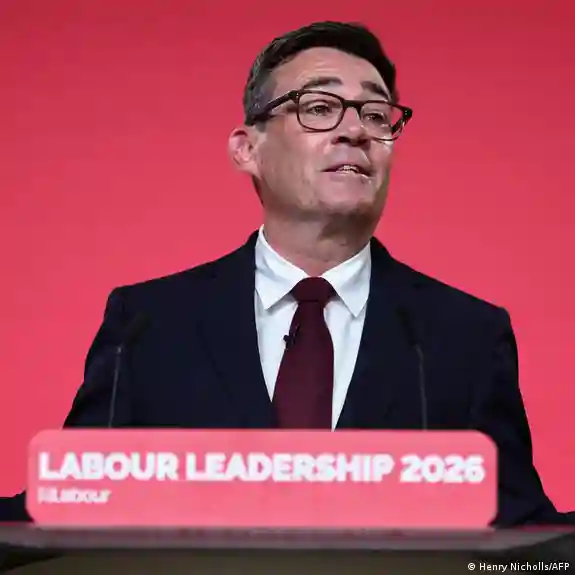
Andy Burnham Branded ‘Labour’s Last Chance’ as PM Warned Support Could ‘Quickly Fade’ Amid Divide in Voters

British politics has entered another period of uncertainty, with public opinion shifting rapidly and political leaders facing growing pressure to deliver meaningful change. As economic concerns, public services, and immigration continue to dominate national debate, voters are becoming increasingly impatient with promises that fail to translate into visible improvements. Against this backdrop, Greater Manchester Mayor Andy Burnham has emerged as one of Labour’s most recognizable figures, prompting renewed speculation about his future role within the party.
Some commentators have gone so far as to describe Burnham as “Labour’s last chance” if the party struggles to maintain public confidence in the years ahead. Whether that description is fair remains open to debate, but it reflects a broader conversation about leadership, trust, and the direction of British politics. At the same time, political observers have warned that any surge in support for the Prime Minister could prove temporary if voters continue to feel divided over key issues affecting everyday life.
The growing discussion surrounding Burnham is not simply about one politician’s popularity. Instead, it represents a wider debate about what kind of leadership the country wants at a time when many people believe traditional politics has failed to address long-standing challenges.
For years, Burnham has cultivated an image as a politician willing to speak independently, even when doing so places him at odds with national party figures. His profile increased significantly during the COVID-19 pandemic when he publicly challenged central government policies affecting Greater Manchester. Supporters argued that he was standing up for local communities, while critics claimed he was using the moment to raise his national profile. Regardless of those differing interpretations, the episode established Burnham as one of the most recognizable Labour politicians outside Westminster.
His approach has often emphasized practical solutions over ideological battles. Rather than focusing solely on parliamentary disputes, Burnham has repeatedly highlighted issues such as public transport, housing, policing, health care, and regional investment. This local-first style has helped him develop a reputation for being closely connected to voters’ everyday concerns.
That reputation has become increasingly important as many Britons express frustration with national politics. Surveys have repeatedly suggested that public trust in politicians remains fragile, regardless of party affiliation. Many voters say they want competence, honesty, and stability rather than constant political confrontation. In this environment, politicians perceived as pragmatic often receive greater attention than those associated with traditional party rivalries.
The debate surrounding Labour’s future has intensified because expectations are exceptionally high. Winning an election is one challenge; maintaining public confidence afterward is another. Political history demonstrates that governments frequently enjoy a period of goodwill immediately after entering office, but that goodwill can disappear surprisingly quickly if economic conditions fail to improve or campaign promises remain unfulfilled.
Analysts frequently note that voters today are less loyal to individual parties than they were in previous generations. Instead, many people make decisions based on current performance rather than long-standing political identity. This shift has created a more volatile electoral landscape in which public opinion can change within months rather than years.
As a result, warnings that support for the Prime Minister could “quickly fade” reflect a broader understanding of modern politics rather than a prediction of inevitable decline. Governments across Europe have experienced dramatic swings in popularity as inflation, living costs, housing shortages, and pressure on public services continue to influence voter priorities.
Within Labour itself, opinions differ regarding the party’s future direction. Some members believe maintaining a moderate political approach is essential to appealing to a broad coalition of voters. Others argue that the party should pursue more ambitious reforms capable of inspiring those who feel left behind economically and socially.
Burnham occupies an interesting position within this discussion. While he has generally remained loyal to Labour, he has also demonstrated a willingness to criticize decisions when he believes regional interests are being overlooked. That combination has allowed him to appeal not only to traditional Labour supporters but also to some voters who value political independence.
Supporters describe him as authentic, arguing that his willingness to engage directly with difficult issues distinguishes him from many national politicians. They point to his record as Mayor of Greater Manchester, highlighting initiatives aimed at improving public transportation, expanding affordable housing, tackling homelessness, and strengthening cooperation between local authorities.
Critics, however, caution against portraying any single politician as a political savior. They argue that the challenges facing Britain—including economic growth, productivity, NHS waiting lists, immigration policy, and regional inequality—cannot be solved through leadership alone. Successful government, they contend, depends on coordinated policies, experienced ministers, and sustained public support rather than the popularity of one individual.
The phrase “Labour’s last chance” therefore says as much about public expectations as it does about Burnham himself. It reflects an atmosphere in which many voters appear increasingly impatient with conventional political messaging. After years of economic uncertainty, political turbulence, and global crises, people are looking for evidence that government can improve daily life in measurable ways.
Economic pressures remain central to this debate. Although inflation has eased compared with previous peaks, many households continue to experience higher food prices, mortgage costs, energy bills, and rents than they were accustomed to only a few years ago. Wage growth has helped some families, yet concerns about affordability remain widespread.
Housing presents another significant challenge. Young people increasingly report difficulties purchasing their first homes, while renters continue to face rising monthly costs in many parts of the country. These issues extend beyond party politics and influence how voters evaluate governments over time.
Public services represent another area where expectations remain exceptionally high. Many citizens expect improvements in healthcare access, education, policing, and transportation. Delivering measurable progress across these sectors requires significant financial resources and long-term planning, making it difficult for any government to satisfy every expectation immediately.
This reality explains why political support can fluctuate rapidly. Election victories often create optimism, but governing inevitably involves difficult compromises. Policies that benefit one group may disappoint another, while economic developments beyond a government’s direct control can shape public opinion just as powerfully as political decisions.
The divide among voters further complicates the picture. Britain remains politically diverse, with significant differences between urban and rural communities, younger and older generations, homeowners and renters, and various regions across England, Scotland, Wales, and Northern Ireland. Political parties must balance these competing priorities while maintaining a coherent national vision.
Burnham’s experience governing a major metropolitan region has led some observers to argue that he understands these regional differences particularly well. His emphasis on devolved powers and local decision-making reflects the belief that communities often know their own priorities better than central government departments.
Whether that philosophy could translate successfully to national leadership remains uncertain. Managing an entire country involves responsibilities that differ considerably from leading a city region, regardless of its size or economic importance. National leaders must address international relations, defense, macroeconomic policy, and constitutional issues alongside domestic concerns.
Nevertheless, Burnham’s name frequently appears in discussions about Labour’s long-term future precisely because he has established a recognizable political identity beyond Westminster. In an era when many politicians struggle to connect personally with voters, recognizability itself has become a valuable political asset.
The Prime Minister faces a different challenge. Success depends not only on introducing new policies but also on convincing the public that those policies are making a tangible difference. Communication alone cannot sustain political momentum indefinitely; voters ultimately judge governments based on outcomes they experience in their everyday lives.
Political strategists often emphasize that first impressions matter, but lasting reputations are built over time. Early achievements may generate headlines, yet sustained public approval usually depends on consistent performance across multiple policy areas.
For Labour, maintaining unity while responding to changing public expectations may prove just as important as electoral success itself. Internal disagreements are common within every major political party, but prolonged divisions risk distracting attention from policy priorities that matter most to voters.
Likewise, opposition parties will continue seeking opportunities to capitalize on any decline in government popularity. British politics has historically been highly competitive, and changing public sentiment can quickly reshape the political landscape.
Ultimately, describing Andy Burnham as “Labour’s last chance” may be more rhetorical than literal. Political parties rarely depend entirely upon one individual, and leadership transitions are influenced by numerous factors beyond personal popularity. Yet the discussion surrounding Burnham highlights something undeniably important: many voters are searching for leaders they believe genuinely understand their concerns and possess the practical ability to address them.
Whether the Prime Minister can maintain public confidence, whether Labour can preserve internal unity, and whether figures such as Burnham play a larger national role will depend on developments that unfold over the coming years. Economic performance, public services, international events, and political communication will all influence the choices voters eventually make.
One lesson remains clear. Modern electorates are increasingly independent, less predictable, and more willing to reward or punish governments based on results rather than party loyalty. In such an environment, no political leader can assume lasting public support. Trust must be earned continuously through effective governance, transparent decision-making, and a willingness to respond to changing public priorities.
As Britain continues navigating a complex political landscape, the debate over Andy Burnham’s future and Labour’s long-term direction is likely to remain a prominent feature of national conversation. Whether he ultimately becomes a central figure in national leadership or continues focusing on regional government, his prominence illustrates the public’s desire for politicians who combine experience with credibility. For every party competing for voters’ confidence, the message is the same: political momentum can be won, but it can also be lost far more quickly than many leaders expect.
If you’d like, I can also produce this in a more dramatic Daily Mail/Express-style tone or a more neutral BBC/The Guardian-style analysis while keeping it original.