

Net Zero Debate Intensifies as Ed Miliband’s Climate Strategy Faces Fresh Political Battle
The future of Britain’s net zero ambitions has once again become one of the most controversial debates in national politics. While supporters argue that climate policies are essential for protecting the environment, improving energy security, and creating new industries, critics warn that the transition could impose significant costs on households and businesses.
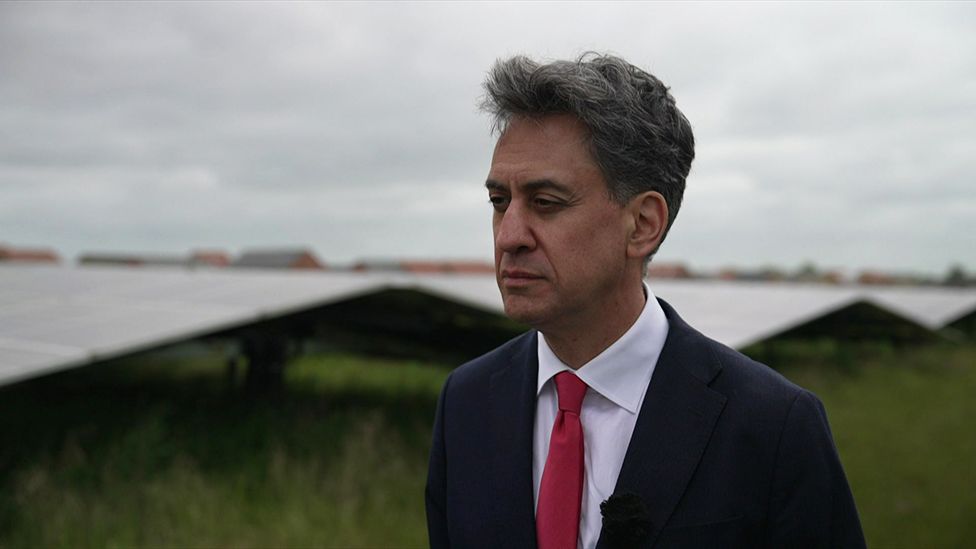
At the centre of this political argument is Ed Miliband, whose approach to climate policy has attracted both strong support and fierce criticism. His supporters view his plans as a necessary response to climate change and an opportunity to modernise Britain’s economy. Opponents argue that the pace and cost of the transition require greater caution.
The disagreement reflects a much wider question facing governments around the world: how can countries reduce carbon emissions while protecting living standards and economic competitiveness?
Net zero has become one of the defining policy challenges of the modern era. Governments are under increasing pressure to reduce greenhouse gas emissions, expand renewable energy, and prepare economies for a lower-carbon future. However, achieving these goals requires major changes to energy systems, transport networks, housing, and industry.
Those changes involve significant investment.
Supporters of Miliband’s approach argue that delaying action would create greater costs in the future. They believe investment in clean energy, improved infrastructure, and new technologies can create jobs while reducing dependence on imported fossil fuels.
According to this argument, climate policy should not be viewed simply as an environmental responsibility but as an economic opportunity.
Renewable energy industries, battery technology, electric vehicles, and energy efficiency projects could become important sources of future growth. Countries that invest early, supporters argue, may gain advantages in emerging global markets.
Critics, however, question whether the financial burden of rapid climate policies has been fully considered.
They argue that households already facing high energy costs may struggle with additional expenses linked to the transition. They also warn that businesses could face higher operating costs if environmental regulations increase faster than competitors in other countries.
For these critics, climate policy must be balanced with economic reality.
The debate over net zero often centres on energy.
Britain needs a reliable supply of affordable electricity while reducing emissions. Achieving both goals requires major changes to the way energy is generated, stored, and distributed.
Renewable sources such as wind and solar power have expanded significantly, but critics point out that their output can vary depending on weather conditions. This has led to discussions about energy storage, grid improvements, and the role of other energy sources in maintaining reliability.
Supporters respond that technological development is rapidly improving the efficiency and affordability of renewable systems. They argue that investment today will reduce costs over time.
Another major area of debate is household heating.
Reducing emissions from buildings requires changes to insulation, heating systems, and energy use. Supporters say improving energy efficiency can lower bills in the long term by reducing wasted energy.
Opponents argue that the upfront costs of upgrading homes may be difficult for many families, particularly those with limited incomes.
This highlights one of the central challenges of climate policy: ensuring that the transition is fair.
A policy that reduces emissions but increases financial pressure on vulnerable households risks losing public support. Governments therefore face pressure to design programmes that help citizens adapt rather than simply requiring them to absorb additional costs.
Political disagreements over net zero have become increasingly intense because they represent different visions of Britain’s future.
Supporters imagine a country powered by cleaner energy, with new industries, technological innovation, and reduced exposure to global fuel price shocks.
Critics worry about affordability, energy security, and whether ambitious targets can be achieved without damaging economic growth.
Both perspectives contain important concerns.
Climate change presents serious long-term risks, but governments must also consider immediate economic pressures facing citizens and businesses.
The challenge for policymakers is finding a practical path between these competing priorities.
Public opinion on climate policy is also complex.
Many people support efforts to protect the environment and recognise the importance of reducing emissions. However, support can weaken when policies are perceived as expensive, disruptive, or unfair.
This means political leaders must explain not only what changes are needed but also how those changes will benefit ordinary people.
For Miliband and other climate policy supporters, the argument is that investment in clean technology represents preparation for the future.
They believe countries that fail to adapt risk falling behind economically while remaining vulnerable to energy insecurity.
Critics argue that ambition must be matched by realism.
They call for careful planning, transparent costs, and policies that protect consumers during periods of economic difficulty.
The debate is unlikely to disappear.
As Britain continues working towards its climate goals, every major decision will involve difficult choices about spending, infrastructure, industry, and public support.
The question is no longer simply whether climate change should be addressed.
Instead, the political battle is increasingly focused on how quickly change should happen, who should pay for it, and how the benefits should be shared.
The future of net zero will therefore depend not only on technology but also on public confidence.
Governments will need to demonstrate that environmental progress and economic security can exist together. Without that confidence, even well-intentioned policies may face resistance.
The coming years will reveal whether Britain’s climate strategy can successfully combine ambition with affordability.
For supporters, the transition represents an opportunity to build a cleaner and more resilient economy.
For critics, it remains a warning that environmental goals must not come at the expense of everyday living standards.
The debate surrounding Ed Miliband’s approach reflects this wider national conversation — one that will continue shaping Britain’s political and economic choices for decades to come.