

From DIY SOS to Political Controversy: Sian Astley’s Reform Manchester Mayoral Campaign Faces Intense Scrutiny
Sian Astley entered the public spotlight through television, home improvement projects, and her work in the property industry. However, her move into politics has placed her at the centre of a very different kind of attention. As a Reform UK candidate seeking to become Greater Manchester’s mayor, Astley has attracted both support and criticism, particularly following controversial comments about immigration and political responsibility.
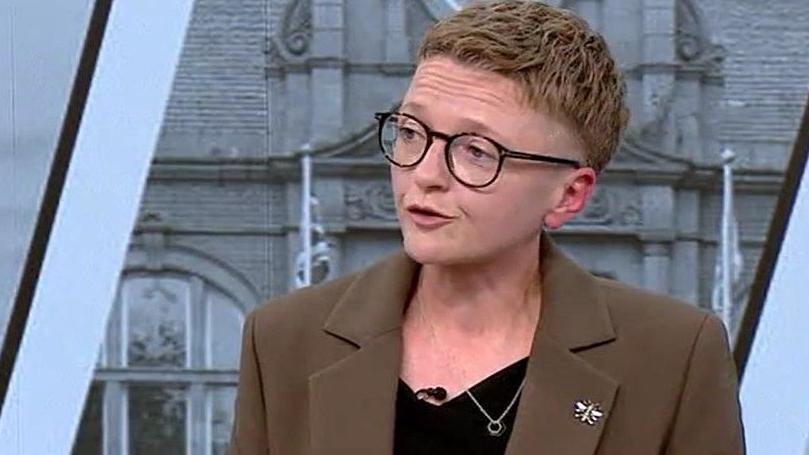
The transition from television personality to political candidate is not u
nusual in modern politics. Across the world, individuals from business, entertainment, and public life have entered elections by presenting themselves as outsiders who can challenge established systems. Astley has attempted to position herself in this way, arguing that Greater Manchester needs a different approach to leadership and decision-making.
Before entering politics, Astley was known for her involvement in property and renovation projects. She appeared on programmes including DIY SOS: The Big Build and other television shows focused on homes and design. Her background has helped shape her political identity, with her campaign often using the language of rebuilding, improving, and fixing problems in the same way one might approach a major renovation project
However, her political journey has also been marked by controversy. During the mayoral campaign, Astley faced criticism after comments suggesting that supporters of other political parties should take responsibility for housing criminals, including migrants accused of serious offences. The remarks were made in response to a Reform UK immigration policy debate and triggered strong reactions from political opponents.
Critics argued that such statements risked creating division between communities and turning a complex immigration discussion into a question of political blame. Opponents claimed that linking ordinary voters with criminal behaviour was unfair and harmful to democratic debate.
Astley defended her comments, describing them as a form of political frustration and arguing that she was highlighting what she sees as the consequences of policies supporting more open borders. She maintained that her criticism was aimed at politicians and voters who support certain immigration approaches rather than at specific communities.
The controversy reflects a wider national debate in Britain about immigration, housing, public services, and the responsibilities of government. Immigration has become one of the most politically sensitive issues in the country, with different parties offering sharply contrasting solutions.
Supporters of stricter immigration controls argue that communities must have sufficient resources to manage population pressures, including housing demand, healthcare needs, and public service capacity. They believe governments have failed to address concerns raised by many residents and that stronger action is required.
Opponents argue that immigration debates must avoid blaming individuals or groups and should focus instead on practical solutions. They emphasize that migrants are not a single group and that many contribute economically and socially to the communities where they live.
The Greater Manchester mayoral contest also takes place against the backdrop of a major political transition. The region has long been associated with Labour leadership, particularly under Andy Burnham, who became a prominent national figure during his time as mayor. His departure created a highly competitive race and opened the possibility of a new political direction for the region.
For Reform UK, the election represents an opportunity to expand its influence beyond traditional areas of support. The party has built its appeal around issues such as immigration control, reducing bureaucracy, supporting local businesses, and challenging what it describes as the failures of established political parties.
For its opponents, however, Reform’s approach raises concerns about whether strong political messaging can sometimes deepen social divisions. They argue that local leadership requires bringing communities together rather than creating further disagreement.
Astley’s campaign has focused on themes of transparency, efficiency, and changing how local government operates. She has presented herself as someone from outside traditional politics who can bring practical experience from business and construction into public administration.
Her supporters believe this background gives her a different perspective from career politicians. They argue that experience managing projects, budgets, and teams can be valuable when dealing with challenges such as housing shortages, transport problems, and economic development.
Yet critics point out that governing a major metropolitan region involves complex responsibilities beyond project management. A mayor must balance competing interests, work with public institutions, and represent a diverse population with different backgrounds and priorities.
The controversy surrounding Astley highlights the challenges faced by political newcomers. While outsider candidates can attract voters who want change, they are also closely examined for their statements, policies, and understanding of public leadership.
Modern elections are increasingly shaped by social media, where individual comments can quickly become national stories. A single post or statement can influence public perceptions and dominate political discussion, sometimes overshadowing broader policy proposals.
For Astley, the challenge is to convince voters that her campaign is about more than controversy. She must demonstrate how her ideas would address practical issues affecting residents, from the cost of living and housing shortages to public transport and local economic growth.
The wider lesson from this campaign is that politics is no longer only about traditional experience or party structures. Candidates from different backgrounds can gain attention and challenge established leaders. However, they must also navigate the responsibility that comes with public office and the impact their words can have on communities.
As voters consider the future direction of Greater Manchester, the debate surrounding Sian Astley represents larger questions facing modern politics: how should leaders discuss difficult issues, how can governments respond to public concerns, and how can political disagreements be managed without damaging social trust?
Whether Astley’s approach will attract enough support remains a matter for voters. What is clear is that her journey from television renovation programmes to the centre of a major political debate demonstrates how dramatically the nature of political participation has changed. In an era where public figures can move quickly from entertainment to elections, every statement can become part of a much larger national conversation.