

Andy Burnham Calls for Political Unity as England’s Social Care Crisis Reaches Breaking Point
For decades, England’s social care system has remained one of the country’s most difficult political challenges. Governments of different parties have promised reform, launched consultations, and debated funding solutions, yet millions of families continue to face uncertainty when they need support for elderly relatives, disabled people, and vulnerable members of society.
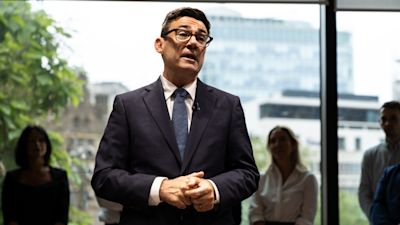
Now, Andy Burnham has called for a new approach, inviting political opponents from the Conservative Party and Liberal Democrats to join urgent discussions aimed at finding a long-term solution to the crisis. His message is that social care should no longer be treated as a political weapon but as a national issue requiring cooperation across party lines.
The decision marks a significant moment in the ongoing debate over the future of adult social care. Rather than focusing only on short-term policies, Burnham has argued that Britain needs a fundamental transformation of the system. Supporters say the current model has become increasingly difficult for families, councils, and healthcare providers to manage, while critics question how any major reform would be paid for.
The crisis in social care has developed over many years. An ageing population, rising healthcare needs, workforce shortages, and increasing financial pressure on local authorities have created a system under intense strain. Many councils have struggled to balance their budgets while attempting to provide essential services for those who need daily assistance.
For many families, the difficulties are deeply personal. Relatives often find themselves trying to navigate complicated care arrangements while worrying about costs, availability, and the quality of support. Some people wait months for assistance, while others must make difficult decisions about paying for private care when public support is unavailable.
Burnham’s argument is that social care should receive the same level of attention and long-term planning as other essential public services. He has suggested that future reforms could move closer to a model based on the principles of the National Health Service, where support is available according to need rather than simply according to a person’s ability to pay.
However, achieving such a transformation would be politically challenging. A major question remains: how should a new system be funded? Social care reform could require significant investment, and any proposal involving increased taxes, changes to wealth distribution, or new contributions is likely to generate strong debate.
Conservative politicians have expressed concerns about placing additional financial pressure on households. Some argue that governments must first examine existing spending and improve efficiency before asking taxpayers for more money. Others warn that future generations should not inherit unsustainable financial commitments.
The Liberal Democrats, meanwhile, have traditionally supported greater investment in social care and have called for long-term agreement rather than repeated changes whenever governments change. They argue that lasting reform requires cooperation because social care affects communities across the political divide.
The challenge for Burnham is therefore not only designing a new system but also building trust between political parties. Previous attempts at reform have often collapsed because governments struggled to achieve public support or political agreement. Many experts believe that any successful solution will need stability that extends beyond a single parliamentary term.
Another major concern is the impact of social care problems on the wider healthcare system. When people cannot access appropriate support at home or in residential care, hospitals often become responsible for situations that could have been prevented. This creates pressure on emergency departments, increases waiting times, and makes it harder for hospitals to focus on patients requiring urgent medical treatment.
Care workers are also central to the debate. Thousands of employees provide essential support every day, yet the sector has faced recruitment difficulties, low wages, and high staff turnover. Many organisations argue that improving working conditions is necessary if the country wants a reliable care system in the future.
A successful reform plan would likely need to address several issues at once: funding, workforce conditions, training, quality standards, and the relationship between social care and healthcare. Focusing on only one area would risk leaving the wider problems unresolved.
Burnham’s invitation to opposition leaders represents an attempt to change the tone of the debate. Instead of presenting reform as a victory for one political party, he has argued that the issue requires collective responsibility. His supporters believe this approach could create the foundation for a more stable system.
However, political cooperation does not guarantee agreement. Different parties have different ideas about taxation, government spending, and the role of the state. Negotiations are expected to involve difficult compromises, and some disagreements may prove difficult to overcome.
Public opinion will also play a crucial role. Many people support improvements to social care but may have concerns about how reforms affect their personal finances. Governments must therefore explain not only what changes are being proposed but also why those changes are necessary.
The debate also raises broader questions about how society values care. As people live longer lives, the demand for support will continue to grow. The issue is not simply about managing a current crisis but about preparing for demographic changes that will affect future generations.
A modern social care system must recognise that care is not only a financial issue. It is about dignity, independence, and ensuring that people can live with security as they grow older or face disabilities. Families, communities, and care professionals all play important roles, but they require a system that provides reliable support.
Whether Burnham’s cross-party approach succeeds remains uncertain. Bringing political rivals together is only the first step; turning discussions into practical reform will be the far greater challenge. Yet many observers agree that continuing with the current system without significant change is no longer a realistic option.
England’s social care crisis has lasted for years, but the search for a solution continues. If political leaders can move beyond short-term disagreements and focus on long-term national needs, the current moment could become an opportunity for meaningful change.
The future of social care will ultimately depend on difficult choices, careful planning, and a willingness to compromise. The people who rely on these services, as well as the families and workers who support them, will be watching closely to see whether political promises finally lead to lasting action.