
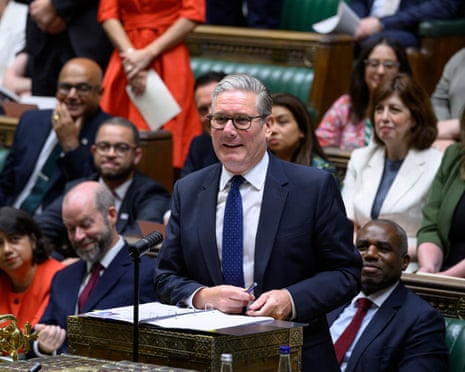
Keir Starmer Given Standing Ovation in Final PMQs Appearance as Leader
The final appearance of a political leader at Prime Minister’s Questions (PMQs) is often an emotional and symbolic moment in British politics. It marks the end of one chapter and the beginning of another, offering politicians from all parties an opportunity to reflect on years of public service, political battles, and national leadership. When Keir Starmer received a standing ovation during his final PMQs appearance as leader, the event attracted widespread attention and sparked discussion about his political legacy and the future of British politics.
Prime Minister’s Questions is one of the most recognizable traditions in the United Kingdom’s parliamentary system. Held every Wednesday when Parliament is in session, PMQs allows Members of Parliament to question the Prime Minister on government policies, national issues, and current events. The exchanges are often lively, with sharp criticism, quick wit, and passionate debate. Over the years, PMQs has become more than a parliamentary procedure; it is also a public demonstration of democratic accountability watched by millions of people.
Keir Starmer’s final appearance at PMQs carried special significance because it represented the conclusion of his time as leader before a new political chapter. Whether praised or criticized during his leadership, Starmer had become one of the defining political figures of his generation. His final session provided an opportunity for colleagues, political opponents, and the public to reflect on his contributions to British politics.
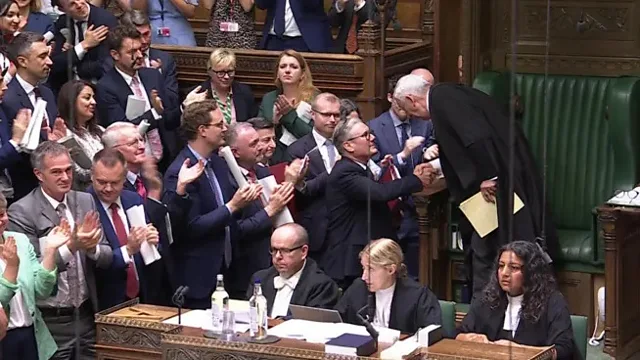
As Starmer entered the House of Commons for the final time as leader during PMQs, the atmosphere was noticeably different from an ordinary Wednesday session. Members from his own party welcomed him warmly, while even some political rivals acknowledged the importance of the occasion. At the conclusion of the session, many MPs rose to their feet in a standing ovation, recognizing not only his leadership but also his years of dedication to public service.
Standing ovations are relatively uncommon in the House of Commons. British parliamentary tradition generally emphasizes debate over ceremony, and politicians from opposing parties frequently engage in fierce exchanges. For that reason, a standing ovation often carries considerable symbolic weight. It reflects respect for an individual’s commitment to democratic institutions, regardless of political differences.

Keir Starmer’s journey to national leadership was not typical. Before entering politics, he established a distinguished legal career and served as Director of Public Prosecutions. His legal background shaped his political style, emphasizing evidence, careful argument, and institutional reform. When he entered Parliament, he quickly became known as a serious and disciplined politician rather than a charismatic campaigner.
After becoming leader of the Labour Party, Starmer inherited a difficult political situation. The party had recently suffered significant electoral defeats and faced internal disagreements over its direction. Rebuilding public trust required more than changing campaign slogans; it demanded organizational reform, policy development, and efforts to unite different factions within the party.
Throughout his leadership, Starmer focused on presenting Labour as a credible alternative government. He emphasized economic stability, stronger public services, responsible fiscal management, and improved relationships with international partners. His supporters argued that these priorities helped restore confidence in the party and broaden its appeal among moderate voters.
Not everyone agreed with Starmer’s approach. Some members of his own party believed he moved Labour too far toward the political center, while critics from opposing parties questioned his policies on taxation, immigration, and public spending. Such disagreements are common in democratic politics, where competing visions for the country’s future naturally generate debate.
Despite these differences, many observers acknowledged Starmer’s professionalism and determination. He was often described as calm, methodical, and focused on practical solutions rather than dramatic political rhetoric. His legal training encouraged him to rely on facts and detailed arguments during parliamentary debates, including the weekly exchanges at PMQs.
Prime Minister’s Questions became one of the most visible stages for Starmer’s leadership. Every week, he faced the Prime Minister in direct questioning before Parliament and a national television audience. These sessions tested not only his knowledge of government policy but also his ability to think quickly under pressure. Success at PMQs requires preparation, confidence, and effective communication, making it one of the most demanding responsibilities of an opposition leader.
Over time, Starmer developed a reputation for detailed questioning and careful preparation. Rather than relying solely on dramatic sound bites, he frequently cited statistics, reports, and testimonies from ordinary citizens to challenge government decisions. While critics sometimes argued that his style lacked excitement, supporters viewed his measured approach as evidence of competence and seriousness.
The standing ovation during his final PMQs appearance reflected more than partisan loyalty. It acknowledged the broader importance of democratic leadership and public service. Members of Parliament often disagree passionately on policy, but they also recognize the personal sacrifices involved in leading a major political party. Long working hours, constant public scrutiny, media criticism, and responsibility for national issues place enormous pressure on political leaders regardless of party affiliation.
Political transitions are an essential feature of democratic systems. Leadership changes allow parties to adapt to new challenges, introduce fresh ideas, and respond to changing public expectations. At the same time, they provide an opportunity to recognize the achievements of departing leaders, even if opinions remain divided about their policies.
The public reaction to Starmer’s final PMQs appearance was mixed but thoughtful. Supporters praised his dedication, professionalism, and efforts to restore stability to British politics. Many highlighted his commitment to public service and his willingness to engage respectfully with political opponents. Others argued that while he demonstrated competence, his leadership style lacked the charisma needed to inspire broader political enthusiasm.
Media coverage focused on both the symbolic significance of the standing ovation and the practical implications of the leadership transition. Commentators discussed Starmer’s political legacy, examining how his decisions reshaped his party and influenced the national political landscape. Some predicted that historians would remember him as a leader who prioritized stability during a period of uncertainty, while others suggested that his long-term impact would depend on future political developments.
The event also reminded observers that politics is ultimately about people as well as policies. Behind every parliamentary debate are individuals who dedicate years of their lives to public service. While political disagreements are inevitable, moments of mutual respect reinforce the strength of democratic institutions by demonstrating that fierce competition can coexist with professional courtesy.
For younger politicians entering Parliament, Starmer’s career offers several lessons. His rise illustrates the importance of preparation, persistence, and experience. Rather than relying solely on popularity or media attention, he built his reputation through legal expertise, parliamentary work, and disciplined leadership. Whether one agrees with his political views or not, his career demonstrates that effective leadership often depends on patience and consistent effort.
The standing ovation also served as a reminder of the traditions that distinguish British parliamentary democracy. While political debates may be heated, Parliament remains an institution built upon respect for constitutional processes and peaceful transitions of power. Ceremonial moments such as this reinforce public confidence in democratic values and encourage continued participation in political life.
As Britain continues to face challenges including economic uncertainty, healthcare reform, climate change, and international security, new leaders will inherit significant responsibilities. The transition from one leader to another marks not an ending but the continuation of democratic government, with each generation contributing its own ideas and priorities.
In conclusion, Keir Starmer’s final appearance at Prime Minister’s Questions as leader was a moment of both reflection and transition. The standing ovation he received symbolized recognition for years of public service, leadership, and commitment to democratic institutions. Although opinions about his policies remain diverse, the respect shown by colleagues demonstrated that democracy depends not only on vigorous debate but also on mutual recognition of public service. His departure from this chapter of political life leaves behind a legacy that will continue to be discussed by historians, political analysts, and citizens for years to come. Regardless of political affiliation, the occasion highlighted the enduring importance of leadership, accountability, and respect within one of the world’s oldest parliamentary democracies.