

The House of Lords: An Outdated Institution in Need of Fundamental Reform
The statement that “the House of Lords is an absurdly bloated, unelected chamber that has no place in a modern democracy” reflects one of the most significant criticisms of Britain’s political system. For many people, the existence of a large legislative body whose members are appointed rather than elected represents a contradiction with modern democratic principles. Although supporters argue that the House of Lords provides valuable expertise and acts as a useful check on government power, I believe that its current structure is outdated, lacks sufficient democratic legitimacy, and requires fundamental reform.
One of the strongest arguments against the House of Lords is its lack of direct accountability to the public. In a modern democracy, citizens expect those who make important decisions on their behalf to receive their authority through elections. Members of the House of Commons must compete for public support and can be removed by voters if they fail to perform effectively. In contrast, most members of the House of Lords receive life appointments and are not directly chosen by the people. This creates a democratic imbalance because grown into one of the largest legislative chambers in the world. A chamber with hundreds of members raises questions about efficiency, cost, and purpose. Supporters of reform argue that such a large institution is unelected individuals have the ability to influence national laws without facing the same level of public scrutiny.
The issue of democratic legitimacy becomes even more significant because the House of Lords has grown into one of the largest legislative chambers in the world. A chamber with hundreds of members raises questions about efficiency, cost, and purpose. Supporters of reform argue that such a large institution is difficult to manage and does not represent a modern approach to government. A smaller, more accountable chamber would likely be more effective and better aligned with the expectations of contemporary society.
Another criticism is that the appointment system can create the perception of political privilege. Many members of the House of Lords are appointed because of their political connections, professional achievements, or support for particular parties. While expertise is undoubtedly valuable, critics argue that political loyalty should not be a pathway to significant legislative influence. A democratic system should prioritise representation and public trust rather than allowing influential individuals to hold power for life.
Furthermore, the existence of hereditary peers, although greatly reduced compared with the past, has been viewed by many as incompatible with modern democratic values. The idea that a person can inherit a position connected to law-making authority through family background appears inconsistent with the principle that political power should be based on ability and public consent. In a society that promotes equality of opportunity, inherited political influence seems increasingly difficult to justify.
Another argument for replacing or radically reforming the House of Lords is that Britain’s political system needs to reflect the diversity of its population. Although the Lords contains people from a variety of professional backgrounds, its membership does not necessarily represent ordinary citizens. Many groups, including younger generations and people from less privileged backgrounds, may feel disconnected from an institution that is largely composed of appointed figures with significant social and professional status. A more democratic second chamber could provide broader representation and increase public engagement.
However, defenders of the House of Lords argue that elections are not the only way to create an effective political institution. They claim that appointed members can bring specialist knowledge in areas such as science, law, business, and healthcare. Unlike elected politicians, peers may focus less on short-term popularity and more on careful examination of legislation. This argument has some merit because good decision-making requires expertise as well as public representation.

Nevertheless, expertise does not necessarily require lifetime political positions. A modern democratic system can create ways to include specialists without granting them permanent legislative authority. Independent experts, advisory committees, and temporary appointments could provide valuable knowledge while maintaining democratic accountability. Therefore, the argument that expertise justifies the current structure of the House of Lords is not entirely convincing.
Another concern is that the House of Lords can slow down government action. While careful review of laws is important, an unelected chamber should not have excessive influence over policies supported by elected representatives. In a democracy, the final authority should belong to institutions that directly reflect the will of the people. A second chamber should improve legislation, not create uncertainty about who has the right to make final decisions.
A possible solution would be to replace the current House of Lords with a smaller, elected second chamber. Members could be chosen through a proportional voting system to ensure that different regions and political views are represented. Such a chamber would maintain the valuable function of reviewing legislation while gaining stronger democratic legitimacy. Alternatively, a mixed system combining elected representatives with independent experts could also provide a balance between accountability and experience.
The reform of the House of Lords is not simply about reducing numbers or changing procedures; it is about redefining the relationship between citizens and political power. In the twenty-first century, people increasingly expect transparency, fairness, and accountability from their institutions. A system in which individuals can influence national laws without direct electoral approval appears increasingly difficult to defend.
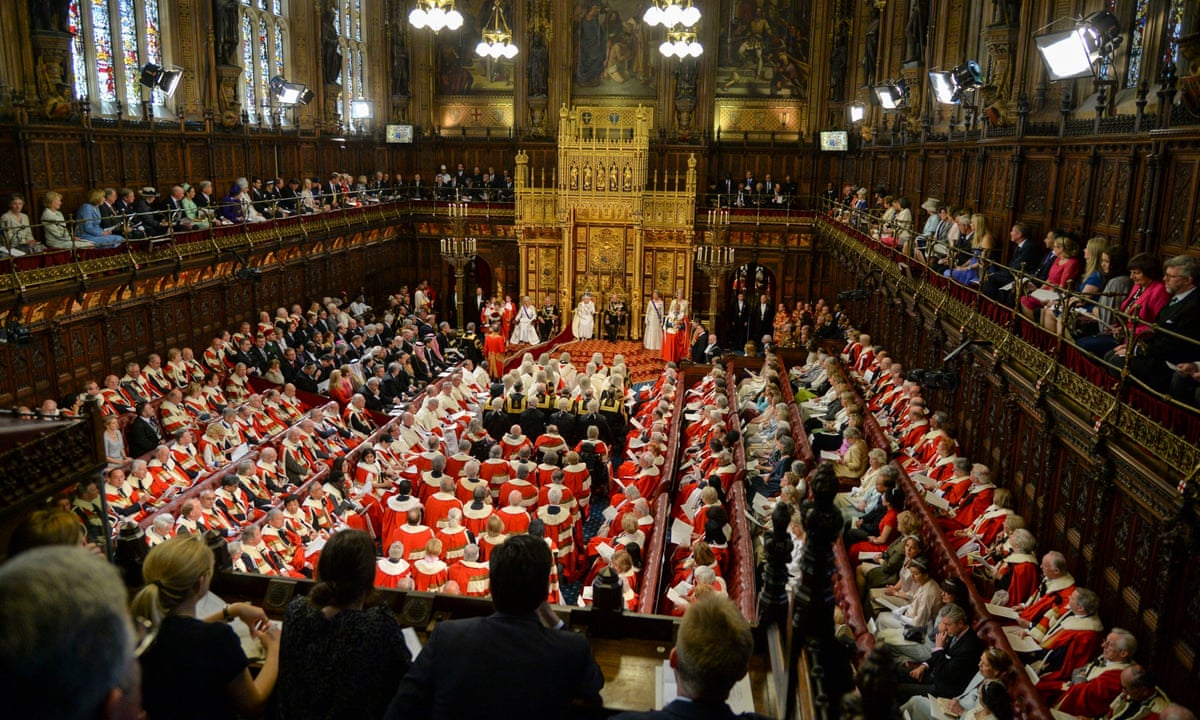
In conclusion, the criticism that the House of Lords is a bloated and unelected institution highlights genuine problems within Britain’s political system. Although the chamber provides valuable expertise and can improve the quality of legislation, these benefits do not fully outweigh the problems of democratic legitimacy and accountability. The House of Lords should not necessarily disappear completely, but it must undergo fundamental reform to ensure that political power in Britain reflects the principles of a modern democracy.