

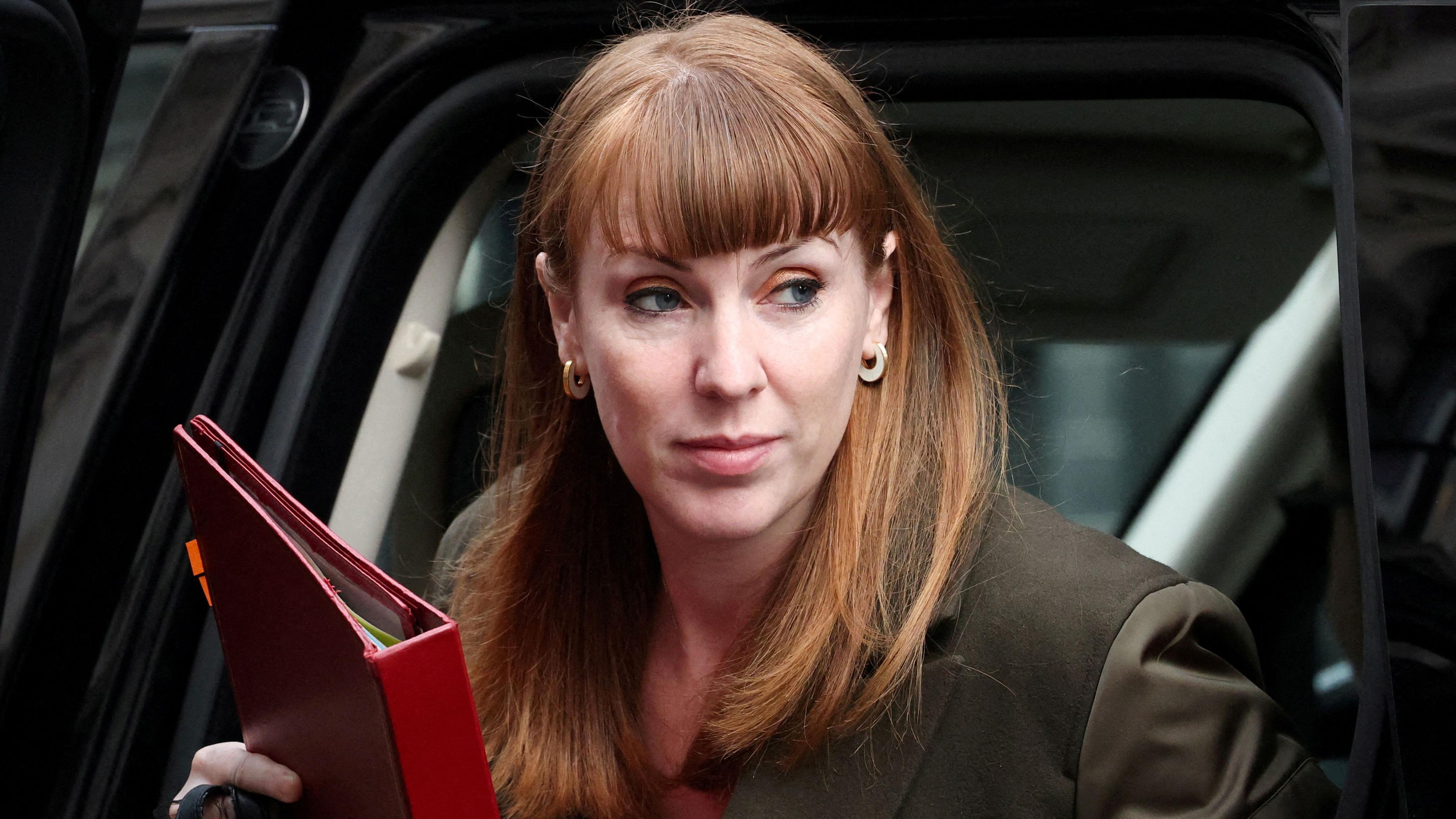
Angela Rayner on BBC Breakfast (Image: BBC)
Angela Rayner has suggested Labour might break its manifesto promise to build 1.5 million new homes.
The Housing Secretary, who was sacked from Sir Keir’s cabinet for tax dodging, admitted the target is “a really difficult challenge” when quizzed on it on Friday.
Speaking to the BBC Radio 4’s Today programme, the former Deputy Prime Minister said: “It certainly got more challenging, and we’ve seen things like construction costs go up etc, which has had a real negative impact on that.
“But I’m not dropping it. I’m just saying that it is a really difficult stretched target.”
Pressed further, she said: “Yeah, I’m going to keep the target, but it’s like me saying I’m going to run the London Marathon in under five hours.
Speaking to the BBC Radio 4’s Today programme, the former Deputy Prime Minister said: “It certainly got more challenging, and we’ve seen things like construction costs go up etc, which has had a real negative impact on that.
“But I’m not dropping it. I’m just saying that it is a really difficult stretched target.”
Pressed further, she said: “Yeah, I’m going to keep the target, but it’s like me saying I’m going to run the London Marathon in under five hours.One-point-five million homes is a difficult target. It was when I made the target, but I’m going to keep the target, and I’m not going to be defeated.”
England saw 208,600 new homes built in 2024/25, a 6% fall on the previous year and the lowest annual total since 2015/16, highlighting the scale of the challenge facing Labour’s pledge to deliver 1.5 million homes during this parliament.
Since Labour entered government in July 2024, around 392,400 net additional homes have been delivered, leaving ministers running at roughly two-thirds of the rate required to hit their goal by 2029.
Reform UK’s Treasury spokesman Robert Jenrick said: “In a car crash interview… Angela Rayner admitted Labour are going to let people down and break another election promise.
“She said that building 1.5 million homes is like running a marathon under five hours – she’ll give it a go, but may not do it.
“She insists people shouldn’t underestimate her. But when she was last in post the number of homes granted planning permission fell to the lowest level in over a decade.
‘The circus rolls on…”
Ms Rayner, who returned to Government under Andy Burnham on Monday, also ruled out bringing in rent controls to help with the cost of living.
Prime Minister Andy Burnham told reporters on Monday that he was considering rent freezes as part of a package of measures, but said no final decisions had been made.
Ms Rayner said changes made through renters’ rights legislation brought in under Labour so far are “already having a significant impact on the market”.
Speaking to BBC Breakfast, she said: “We won’t be looking at rent controls if that’s what you’re getting at at the moment.
That is not something that we’re looking to do because we’ve seen what’s happened in areas like Scotland. It hasn’t necessarily brought rents down.”
She pointed to changes that allow people to challenge rent hikes at tribunals and stop bidding wars for rented properties, saying: “I think that’s a better way of stabilising the rental market.”
Rent controls can come in the form of caps on how much rent can be charged or freezing them for a period of time.
Mr Burnham backed a call three years ago as mayor of Greater Manchester for a freeze on private sector rents until the cost-of-living crisis is over.
Asked if he stood by it, Ms Rayner said: “I don’t think that rent freezes, rent controls, is a way forward at the moment.
“Three years ago Andy called for that because there was a significant crisis in the rental market.
“We implemented between then the Renters’ Rights Act which is giving renters more power and control.”
Angela Rayner Admits Labour Could Fail on Major Manifesto Pledge in “Car Crash Interview” — A Political Analysis
The headline “Angela Rayner admits Labour could fail on major manifesto pledge in ‘car crash interview’” reflects the intense scrutiny that political leaders face when discussing election promises and government performance. During election campaigns, parties often make ambitious commitments designed to persuade voters that they can improve the country’s future. Once in government, however, those promises are tested against economic realities, unexpected events, and the practical challenges of governing. As a result, interviews about manifesto commitments frequently become defining political moments.
Election manifestos play a central role in democratic politics. They provide voters with a clear outline of a party’s priorities and proposed policies. Supporters expect governments to work towards delivering those commitments, while opposition parties and journalists closely monitor whether promises are being fulfilled. Any suggestion that a key pledge may not be achieved is therefore likely to attract significant public attention.
The phrase “could fail” highlights the uncertainty that often surrounds government policy. Economic conditions can change rapidly, international events may affect public finances, and unforeseen challenges can alter political priorities. Governments sometimes argue that circumstances beyond their control require adjustments to previously announced plans. Critics, however, may see such explanations as evidence of poor planning or unrealistic campaign promises.
The description of the interview as a “car crash interview” is itself a matter of media interpretation. In political journalism, this expression is commonly used to describe an interview in which a politician appears uncomfortable, struggles to answer difficult questions, or faces sustained criticism. Different viewers may reach different conclusions about the same interview depending on their political views and expectations. A moment that supporters consider honest and realistic may be viewed by opponents as a serious political mistake.
For Labour, managing public expectations is a major challenge. Every government must balance the promises made during an election with the financial and administrative realities it encounters after taking office. Decisions involving taxation, public spending, healthcare, education, infrastructure, and welfare often require difficult compromises. Supporters may argue that adapting policies to changing circumstances is responsible leadership, while critics may contend that it represents a failure to deliver what was promised.
Opposition parties frequently use such moments to question a government’s credibility. They may argue that if one major pledge appears uncertain, voters could begin to doubt other commitments as well. Political trust is built not only on ambitious promises but also on consistent delivery and clear communication. As a result, interviews in which senior politicians discuss potential difficulties can become important moments in shaping public confidence.
At the same time, honesty about policy challenges can also be interpreted positively. Some commentators argue that acknowledging uncertainty is preferable to making unrealistic guarantees. In complex economies, governments cannot always predict every development, and openness about risks may encourage more informed public debate. The challenge lies in explaining why objectives may change while maintaining confidence that the government remains committed to its broader goals.
Media coverage plays a significant role in shaping how such interviews are understood. Headlines often focus on dramatic moments because they attract attention, but they may not capture the full context of a longer discussion. Viewers who read beyond the headline may find a more detailed explanation of the government’s position, the questions that were asked, and the policy challenges being discussed.
Ultimately, the success of any government is judged over time rather than through a single interview. Voters generally evaluate political leaders based on their overall record, including economic performance, public services, national security, and the extent to which key manifesto commitments are delivered. One difficult media appearance may influence public opinion temporarily, but long-term political credibility depends on sustained performance.
In conclusion, the headline suggesting that Angela Rayner acknowledged Labour could fail to deliver a major manifesto pledge illustrates the pressures of governing and the importance of political communication. It highlights the gap that can emerge between campaign commitments and the realities of public administration. Whether this represents a significant political setback or simply an example of candid discussion depends on the wider context, future government actions, and ultimately the judgement of voters.