

Andy Burnham has told John Swinney that a second referendum on Scottish independence is “off limits”.
The Prime Minister warned Scotland’s First Minister that a fresh vote was “off limits” during his first meeting with the SNP leader since entering No 10.
A No 10 spokesman said: “The Prime Minister stated up-front that another referendum on independence was off limits because it would take our focus away from growing the economy and helping families with the cost of living.”
During the 40-minute meeting with the SNP leader, Mr Burnham reiterated his desire to take devolution “deeper down”, which is widely thought to mean giving more power to local authorities as opposed to devolved governments.
There was no discussion about creating Scottish versions of the metro mayors that run English cities, it is understood.
Mr Burnham committed to not “bypassing” the Scottish Government when it came to further devolution amid fears the Labour leader would go above Holyrood to strengthen local communities.
 It comes after he told around 25 Scottish Labour MPs he was
 Opposition parties said Mr Swinney had been given a “reality check” by the new Prime Minister and called on the SNP leader to abandon the push for independence.
Rachael Hamilton, the Scottish Tory leader, said: “John Swinney has been given a reality check by the Prime Minister. Another independence referendum is off the table, and it’s time he accepted that.
“The SNP have spent years putting separation ahead of Scotland’s success. The result is a stagnant economy, rising welfare dependency, struggling public services and taxpayers paying the price for their misplaced priorities.
“John Swinney should stop obsessing over another referendum and start delivering the jobs, growth and competent government that Scotland desperately needs.”

As part of his devolution push, the new Prime Minister will visit his new No 10 North headquarters in Manchester for the first time.
He plans to work in Heron House in Manchester city centre each week and other ministers will work there on a regular basis to make it the “situation room for growth”.
The Prime Minister said he would bring together ministers and regional mayors regularly in a revived National Economic Council. The council was first established in 2008 to provide a national response to an economic emergency.
Mr Burnham said: “For 40 years, power and resources have been sucked into the centre and too many communities have felt forgotten, without the attention and investment they deserve.
“No 10 North will change that by putting more power into every postcode across the entire country.
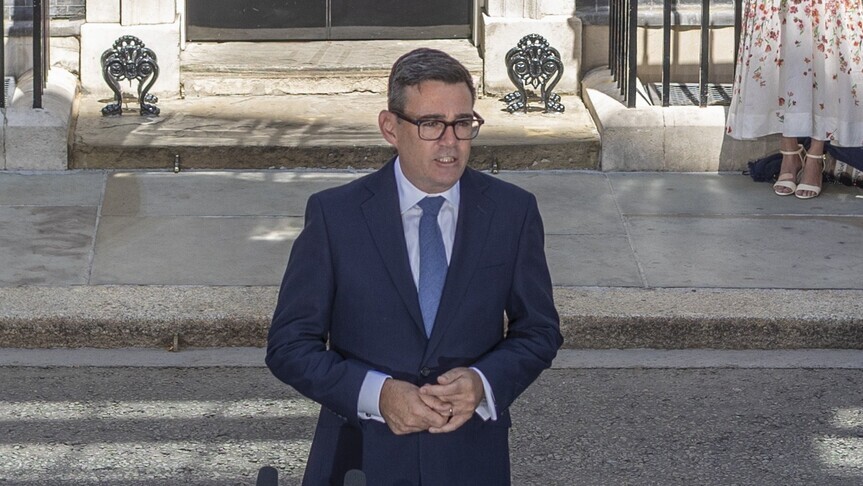
“It will be the situation room for making Britain better – the place we use to get power out of Westminster, into the hands of people at a local level, so that they can turn things around. The days of Whitehall resisting devolution are over, for good.”
Heron House is also the home of the North West hub of GCHQ, the UK’s intelligence, cyber and security agency.
Louise Haigh, the First Secretary of State, said: “Today marks a fundamental rebalancing of where power sits in our country. No10 North has been set up to drive economic growth in every postcode and put power in the hands of every community.
“Through this department, this government will ensure that the places overlooked by Westminster for decades are given a real voice. No 10 North is open for business.”
It is understood that she and Lucy Powell, the Education Secretary, and Angela Rayner, the Housing Secretary, will use No 10 North regularly.
Burnham: Scottish Independence Is “Off Limits”
The debate over Scottish independence has remained one of the most important political issues in the United Kingdom for many years. However, recent comments by Andy Burnham, who stated that Scottish independence is “off limits,” have sparked further discussion about the future relationship between Scotland and the rest of the UK.
Scottish independence has been a major source of political debate since the establishment of the Scottish Parliament in 1999. Many supporters of independence believe that Scotland should have the right to make its own decisions on issues such as the economy, education, healthcare, and international relations. They argue that greater self-government would allow Scotland to better reflect the wishes and priorities of its own people.
On the other hand, opponents of independence believe that remaining part of the United Kingdom provides important economic, political, and security advantages. They argue that the union allows Scotland to benefit from shared resources, a larger economy, and stronger international influence. For them, maintaining the UK’s unity is essential for stability and cooperation.
Burnham’s comment that independence is “off limits” suggests a strong position against reopening discussions about breaking up the United Kingdom. His view reflects the belief among some politicians that the focus should be on improving cooperation between Scotland and the other nations of the UK rather than pursuing separation.
However, the issue remains sensitive because many people in Scotland continue to support the idea of independence. The Scottish National Party and other independence supporters have argued that Scotland should have the ability to choose its own future through a democratic process. They believe that decisions about Scotland’s future should be made by people living in Scotland rather than being controlled by the UK government.
The disagreement over independence also highlights broader questions about democracy and national identity. Scotland has its own history, culture, and legal traditions, which make the debate more complex than a simple political disagreement. Many people feel a strong connection to both Scottish and British identities, while others identify primarily with one.
Economic concerns are another important factor in the independence debate. Supporters argue that an independent Scotland could develop its own economic policies and make decisions based on its specific needs. Critics, however, question whether independence would create financial challenges, particularly regarding public spending, trade, and currency arrangements.
The future of Scotland’s constitutional position is likely to remain a topic of debate for years to come. While statements such as Burnham’s demonstrate opposition to independence, they do not remove the strong feelings that exist on both sides of the argument. Finding a balance between respecting Scotland’s identity and maintaining cooperation within the United Kingdom remains a major political challenge.
In conclusion, Andy Burnham’s statement that Scottish independence is “off limits” reflects one side of a long-running national debate. The issue involves complex questions about democracy, economics, identity, and the future structure of the United Kingdom. Regardless of the final outcome, the discussion shows the importance of listening to different perspectives and finding peaceful democratic solutions.