

Final PMQs: Sir Keir’s Farewell Leaves Parliament Emotional
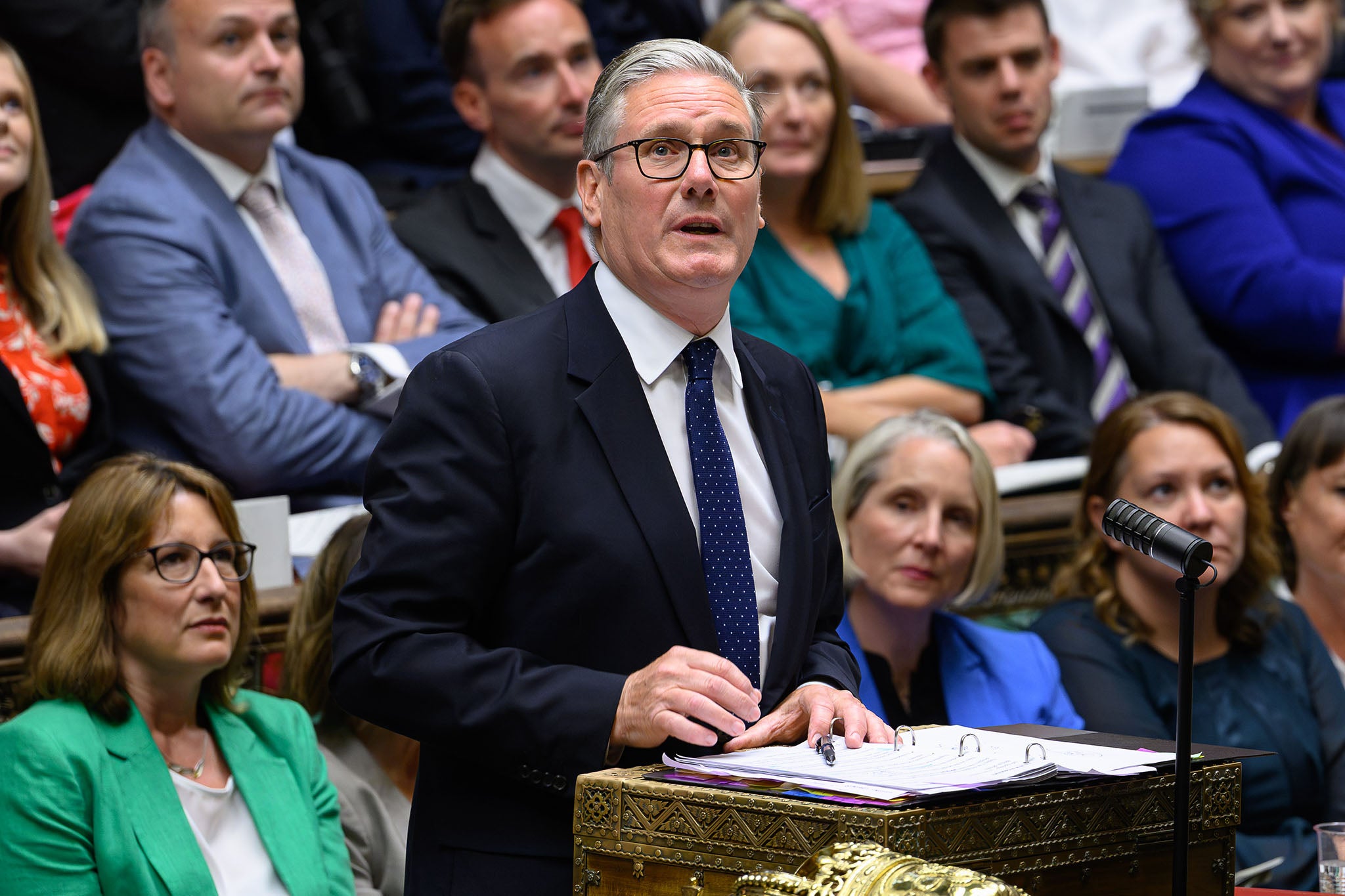
In a moment that marked the end of a significant chapter in British politics, Sir Keir Starmer delivered his final appearance at Prime Minister’s Questions (PMQs), bringing an emotional close to his time at the dispatch box. The weekly parliamentary session, often known for its fierce exchanges and political point-scoring, took on a noticeably different tone as MPs from across the House reflected on Starmer’s leadership and public service.
For many watching inside the House of Commons and across the country, it was a rare occasion when political rivalry gave way—at least briefly—to respect and reflection.
A Different Atmosphere in the Commons
Prime Minister’s Questions is traditionally one of the most combative events in British politics. Every Wednesday, the Prime Minister faces questions from opposition leaders and MPs in a fast-paced session that often produces headline-making exchanges.
However, Starmer’s final PMQs carried a very different atmosphere.
Instead of the usual heated clashes, members of Parliament acknowledged the significance of the occasion. While political differences remained, many MPs expressed appreciation for Starmer’s years of public service and his role in leading the country through challenging times.
Observers described the chamber as unusually reflective, with applause and words of gratitude replacing much of the normal confrontation.
Looking Back on His Leadership
In his closing remarks, Starmer reflected on the journey that brought him to the country’s highest political office.
He spoke about the responsibility of serving as Prime Minister and the importance of maintaining public trust in government. Rather than focusing solely on political victories, he emphasized the value of public service, democratic institutions, and the need for leaders to make decisions in the national interest.
Starmer thanked civil servants, parliamentary staff, government ministers, political colleagues, and his family for supporting him throughout his time in office.
He also paid tribute to people working across the country—from healthcare professionals and emergency responders to teachers, members of the armed forces, and countless public servants whose work often takes place away from the spotlight.
From Opposition Leader to Prime Minister
Starmer’s political journey has been one of steady transformation.
When he became leader of the Labour Party in 2020, the party was recovering from one of its worst election defeats in modern history. Labour faced internal divisions, declining public confidence, and ongoing controversy surrounding anti-Semitism within the party.
Starmer promised to rebuild Labour’s credibility.
Over the following years, he introduced organizational reforms, reshaped the party’s policy platform, and sought to present Labour as a moderate and responsible alternative government.
Supporters argue these changes restored Labour’s reputation and helped return the party to power. Critics, meanwhile, contend that some policy shifts came at the expense of traditional supporters.
Regardless of differing opinions, few dispute that Starmer fundamentally changed the direction of the Labour Party.
A Speech Focused on Unity
Unlike many farewell speeches that emphasize personal achievements, Starmer’s final PMQs focused heavily on unity.
He encouraged politicians to remember that disagreement is an essential part of democracy but should never become personal hostility.
He stressed that Parliament functions best when vigorous debate is matched by mutual respect, even between political opponents.
This message resonated across party lines, particularly during a period in which political polarization has become increasingly common in many democracies.
Tributes from Across the Political Spectrum
Several MPs used the session to recognize Starmer’s contribution to public life.
Supporters praised his determination to rebuild Labour after its difficult years in opposition and his emphasis on stability and pragmatic government.
Some opposition MPs acknowledged that, despite deep disagreements over policy, Starmer approached political debate with seriousness and professionalism.
Such moments of cross-party recognition are relatively uncommon during PMQs, making the session particularly memorable.
Challenges That Defined His Time in Office
Starmer’s premiership coincided with a number of significant domestic and international challenges.
His government faced pressure over the economy, inflation, public services, housing, immigration, and the National Health Service.
Internationally, Britain continued to navigate a complex global environment marked by ongoing geopolitical tensions, security concerns, and economic uncertainty.
Supporters argue that his administration emphasized stability, responsible fiscal management, and strengthening Britain’s international partnerships.
Critics questioned whether the government moved quickly enough on issues such as economic growth, immigration, and public sector reform.
As with every Prime Minister, opinions on his record remain divided.
The Human Side of Politics
Perhaps the most striking feature of Starmer’s final PMQs was the reminder that politics is ultimately about people.
Behind the debates, legislation, and headlines are individuals who dedicate years of their lives to public service.
Starmer spoke briefly about the personal sacrifices involved in political leadership—the long hours, constant scrutiny, and impact on family life.
While political leaders often become symbols of competing ideas, moments like these reveal the human dimension of leadership that is rarely visible during ordinary political debate.
What Comes Next?
With Starmer leaving office, attention now turns to Britain’s political future.
A new Prime Minister will inherit many of the same issues that dominated Starmer’s time in government, including economic growth, public services, immigration, national security, and Britain’s role on the world stage.
Leadership changes often bring fresh priorities, but they also highlight the continuity of the challenges facing modern governments.
For Labour, Starmer’s departure marks the end of an era that began with rebuilding the party after its 2019 defeat and culminated in returning it to government.
A Legacy Still Being Written
Political legacies are rarely settled immediately.
Supporters are likely to remember Starmer for restoring Labour’s electoral credibility, reforming the party’s internal culture, and emphasizing stability in government.
Critics may continue to debate his policy decisions, economic strategy, and approach to key national issues.
Ultimately, historians—not politicians—will decide how his leadership is remembered.
Conclusion
Sir Keir Starmer’s final Prime Minister’s Questions was more than the conclusion of another parliamentary session. It marked the closing of a chapter in British politics that saw Labour transformed from a party recovering from electoral defeat into one capable of forming a government.
The occasion was notable not because political disagreements disappeared, but because Parliament paused to acknowledge the significance of public service and democratic leadership.
As Starmer left the dispatch box for the final time, the emotional atmosphere inside the House of Commons reflected the weight of the moment. Whether remembered for party reform, government leadership, or efforts to restore public confidence, his final appearance at PMQs served as a reminder that political careers eventually come to an end—but the impact of leadership continues to shape the country’s future long after the speeches have finished.
Final PMQs: Sir Keir’s Farewell Leaves Parliament Emotional
In a moment that marked the end of a significant chapter in British politics, Sir Keir Starmer delivered his final appearance at Prime Minister’s Questions (PMQs), bringing an emotional close to his time at the dispatch box. The weekly parliamentary session, often known for its fierce exchanges and political point-scoring, took on a noticeably different tone as MPs from across the House reflected on Starmer’s leadership and public service.
For many watching inside the House of Commons and across the country, it was a rare occasion when political rivalry gave way—at least briefly—to respect and reflection.
A Different Atmosphere in the Commons
Prime Minister’s Questions is traditionally one of the most combative events in British politics. Every Wednesday, the Prime Minister faces questions from opposition leaders and MPs in a fast-paced session that often produces headline-making exchanges.
However, Starmer’s final PMQs carried a very different atmosphere.
Instead of the usual heated clashes, members of Parliament acknowledged the significance of the occasion. While political differences remained, many MPs expressed appreciation for Starmer’s years of public service and his role in leading the country through challenging times.
Observers described the chamber as unusually reflective, with applause and words of gratitude replacing much of the normal confrontation.
Looking Back on His Leadership
In his closing remarks, Starmer reflected on the journey that brought him to the country’s highest political office.
He spoke about the responsibility of serving as Prime Minister and the importance of maintaining public trust in government. Rather than focusing solely on political victories, he emphasized the value of public service, democratic institutions, and the need for leaders to make decisions in the national interest.
Starmer thanked civil servants, parliamentary staff, government ministers, political colleagues, and his family for supporting him throughout his time in office.
He also paid tribute to people working across the country—from healthcare professionals and emergency responders to teachers, members of the armed forces, and countless public servants whose work often takes place away from the spotlight.
From Opposition Leader to Prime Minister
Starmer’s political journey has been one of steady transformation.
When he became leader of the Labour Party in 2020, the party was recovering from one of its worst election defeats in modern history. Labour faced internal divisions, declining public confidence, and ongoing controversy surrounding anti-Semitism within the party.
Starmer promised to rebuild Labour’s credibility.
Over the following years, he introduced organizational reforms, reshaped the party’s policy platform, and sought to present Labour as a moderate and responsible alternative government.
Supporters argue these changes restored Labour’s reputation and helped return the party to power. Critics, meanwhile, contend that some policy shifts came at the expense of traditional supporters.
Regardless of differing opinions, few dispute that Starmer fundamentally changed the direction of the Labour Party.
A Speech Focused on Unity
Unlike many farewell speeches that emphasize personal achievements, Starmer’s final PMQs focused heavily on unity.
He encouraged politicians to remember that disagreement is an essential part of democracy but should never become personal hostility.
He stressed that Parliament functions best when vigorous debate is matched by mutual respect, even between political opponents.
This message resonated across party lines, particularly during a period in which political polarization has become increasingly common in many democracies.
Tributes from Across the Political Spectrum
Several MPs used the session to recognize Starmer’s contribution to public life.
Supporters praised his determination to rebuild Labour after its difficult years in opposition and his emphasis on stability and pragmatic government.
Some opposition MPs acknowledged that, despite deep disagreements over policy, Starmer approached political debate with seriousness and professionalism.
Such moments of cross-party recognition are relatively uncommon during PMQs, making the session particularly memorable.
Challenges That Defined His Time in Office
Starmer’s premiership coincided with a number of significant domestic and international challenges.
His government faced pressure over the economy, inflation, public services, housing, immigration, and the National Health Service.
Internationally, Britain continued to navigate a complex global environment marked by ongoing geopolitical tensions, security concerns, and economic uncertainty.
Supporters argue that his administration emphasized stability, responsible fiscal management, and strengthening Britain’s international partnerships.
Critics questioned whether the government moved quickly enough on issues such as economic growth, immigration, and public sector reform.
As with every Prime Minister, opinions on his record remain divided.
The Human Side of Politics
Perhaps the most striking feature of Starmer’s final PMQs was the reminder that politics is ultimately about people.
Behind the debates, legislation, and headlines are individuals who dedicate years of their lives to public service.
Starmer spoke briefly about the personal sacrifices involved in political leadership—the long hours, constant scrutiny, and impact on family life.
While political leaders often become symbols of competing ideas, moments like these reveal the human dimension of leadership that is rarely visible during ordinary political debate.
What Comes Next?
With Starmer leaving office, attention now turns to Britain’s political future.
A new Prime Minister will inherit many of the same issues that dominated Starmer’s time in government, including economic growth, public services, immigration, national security, and Britain’s role on the world stage.
Leadership changes often bring fresh priorities, but they also highlight the continuity of the challenges facing modern governments.
For Labour, Starmer’s departure marks the end of an era that began with rebuilding the party after its 2019 defeat and culminated in returning it to government.
A Legacy Still Being Written
Political legacies are rarely settled immediately.
Supporters are likely to remember Starmer for restoring Labour’s electoral credibility, reforming the party’s internal culture, and emphasizing stability in government.
Critics may continue to debate his policy decisions, economic strategy, and approach to key national issues.
Ultimately, historians—not politicians—will decide how his leadership is remembered.
Conclusion
Sir Keir Starmer’s final Prime Minister’s Questions was more than the conclusion of another parliamentary session. It marked the closing of a chapter in British politics that saw Labour transformed from a party recovering from electoral defeat into one capable of forming a government.
The occasion was notable not because political disagreements disappeared, but because Parliament paused to acknowledge the significance of public service and democratic leadership.
As Starmer left the dispatch box for the final time, the emotional atmosphere inside the House of Commons reflected the weight of the moment. Whether remembered for party reform, government leadership, or efforts to restore public confidence, his final appearance at PMQs served as a reminder that political careers eventually come to an end—but the impact of leadership continues to shape the country’s future long after the speeches have finished.