

Keir Starmer was condemned as spineless and toxic by Mr Lord (Image: Getty)
A LABOUR donor and former adviser to Andy Burnham has said he will not give another penny to his former party until Keir Starmer quits as Prime Minister. Sacha Lord, an entrepreneur who helped create the Parklife Festival and the Warehouse Project, told the Daily Express that he feels “duped” by Sir Keir, branding him “toxic”.
Mr Lord blasted: “I feel duped as a donor. I feel lied to, I feel conned. And as a Labour Party donor I would never ever give another penny to the Labour Party under it’s current leadership. I think it’s absolutely disgusting – just parking my sector to one side and we’re being absolutely crucified – we’ve got conversations about paedophilia and sex trafficking right to the heart of government. We are a global embarrassment at the moment.”

Lord said Reeves has betrayed hospitality venues (Image: Getty)
Mr Lord rallied support for Labour at the last election, insisting to colleagues in the hospitality industry that Ms Reeves would champion small independent businesses and boost the high street.
But he was shocked by the Chancellor’s immediate decision to raise employers’ National Insurance after the party’s landslide win, followed by the recent eye-watering hike to business rates.
Asked if he regrets his role in getting the party elected, Mr Lord said: “Absolutely. I bitterly regret it, I absolutely do.”
“I’ve never felt, in my sector, more concerned about what’s going to happen in the next – never mind two to three years – few months.
“She’s just not engaged – both herself and the PM – have not engaged hospitality in the slightest.”
He predicted that Sir Keir will be ousted in a leadership coup after the May local elections, predicting Labour will lose “so many really good hard-working councillors… through no fault of their own thanks to the PM and Rachel Reeves.”
“This is death by a thousand cuts… we’re watching the whole thing crumble”, he added.

Mr Lord was delighted by Angela Rayner’s major intervention yesterday (Image: Getty)
Keir Starmer faces fresh questions after Lord Doyle controversy
“My values are still traditional Labour values, but this is not a traditional Labour Party. This is a Labour Party that’s completely out of control. I have no idea who’s running the country at the moment.
“They’re all making moves in the background to save their own jobs and careers, and what they need to be doing is running the country that I feel is the most divided and bitter it’s ever been.
He added that Keir Starmer has been notably absent from the ongoing by-election in Gorton and Denton, saying his failure to visit or campaign is proof of “how toxic he is”.
Mr Lord praised the interventions by both Angela Rayner and Andy Burnham at yesterday’s night-time economy conference in Liverpool, where Ms Rayner issued a surprising call for Ms Reeves to cut taxes and red tape for businesses.
The former Deputy Prime Minister warned that the Chancellor’s constant changes to rules and taxes on businesses risk undermining “confidence” in politics and politicians.
Appearing to position herself as more friendly to businesses ahead of an inevitable leadership campaign, she said: “Over the last few weeks, I’ve spoken candidly with businesses in my own constituency, and many beyond it, and they say it’s a huge challenge that they’re facing, and it’s a challenge just to stay afloat.
“Customers aren’t just there in the way they used to be, as business rates remain punishingly high, energy bills soar and costs in your supply chains and VAT bite.”
Mr Lord said it was “so refreshing” to get such public support from Ms Rayner, warning yesterday was a “huge intervention”.
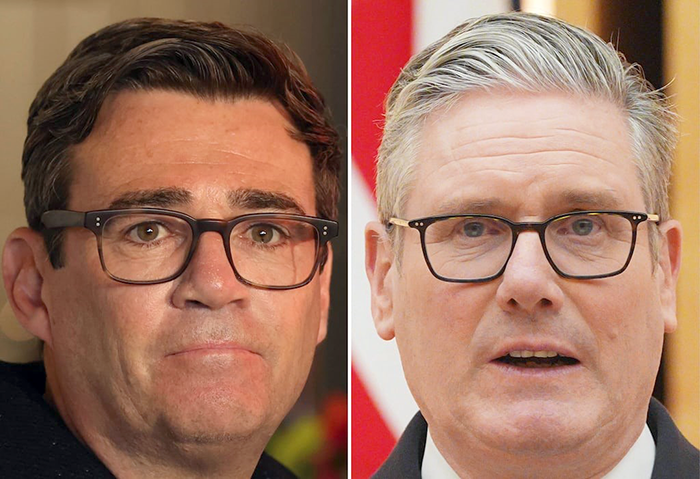
Labour Civil War Explodes as Donor Pulls Funds Until ‘Toxic’ Keir Starmer Quits
The Labour Party has found itself at the centre of renewed political speculation after reports of growing internal tensions coincided with claims that a long-time financial backer had suspended donations while expressing dissatisfaction with the party’s leadership.
Although party officials sought to downplay suggestions of a deepening crisis, the development has intensified debate about Sir Keir Starmer’s authority and the broader direction of the governing party. Political observers say the episode highlights the challenges facing any administration attempting to balance competing priorities while maintaining unity among MPs, members and supporters.
Funding has long been regarded as one of the less visible but most influential aspects of British politics. Political parties depend on donations to finance election campaigns, policy research, staff, advertising and grassroots organisation. When a prominent donor publicly questions a party leader, the financial implications are often overshadowed by the political message such a decision sends.
In this case, the donor reportedly argued that confidence in the leadership had deteriorated and suggested that future financial support would depend on significant changes at the top of the party. Those comments immediately fuelled speculation about whether dissatisfaction extends beyond a single individual or reflects wider concerns among sections of Labour’s traditional support base.
Senior Labour figures, however, rejected suggestions that the party’s direction is determined by the preferences of individual donors. They stressed that policy decisions are made through democratic institutions and that government priorities remain focused on economic growth, public services and long-term reform.
Nevertheless, the controversy has reignited questions about Starmer’s political standing.
Since entering government, Labour has faced difficult choices on taxation, public spending, immigration, housing and welfare. While supporters argue these decisions reflect the realities of governing during a period of economic uncertainty, critics from different ideological wings of the party have accused ministers either of moving too cautiously or abandoning traditional Labour principles.
That combination has created an unusually broad spectrum of criticism.
Some MPs argue the government should pursue more ambitious investment in public services and social programmes, while others believe Labour must prioritise fiscal discipline to maintain market confidence. The result has been a series of policy disagreements that, although common within major political parties, have increasingly played out in public.
Political scientists caution against interpreting every disagreement as evidence of an imminent leadership challenge. Parties in government frequently experience internal debates over strategy, particularly during the early years of a parliamentary term when ministers begin implementing election promises.
However, public criticism from influential supporters can alter perceptions, encouraging renewed discussion about leadership even if no formal challenge is under way.
The financial dimension has attracted particular attention because campaign resources remain essential to political success. While Labour benefits from a broad network of supporters, trade unions and smaller donors, the loss of any high-profile contributor can generate headlines and invite questions about confidence within the party.
Party officials insist that Labour’s fundraising operation remains resilient and continues to receive support from a wide range of individuals and organisations. They also argue that no single donor determines the party’s political direction.
Opposition politicians have nevertheless seized on the controversy, portraying it as evidence of growing instability within the governing party. They argue that public disagreements over leadership risk distracting ministers from addressing pressing national issues including inflation, economic growth, healthcare and housing.
Supporters of the Prime Minister dismiss those claims, maintaining that governments inevitably face criticism from multiple directions. They argue that difficult reforms rarely satisfy every political constituency and that leadership should be judged by long-term outcomes rather than short-term controversies.
Within Westminster, speculation has inevitably turned to potential successors should pressure on the leadership increase in the future. Several senior Labour figures are regularly mentioned by commentators whenever questions about succession arise, though none has publicly indicated any intention of challenging Starmer.
Political analysts emphasise that replacing a sitting party leader is a complicated process requiring substantial parliamentary support and a credible alternative capable of uniting different factions. Leadership transitions rarely occur solely because of media speculation or criticism from individual supporters.
The coming electoral calendar could prove significant in shaping future discussion. Local elections, by-elections and national opinion polls will all be examined closely by MPs seeking evidence of whether Labour’s political position is strengthening or weakening. Positive results could reinforce confidence in the leadership, while disappointing performances might encourage renewed internal debate.
For many voters, however, internal party disputes remain secondary to everyday concerns about living costs, public services and economic opportunities. Surveys consistently suggest that the public is more interested in tangible policy outcomes than Westminster intrigue, meaning Labour’s long-term political fortunes are likely to depend on its record in government rather than headlines about internal disagreements alone.
As debate continues, Labour’s leadership faces the challenge of maintaining party unity while responding to criticism from different quarters. Whether the latest controversy proves to be a brief political storm or the beginning of a more sustained period of internal conflict will become clearer only as future political events unfold.
For now, the party insists it remains focused on governing and delivering its programme. Yet the episode serves as another reminder that leadership in government is shaped not only by electoral success, but also by the ability to retain the confidence of colleagues, supporters and the wider public during periods of political uncertainty.