
-

Chancellor Rachel Reeves has talked-up the economic potential of a visa scheme for EU young people (Image: Getty)
Labour is pushing Britain back into the European Union by the back door, it was claimed after Chancellor Rachel Reeves insisted a coming youth mobility scheme will be “good for the economy”.
The details of the “youth experience visa” are being thrashed out with Brussels but Ms Reeves believes the impact of the scheme will be so significant the Office for Budget Responsibility should take it into account when making its economic forecasts ahead of the Autumn Budget. If it concludes the numbers coming into the work in the UK will boost growth this could reduce the need for major spending cuts or tax hikes.
Get the latest politics news – straight from our team in Westminster and more Invalid email
We use your sign-up to provide content in ways you’ve consented to and to improve our understanding of you. This may include adverts from us and 3rd parties based on our understanding. You can unsubscribe at any time. Read our Privacy Policy
Ms Reeves told the Times she wants an “ambitious” scheme which will allow EU youth to “come to the UK and have the same opportunities that my generation had to travel and work and study in Europe”.
Reform UK deputy leader Richard Tice warned: “Any youth mobility scheme would effectively open a backdoor to freedom of movement, which 17.4 million people voted against in the Brexit referendum. It risks opening the floodgates to EU migrants who will arrive in the UK and find reasons to overstay their visas.
“This cabinet stacked with Remainer politicians and a Prime Minister who tried to block the democratic will of the people cannot be trusted to negotiate with the EU.”
Conservative Shadow Home Secretary Chris Philp shared his concerns, saying: “Rachel Reeves’ comments confirm what we have long warned – Labour are edging Britain back towards Brussels by the back door. She is gaslighting the public by pretending the only way to avoid higher taxes is to throw open our borders.”
“A so-called ‘unlimited youth mobility scheme’ with the EU is nothing more than a new open-door immigration route, at a time when we need firm control of our borders.”
Mr Philp added: “Instead of listening to the British people who voted to take back control, Labour are plotting to unravel Brexit piece by piece.”
Shadow Chancellor Sir Mel Stride said the Chancellor’s call for the OBR to take the scheme into account was a sign of desperation at the heart of Government. The OBR is expected to downgrade Britain’s expected productivity – a move which could leave a black hole of tens of billions of pounds in the Chancellor’s fiscal plans.

Sir Mel Stride accused the Government of desperation (Image: Getty)
Sir Mel said: “When the Chancellor is reduced to begging the OBR to score a yet to be clarified youth mobility scheme, to scrabble together a few hundred million at best, it shows just how desperate things have become. Britain faces a massive fiscal black hole of Rachel Reeves’ own making.
“No amount of creative accounting can cover for the fact that her reckless borrowing has put us in this position. Rachel Reeves has already raised taxes by £40billion a year.
“Despite saying she wouldn’t come back for more, the Chancellor’s reckless economic mismanagement means more painful tax rises loom. Rachel Reeves will tax your children’s future to pay for her failure.”
The mobility scheme is expected to be time-limited, allowing people aged 18 to 30 allowed to live in the UK for two years. It is reported up to 50,000 EU citizens could be allowed to take part each year.
- The proposed scheme has become one of the most closely watched elements of the Government’s broader effort to reset relations with the European Union following Brexit. Ministers have argued that similar youth mobility arrangements already exist with countries including Australia, New Zealand and Canada, and have stressed that any agreement with the EU would be subject to conditions, including age limits and time restrictions.
However, the proposal has continued to divide opinion in Westminster. Critics argue that an EU-wide scheme would differ significantly from existing bilateral agreements because of the size of the potential applicant pool. They have called on ministers to publish full details of any agreement before it is signed, including projected migration figures, eligibility requirements and the expected impact on public services.
Supporters of the policy, meanwhile, contend that a reciprocal scheme would benefit young people from both the UK and EU member states. They argue that giving British citizens the opportunity to work, study and gain experience abroad could improve skills, strengthen business links and provide greater opportunities for cultural exchange. Business organisations have also suggested that sectors experiencing labour shortages could benefit from a larger pool of temporary workers.
The debate has intensified after reports that the Office for Budget Responsibility could consider the economic effects of the programme when preparing its latest forecasts. Economists note that changes in migration assumptions can influence projections for economic growth, employment and tax revenues, although the overall fiscal impact would depend on the final design of the scheme and the number of participants.
Opposition politicians have questioned whether it is appropriate to include estimates for a policy that has yet to be finalised. They argue that relying on projected economic gains before negotiations have concluded risks creating uncertainty around the Government’s fiscal plans. Some have suggested that any economic benefits are likely to be modest compared with the broader challenges facing the public finances.
The Government has rejected suggestions that the proposed arrangement would represent a return to freedom of movement. Ministers have repeatedly stated that the scheme would be temporary, reciprocal and subject to clear eligibility criteria, distinguishing it from the pre-Brexit system that allowed EU citizens to live and work in the UK without time limits.
Business groups have generally welcomed efforts to improve labour mobility with European partners, particularly in industries that rely on seasonal or specialist workers. Representatives from the hospitality, creative industries and technology sectors have argued that easier movement for young professionals could help address recruitment challenges while strengthening economic ties with European markets.
At the same time, migration remains one of the most politically sensitive issues in British politics. Recent opinion polls suggest that border security and immigration continue to rank among voters’ top concerns, meaning any agreement with Brussels is likely to face intense public and parliamentary scrutiny. Analysts believe the Government will seek to reassure voters that any increase in mobility is accompanied by clear rules governing eligibility, duration of stay and enforcement.
The proposed scheme also forms part of a wider programme of UK-EU discussions covering trade, defence cooperation, scientific research and educational exchanges. Both sides have expressed a desire to improve practical cooperation in areas of mutual interest while maintaining the framework established after Brexit.
Political commentators suggest the negotiations are likely to become a key point of debate in the months leading up to the Autumn Budget. If the Office for Budget Responsibility concludes that the scheme would provide a measurable boost to economic growth, it could modestly improve the Chancellor’s fiscal outlook. Conversely, if the impact is judged to be limited, ministers may face renewed pressure to identify alternative measures to balance the public finances.
With negotiations still ongoing, no final agreement has yet been announced. Government officials have indicated that discussions with the European Commission remain active and that further details will be released once negotiations have been completed. Until then, the scale, conditions and economic implications of the proposed youth mobility scheme remain the subject of political debate and continued scrutiny from businesses, economists and opposition parties alike.
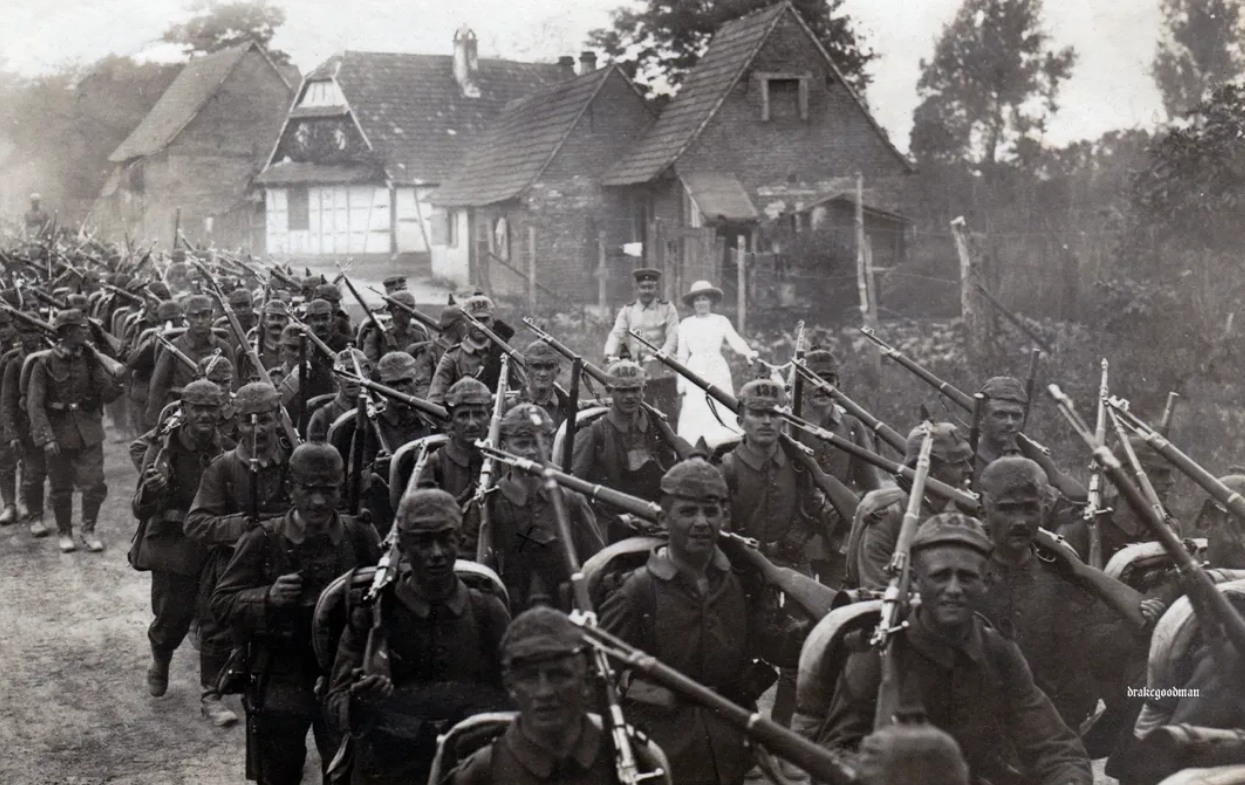
September 1914: Deutsche Soldaten marschieren an die Front – der Moment, bevor alles sich für immer verändert.H
Im September 1914, nur wenige Wochen nach Ausbruch des Ersten Weltkriegs, bewegten sich endlose Kolonnen...
19
Apr
Apr
