
EXTREMELY SENSITIVE CONTENT – 18+ ONLY:
This article discusses sensitive historical events related to methods of execution, including acts of judicial violence. The content is presented for educational purposes only, to foster understanding of the past and encourage reflection on how societies can prevent similar practices in the future. It does not endorse or glorify any form of violence or extremism.
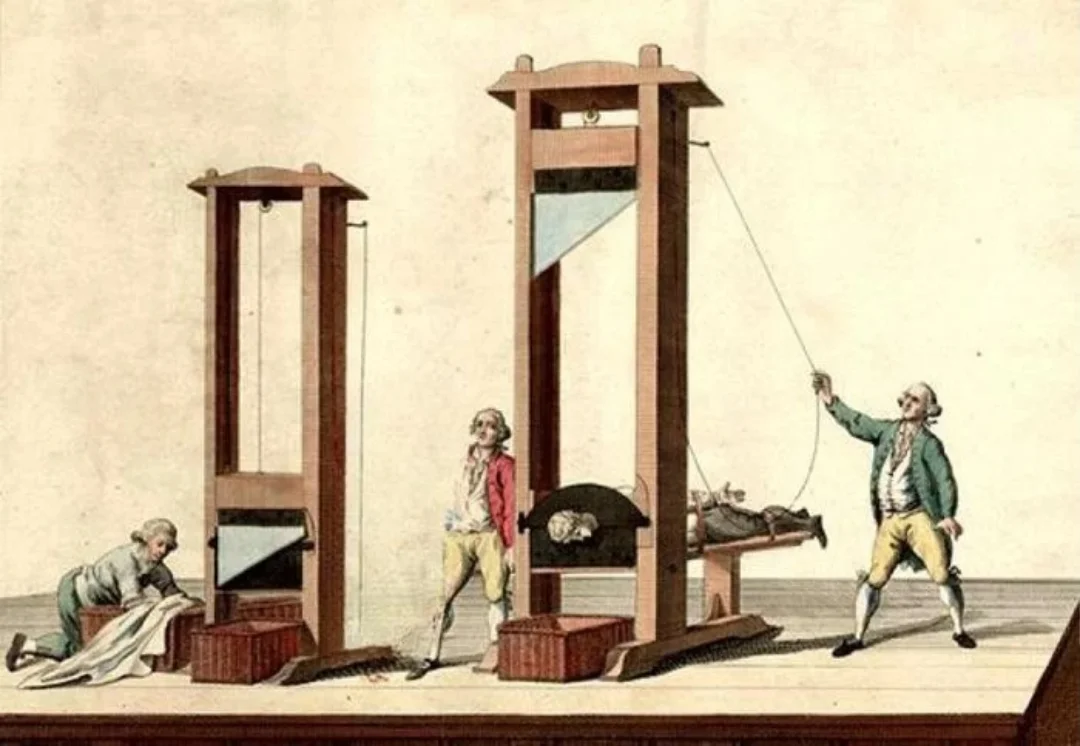
In the late 18th century, amid the Enlightenment’s emphasis on rationality and humanity, the guillotine emerged as a device intended to reform capital punishment in France. Named after Dr. Joseph-Ignace Guillotin, who advocated for it though he did not invent it, the machine was designed to provide a swift, painless death compared to the erratic and prolonged methods of the past, such as manual beheading, hanging, or breaking on the wheel. Introduced during the French Revolution in 1792, it became France’s sole legal execution method until 1981, when capital punishment was abolished. While often viewed today as a symbol of terror due to its association with the Reign of Terror, contemporaries saw it as the most humane option available, ensuring equality in death regardless of social class and minimizing suffering through mechanical precision. This perception stemmed from a desire to align justice with progressive ideals, reducing the role of human error and cruelty. Examining its historical context objectively reveals how innovations in punishment reflected societal shifts toward efficiency and equity, while also highlighting the ethical dilemmas of state-sanctioned death and the importance of evolving toward abolition to uphold human dignity.
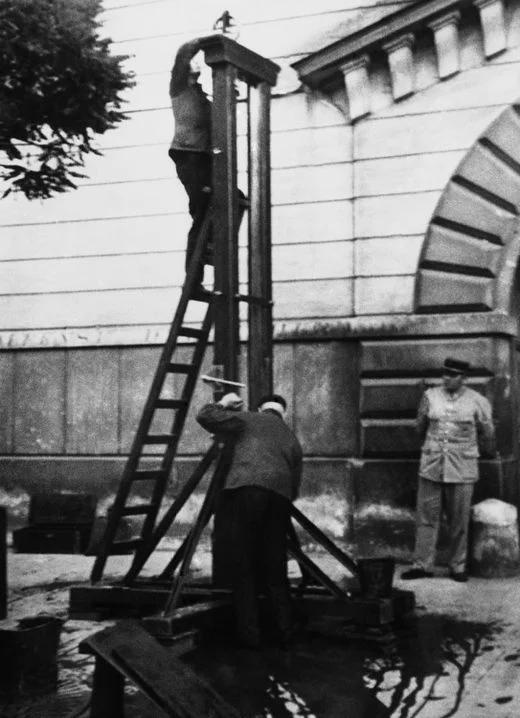
The guillotine’s origins trace to a period when executions in Europe were public spectacles, often botched and agonizing. Prior to its adoption, common methods included hanging for commoners, which could result in slow strangulation if the drop was miscalculated, and beheading for nobility, reliant on the executioner’s skill—sometimes requiring multiple strikes, as in the case of Mary, Queen of Scots in 1587. Other torturous practices, like drawing and quartering or the wheel, prolonged agony for hours or days. Dr. Guillotin, a physician and member of the French National Assembly, proposed a mechanical device in 1789 to address these inconsistencies, arguing for a method that was “democratic” (applicable to all) and merciful.
The machine itself was engineered by Dr. Antoine Louis and built by Tobias Schmidt, featuring a weighted angled blade that dropped along grooves to sever the head in a single motion. Tests on cadavers and animals confirmed its speed: death occurred within seconds due to immediate loss of blood pressure to the brain, with consciousness estimated to fade in 10-13 seconds. This contrasted sharply with hanging, where victims might convulse for minutes, or manual axes, prone to errors. Guillotin’s rationale was rooted in humanitarianism: “The mechanism strikes like lightning; the head flies off; the blood spurts; the man is no more.” It aligned with Enlightenment thinkers like Cesare Beccaria, who advocated for punishments that were certain and swift but not excessively cruel.
Adopted on April 25, 1792, the guillotine’s first use was on highwayman Nicolas Jacques Pelletier. During the Revolution, it executed over 16,000 people, including King Louis XVI and Marie Antoinette, earning notoriety for its efficiency in the Terror. Yet, its design minimized pain: the blade’s force ensured a clean cut, unlike the variability of human executioners. When comparing it to earlier methods, the guillotine stood out for its brief duration of suffering—mere seconds versus minutes in hanging or hours in breaking on the wheel. Its reliability was high, avoiding the miscalculations common in drops or the skill-dependent strikes of axes, while applying equally to all classes, unlike the class-based distinctions of nobility’s beheading versus commoners’ noose. This equality eliminated disparities, and the mechanical nature reduced human error, making it a step forward in perceived mercy despite the finality.
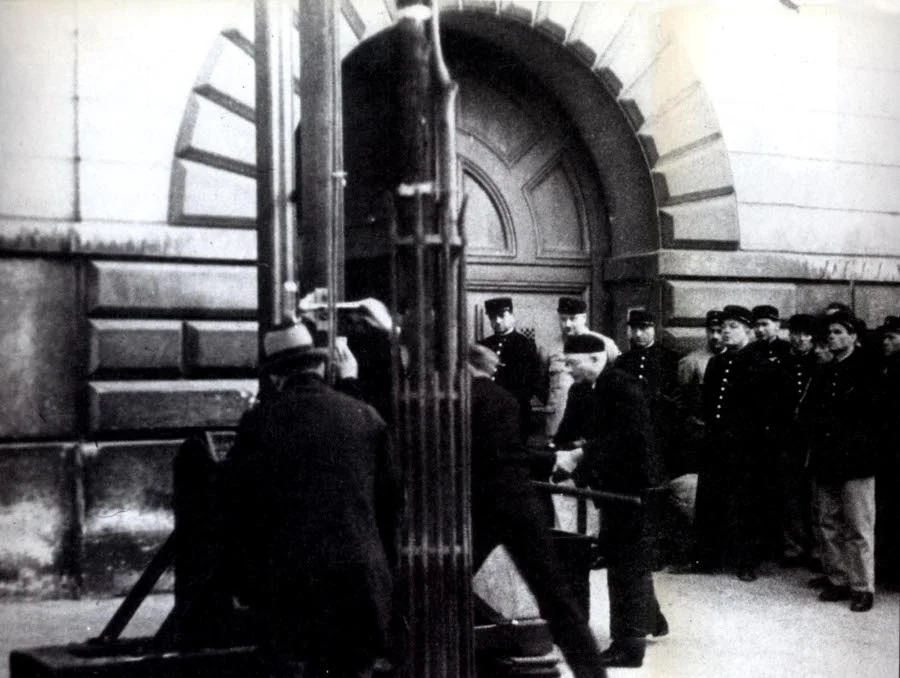
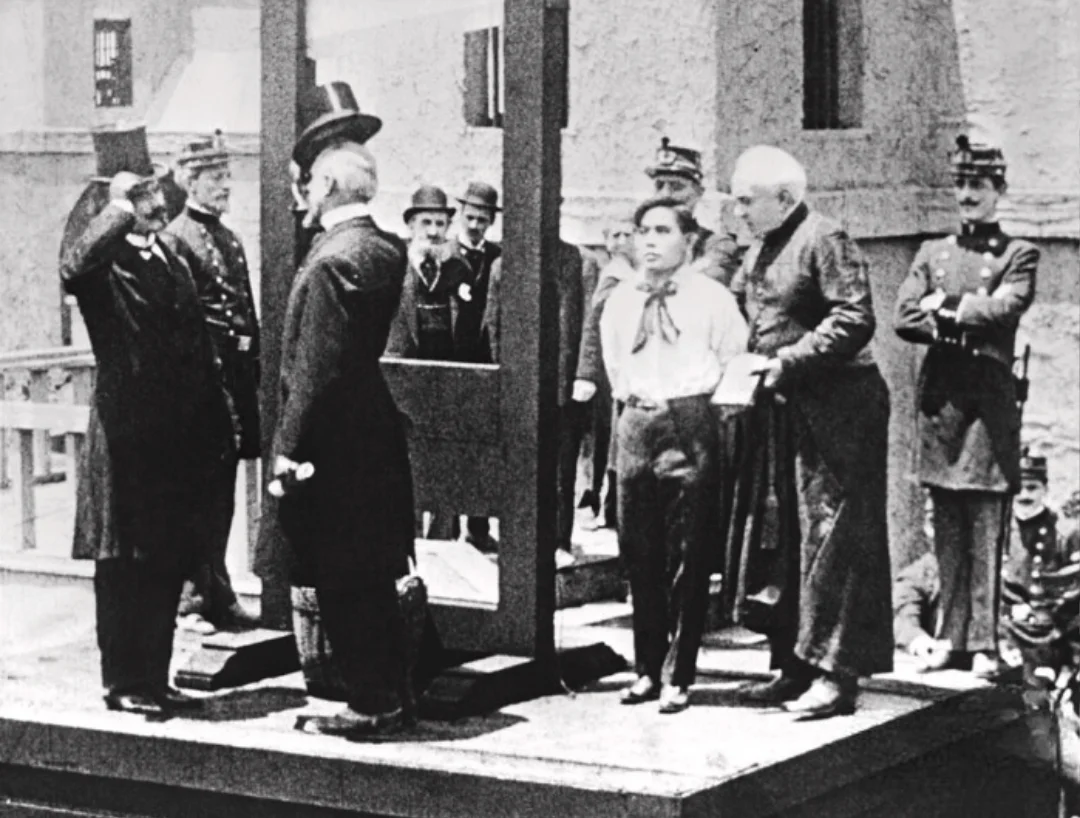
France retained the guillotine until 1981, with the last public execution in 1939 of Eugène Weidmann, a German serial killer convicted of multiple murders, including American dancer Jean de Koven. Weidmann’s beheading outside Versailles prison drew chaotic crowds, leading President Albert Lebrun to ban public executions due to their degrading spectacle. The final execution was of Hamida Djandoubi in 1977 for murder and torture. Abolition followed under President François Mitterrand, reflecting growing opposition to capital punishment as incompatible with human rights.
While effective, debates persist: some survivors of botched executions elsewhere report brief awareness, but historical evidence supports its relative mercy. Its legacy influenced global penal reforms, shifting toward non-lethal alternatives.
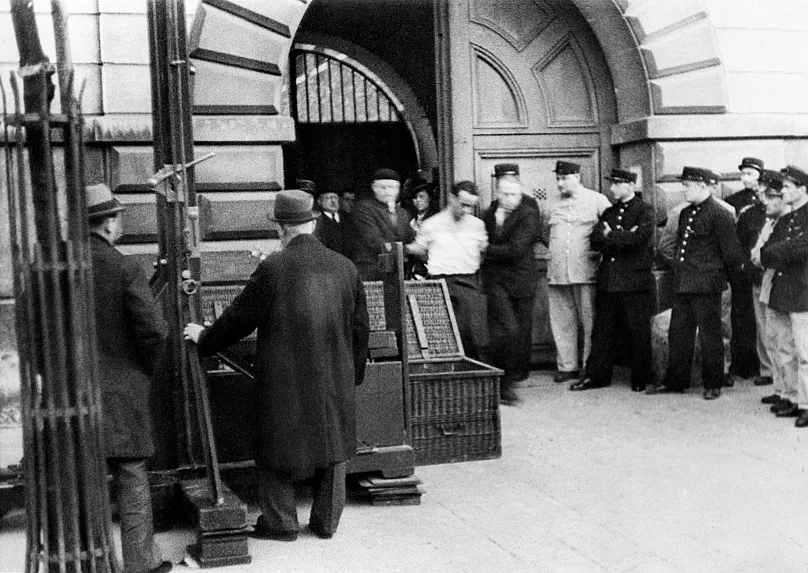
The guillotine, despite its macabre image, represented a step toward humane execution in its era by prioritizing speed, equality, and reliability over prolonged torment. Conceived amid Enlightenment ideals, it minimized suffering compared to archaic methods, reflecting a societal push for rational justice. However, its history underscores the inherent contradictions of capital punishment: no method can truly be “humane” when it ends life. By reflecting on this objectively, we appreciate the progress toward abolition in many nations, emphasizing rehabilitation, due process, and life preservation. Learning from such innovations-turned-symbols of terror encourages ongoing efforts to build justice systems focused on prevention and humanity, ensuring past cruelties remain lessons rather than legacies.
Sources
Britannica: “Guillotine”History.com: “Guillotine”
BBC History: “The Guillotine: The Story of France’s Infamous Execution Device”
Smithsonian Magazine: “The Guillotine’s First Cut”
The Guardian: “The Guillotine: A Humane Form of Execution?”
Additional historical references from academic sources on the French Revolution and penal history.